Great South Wall, Dublin Bay.
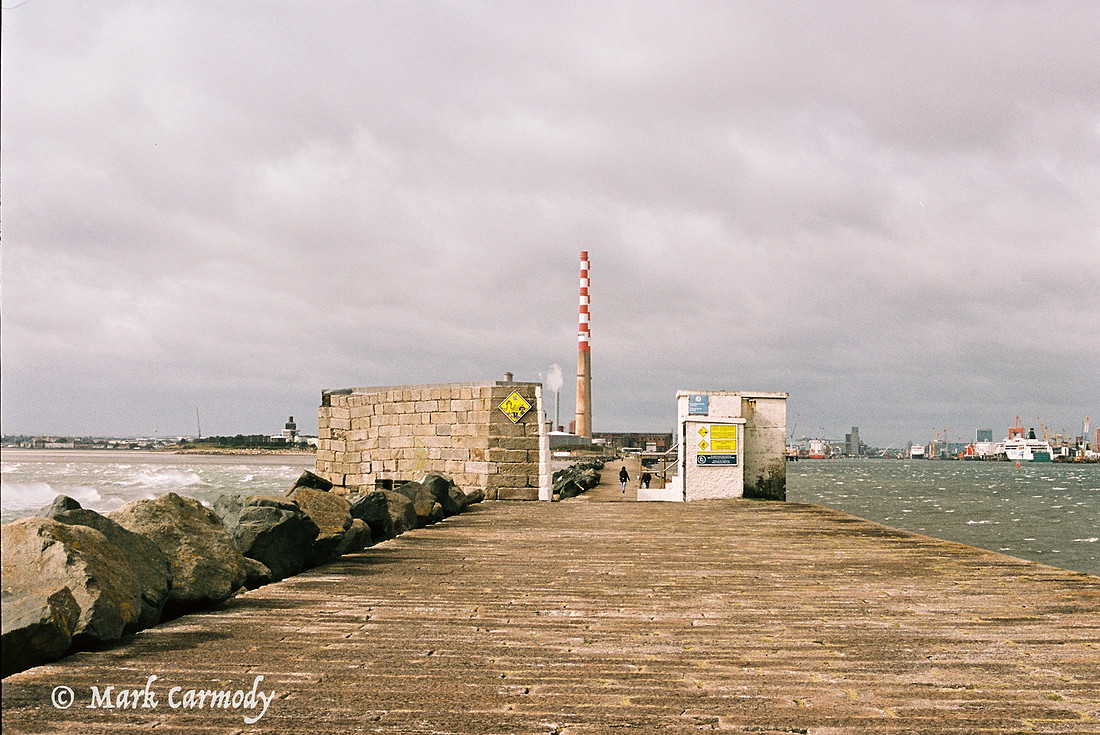
 Looking west back towards the Poolbeg Chimneys, with the Half Moon Swimming and Water Polo Club, founded in 1898, behind the wall on the left, and Dublin Port off to the right. Irishtown Nature Reserve is off to the left in the background.
The Poolbeg "peninsula" is home to a number of landmarks, including the Great South Wall, the Poolbeg Lighthouse, the Irishtown Nature Park, the southern part of Dublin Port, an energy-waste facility, and a power station, formerly Dublin's main power station, which includes the two landmark chimneys, Dublin’s tallest structures.
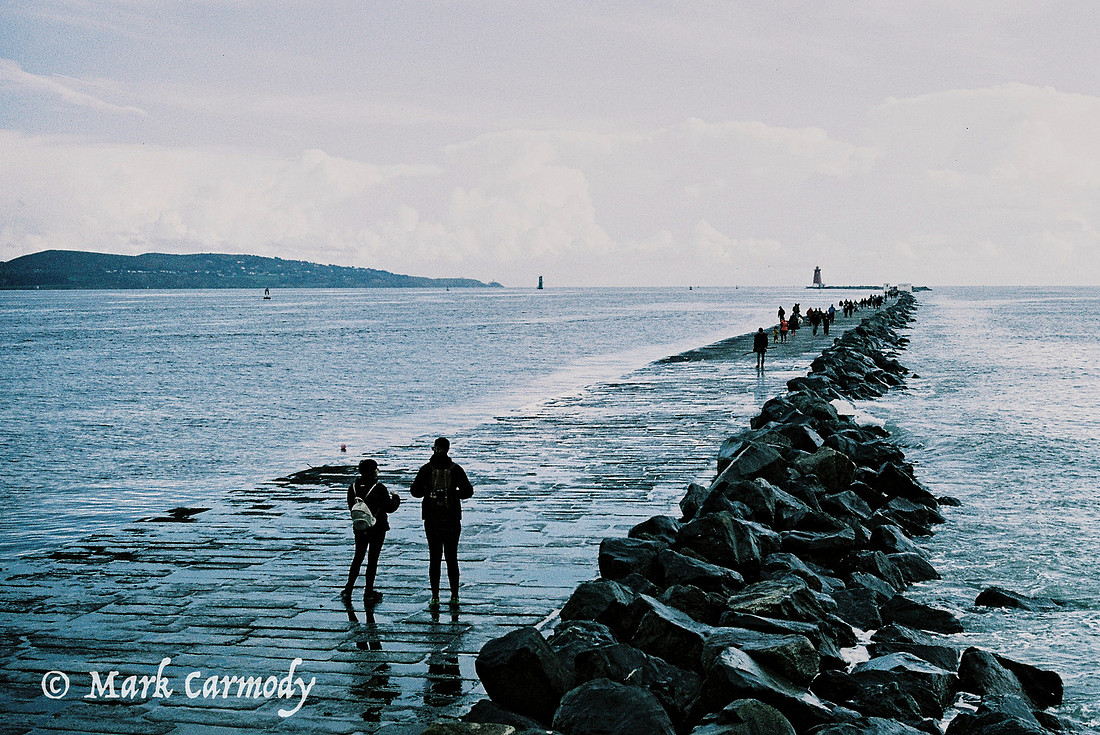
The Great South Wall extending out into Dublin Bay, with the Poolbeg Lighthouse at the end.
The Poolbeg peninsula was built between the mid-18th century and the present day, starting with the Ballast Office Wall, the first section of the Great South Wall to be built on what was then a sandbar known as the South Bull. As the various sections of the Great South Wall were built, further sandbars formed where the River Liffey left its silt, and these were gradually filled with rubble and built upon.
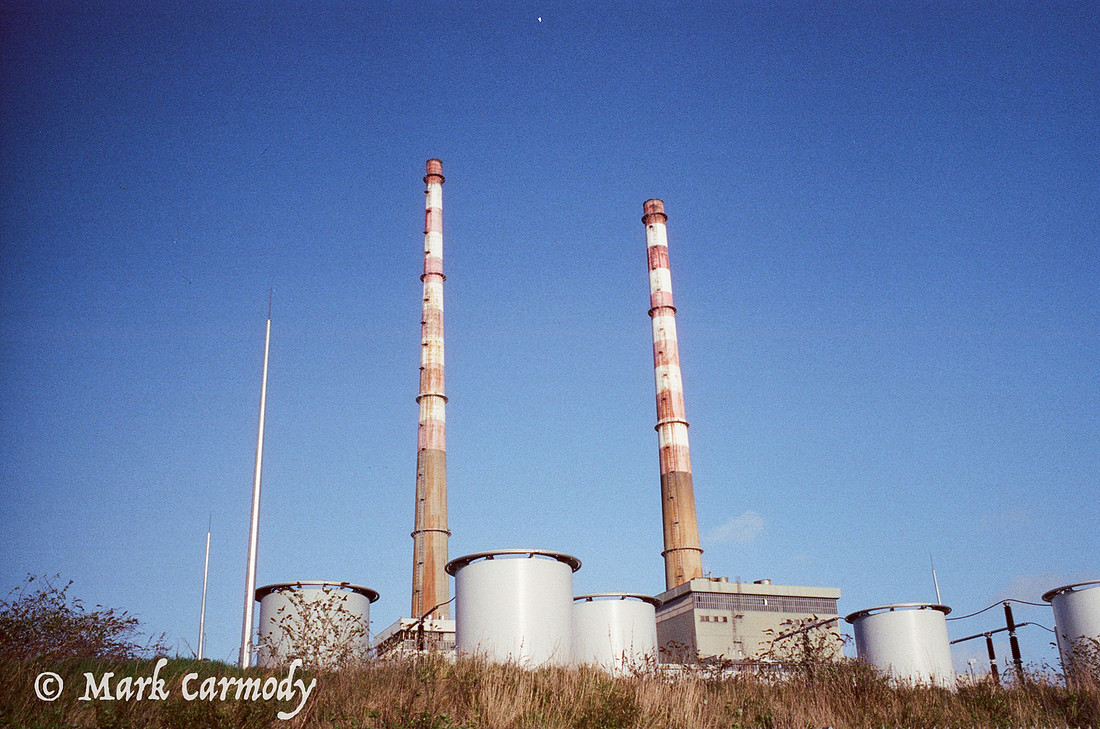
The Poolbeg Chimneys in all their glory. They recently got a fresh paint job.
A tidal pool located out in Dublin Harbour and surrounded by sandbars was where the Poolbeg Lighthouse was built in 1767. The lighthouse was connected to land by the Great South Wall, which was completed in 1795. The Great South Wall, or Balla an Bhulla Theas, extends out from Poolbeg for nearly 4km into Dublin Bay in a west-to-east direction. It creates the channel into Dublin Port, with the newer Bull Wall to the north of it. It was the world's longest sea wall at the time of its construction and remains one of the longest in Europe. It has one of four port lighthouses at its end. It is an important buffer for Dublin Port, where the Wall protects shipping entering and exiting the Port.
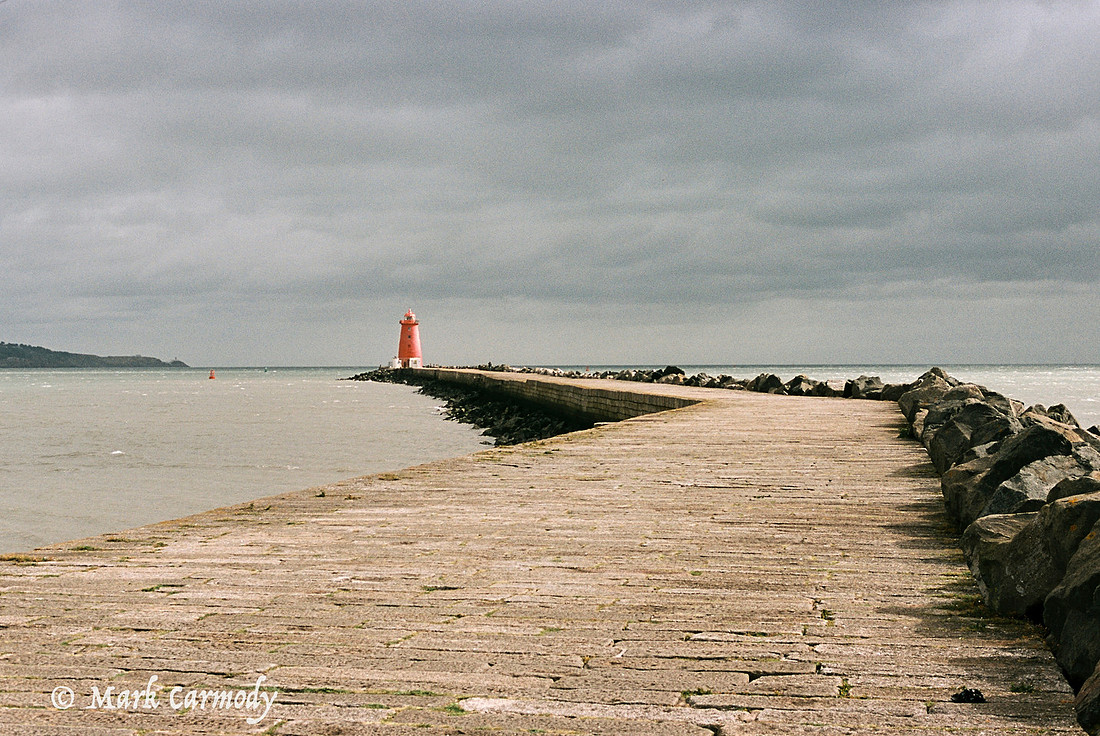 Looking east towards the Great South Wall or Poolbeg Lighthouse.
The Great South Wall also created habitat for diving birds in Dublin Bay and Dublin Port. The shelter provided from the prevailing wind, and the wave defences, provide roosting areas for waders at high tide and feeding areas for diving species. Winter is the best time of year to observe the largest variety of species of waders and seabirds, while the summer months provide a feast of breeding terns that use a couple of pontoons in Dublin Port as breeding platforms.
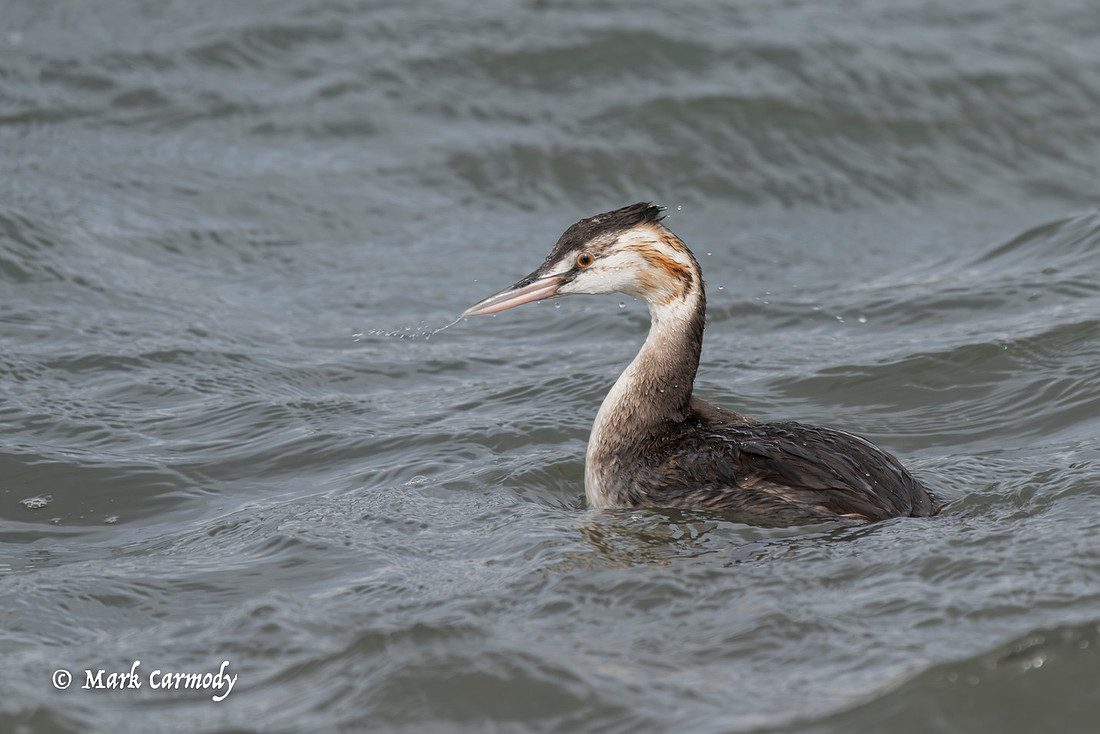
Great Crested Grebe in winter plumage.
Great Crested Grebes congregate in good numbers in Dublin Bay during the winter, with a variety of plumages on show from Autumn right through to Spring ranging from juveniles to adults in breeding plumage. Gulls and Terns use the bay all year round, with terns turning up in March and leaving in the autumn. Gulls are always present, with numbers of particular species waxing and waning through the seasons. Gulls seen regularly during the year include Common Gull, Lesser Black-backed Gull, Great Black-backed Gull, Black-headed Gull, Kittiwake, Mediterranean Gull, and Herring Gull. Rare and Scarce gulls include Ross's Gull, Bonaparte's Gull, Glaucous Gull, Iceland Gull, Sabine's Gull, and Ring-billed Gull.
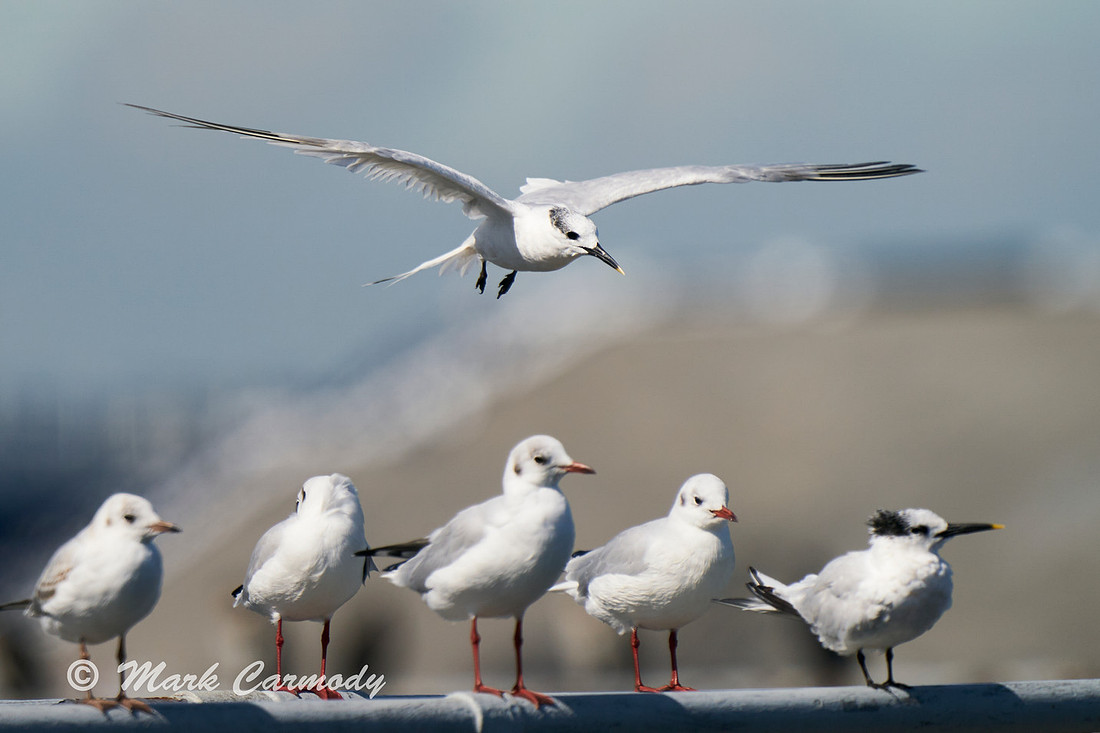
A Sandwich Tern hovers over four Black-headed Gulls, with another Sandwich Tern perched to their right. The gulls and terns in the Bay use the railings at the sewage treatment plant at Poolbeg to roost.
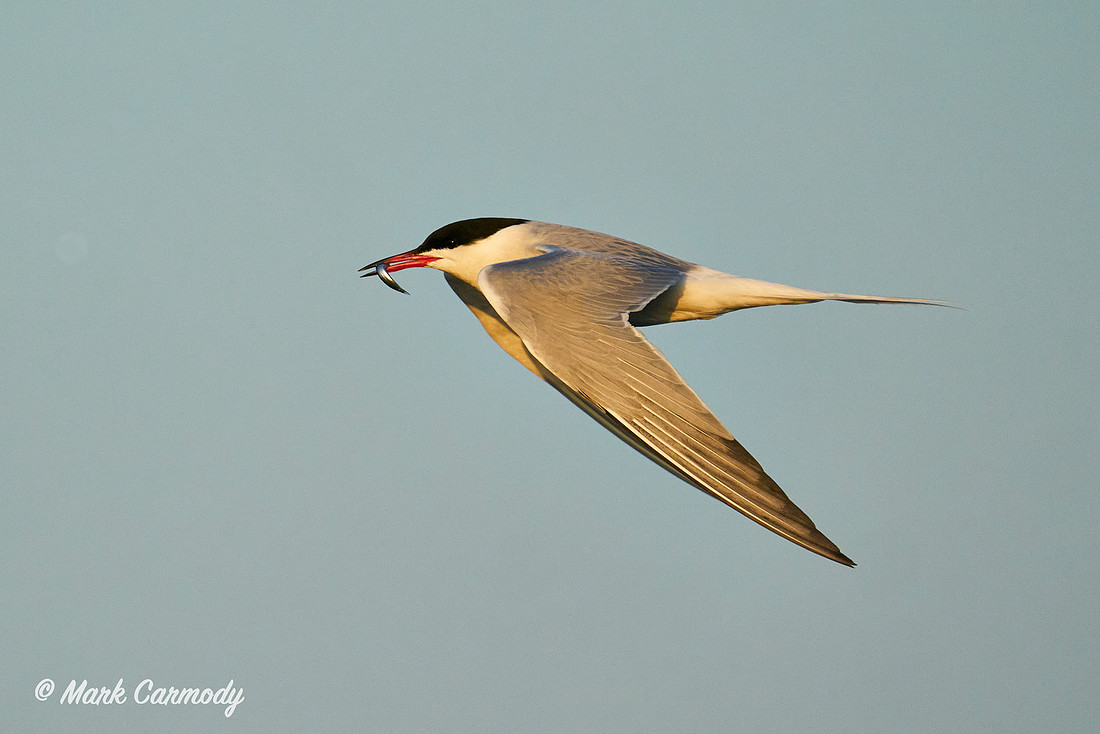
A Common Tern carrying food to it's young on the pontoons in Dublin Port.
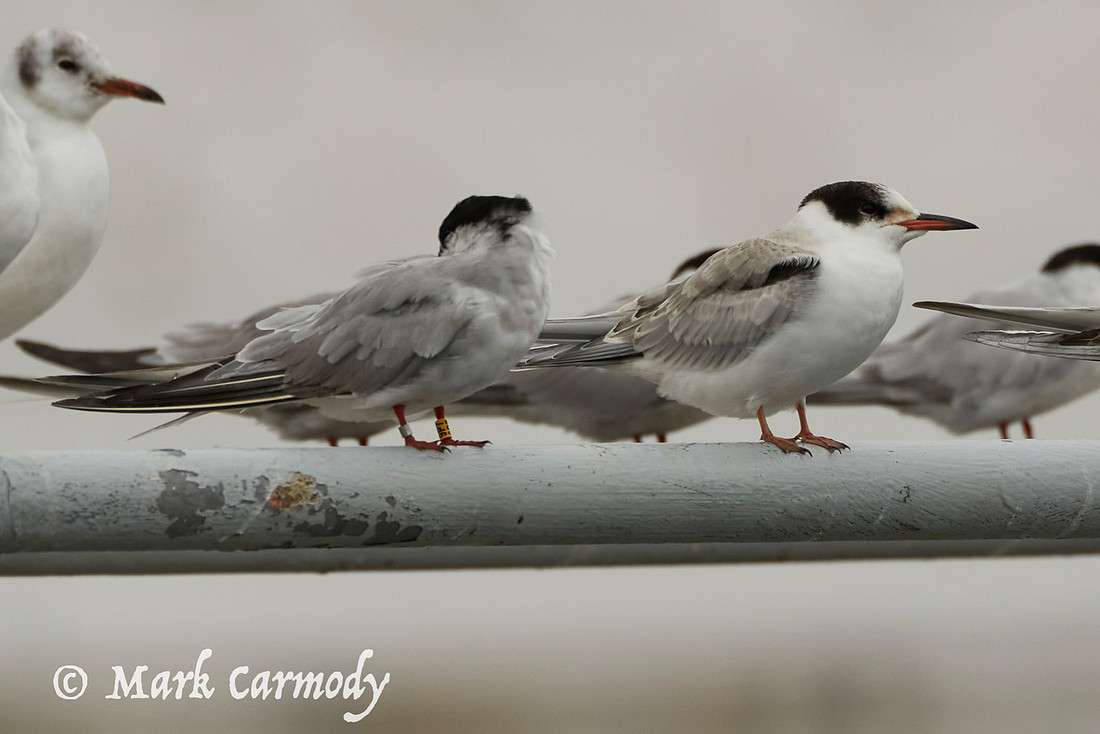
Adult and juvenile Common Terns resting on the railings at the base of the Great South Wall. A good place to scan for perched gulls and terns.
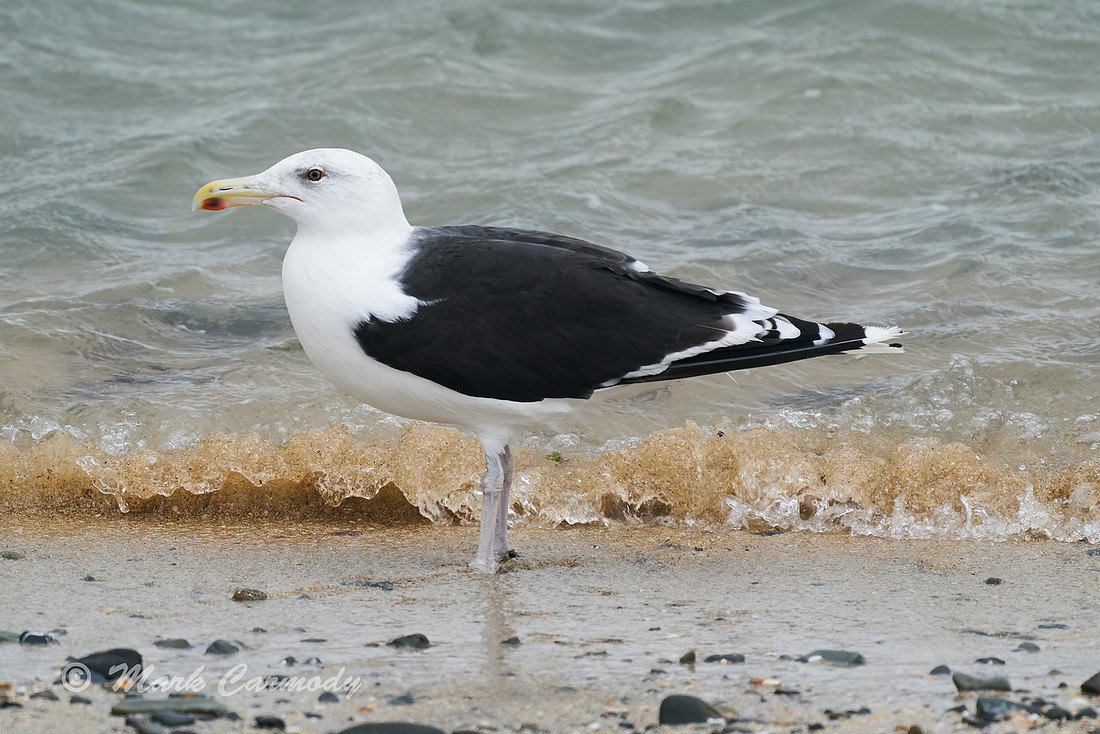
An adult Great Black-backed Gull on the shoreline at Shelly Beach.
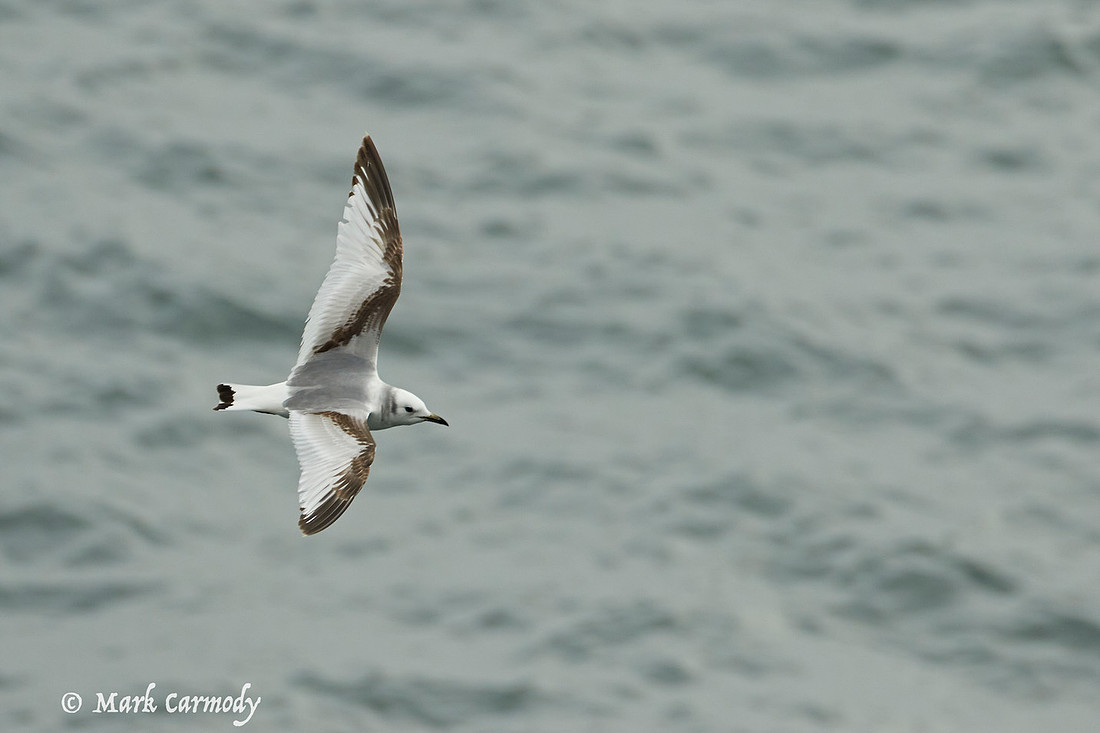 A second-summer Kittiwake.
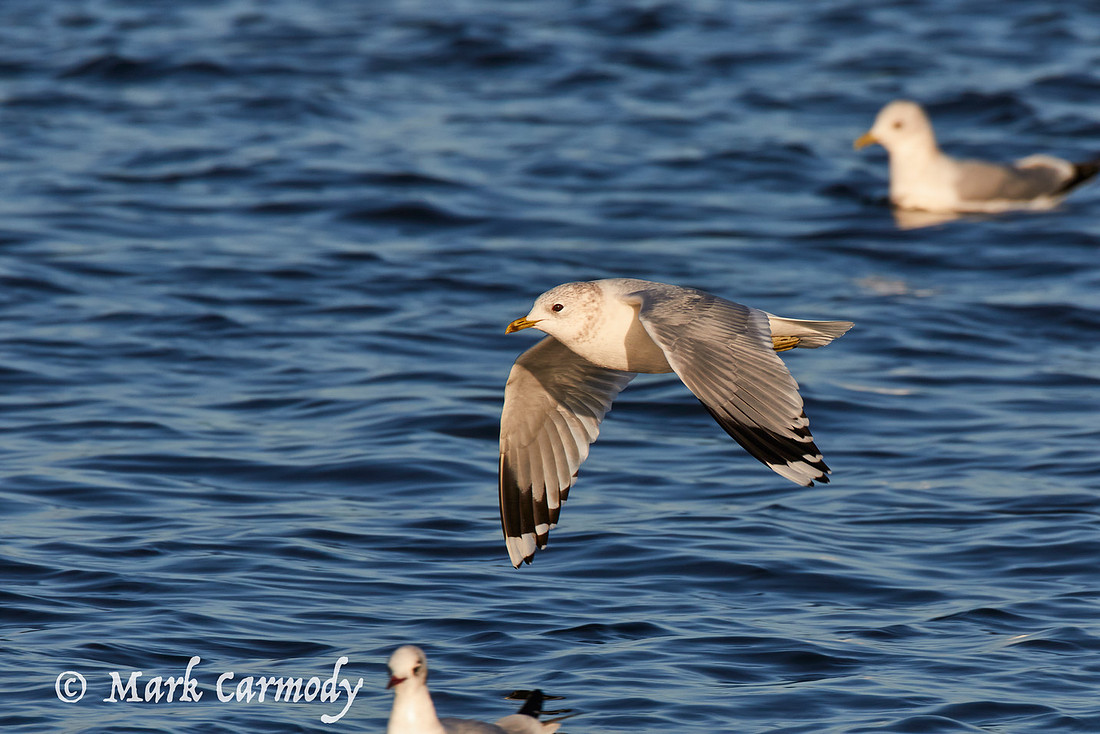 An adult Common Gull in spring.
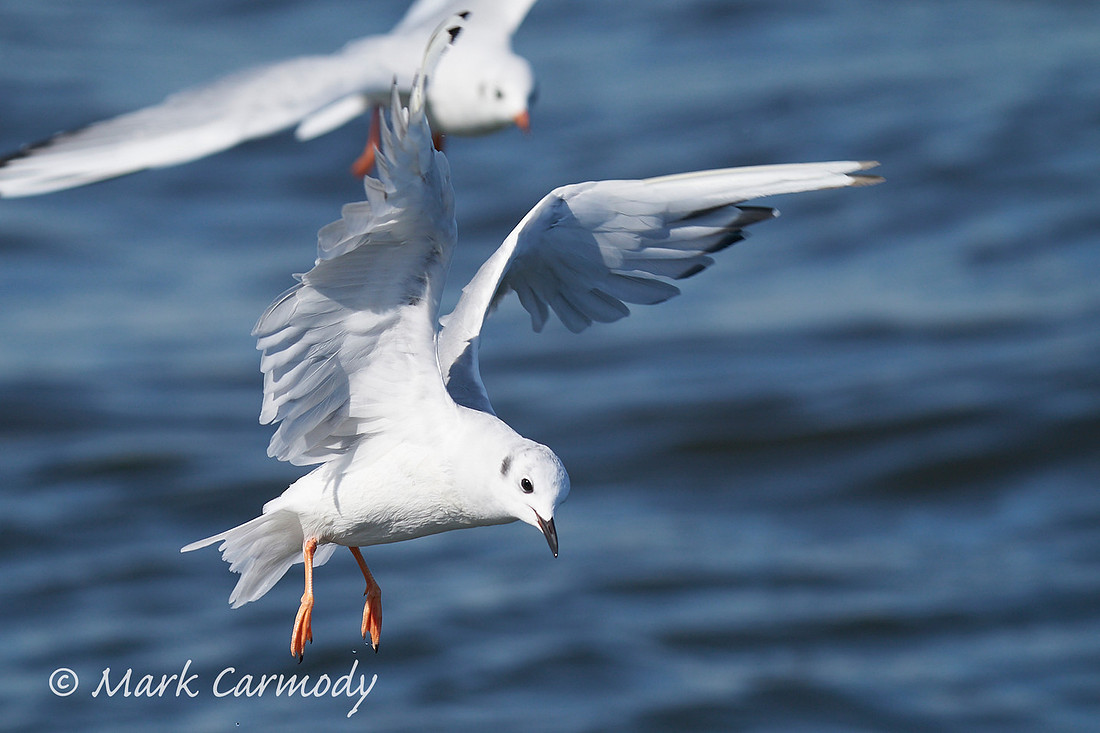 Rarities such as this Bonaparte's Gull from North America have been seen in the Bay, particularly around the outflow from the sewage treatment plant at Poolbeg. This adult was found by Holly Grogan a couple of winters ago.
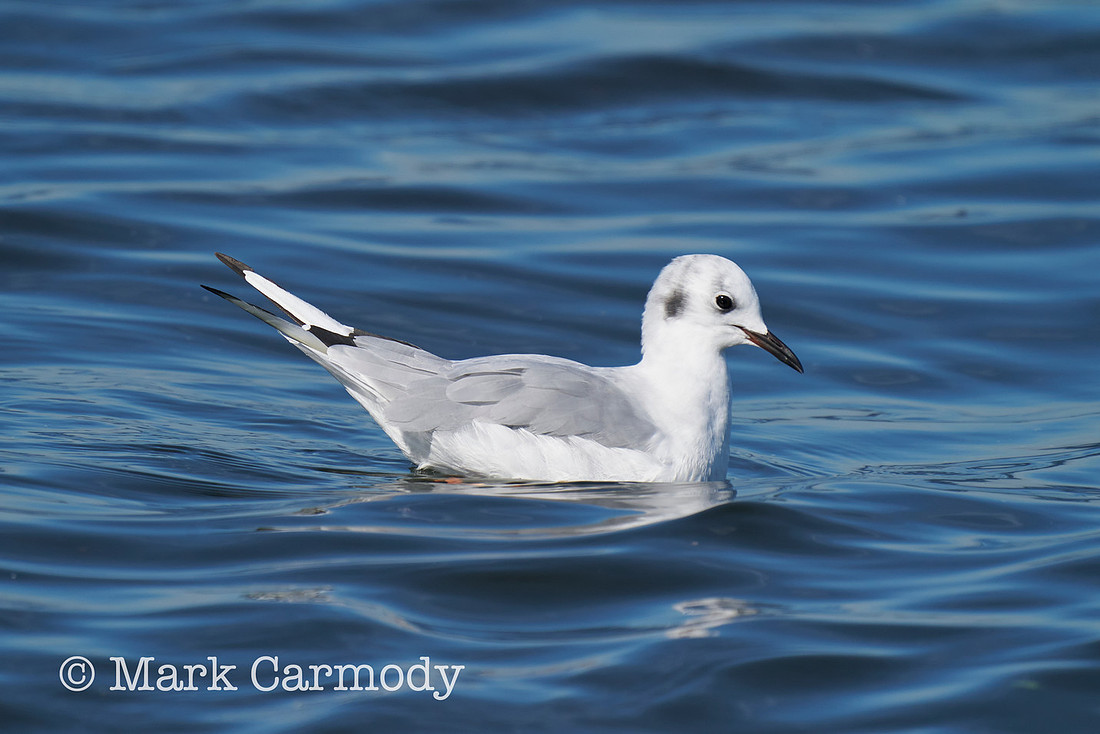
Bonaparte's Gull in winter plumage.
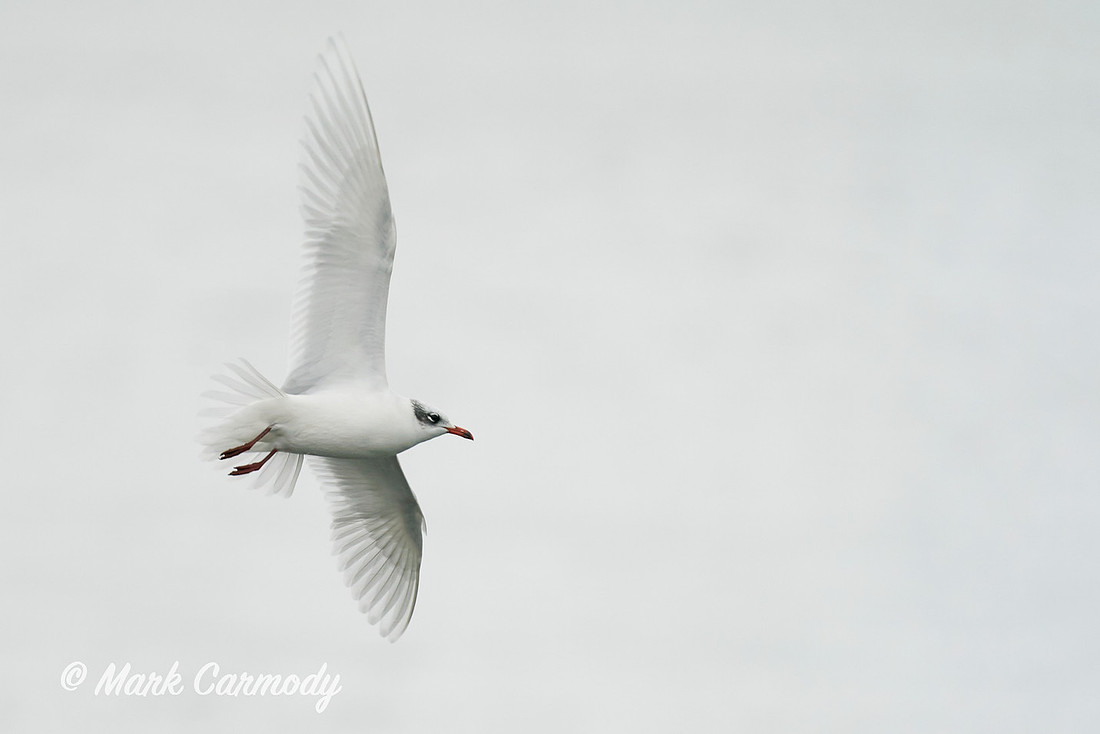 An adult Mediterranean Gull transitioning to winter plumage.
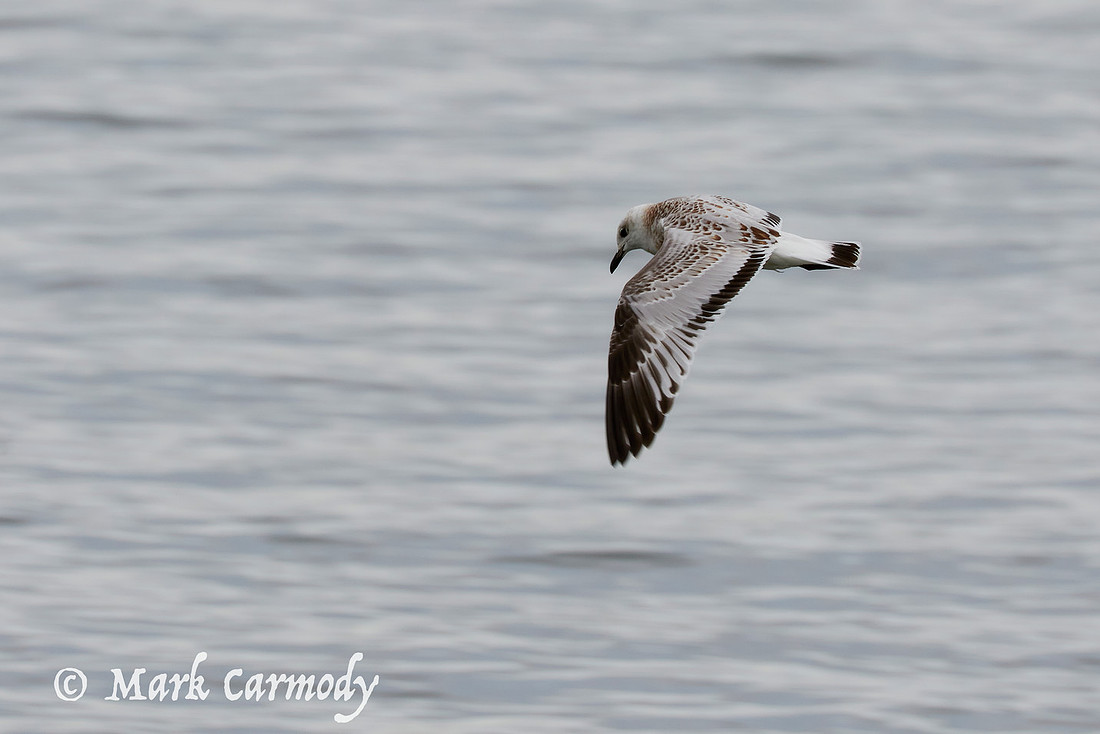 A 1st Winter Mediterranean Gull.
Waders use the area at low tide to feed on the mudflats to the south of the Great South Wall, and also inside the waste treatment plant outflow where mud is exposed. At high tide, smaller waders such as Dunlin, Sanderling, Ringed Plover, and Purple Sandpiper can be found roosting on the rock armour that protects the wall from the power of the sea. It is possible to get very close views of these roosting waders if one is slow and careful. They are well used to walkers, runners, and fisherfolk using the wall on a daily basis. Colour-ringed Sanderling are regularly seen among the flock. A morning high tide is best as the sun will be from the right direction for photography.
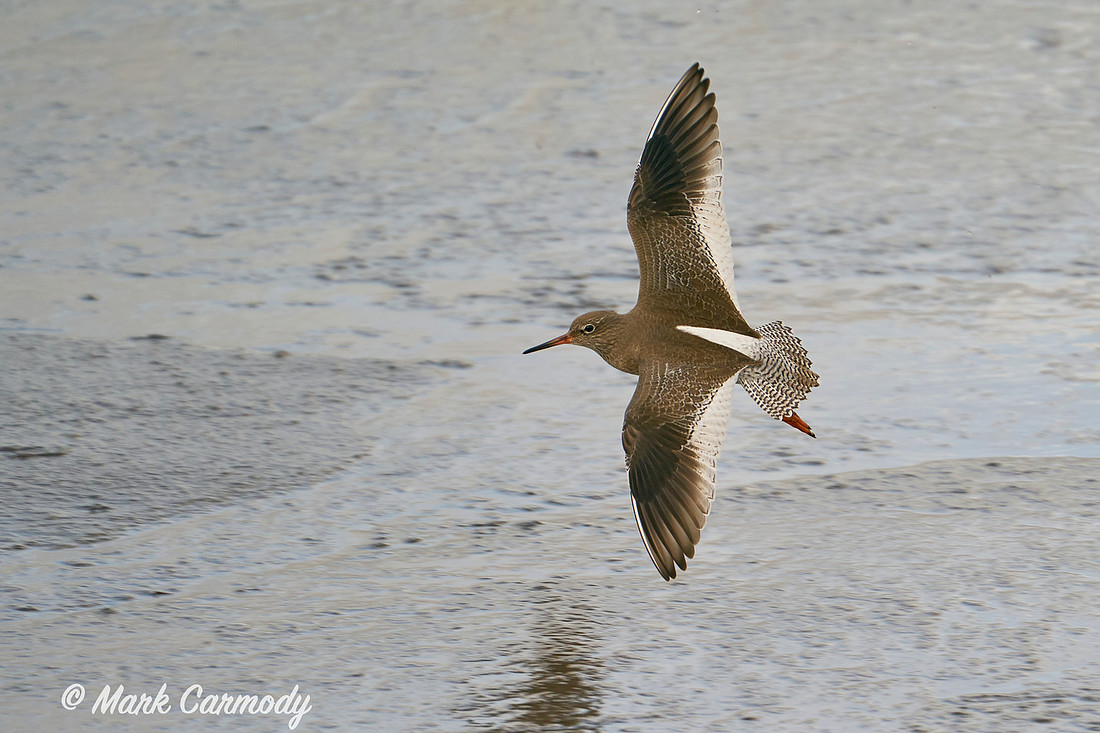 A Common Redshank flies into the base of the Great South Wall at low tide to feed on the exposed mud
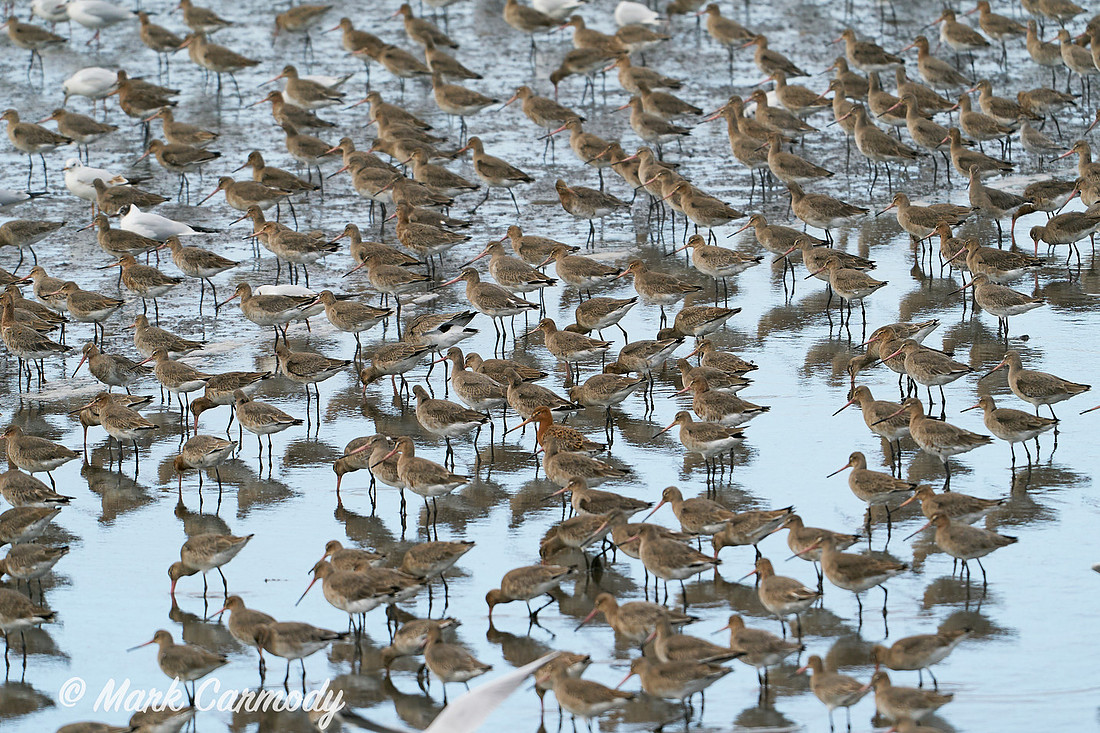 A large flock of the Icelandic race of Black-taileld Godwit come to feed in this area at low tide. I have seen several colour-ringed birds scattered throughout this large flock at times.
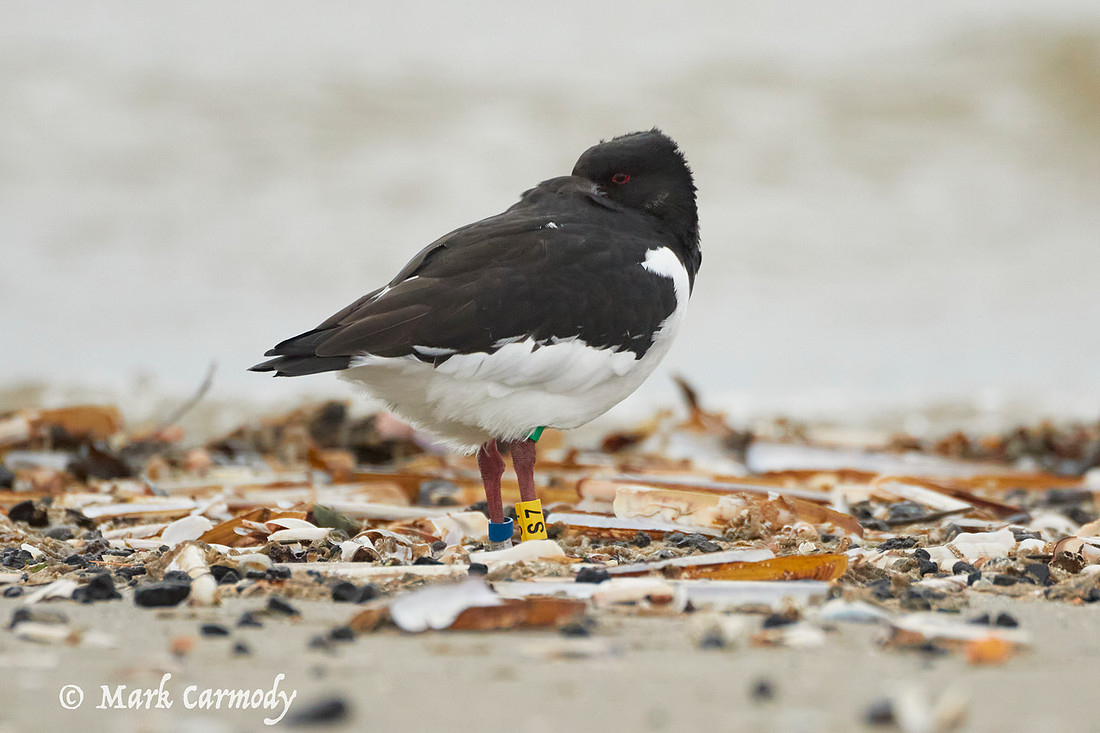 An Oystercatcher with rings indicating a bird trapped in Dublin Bay and tagged.
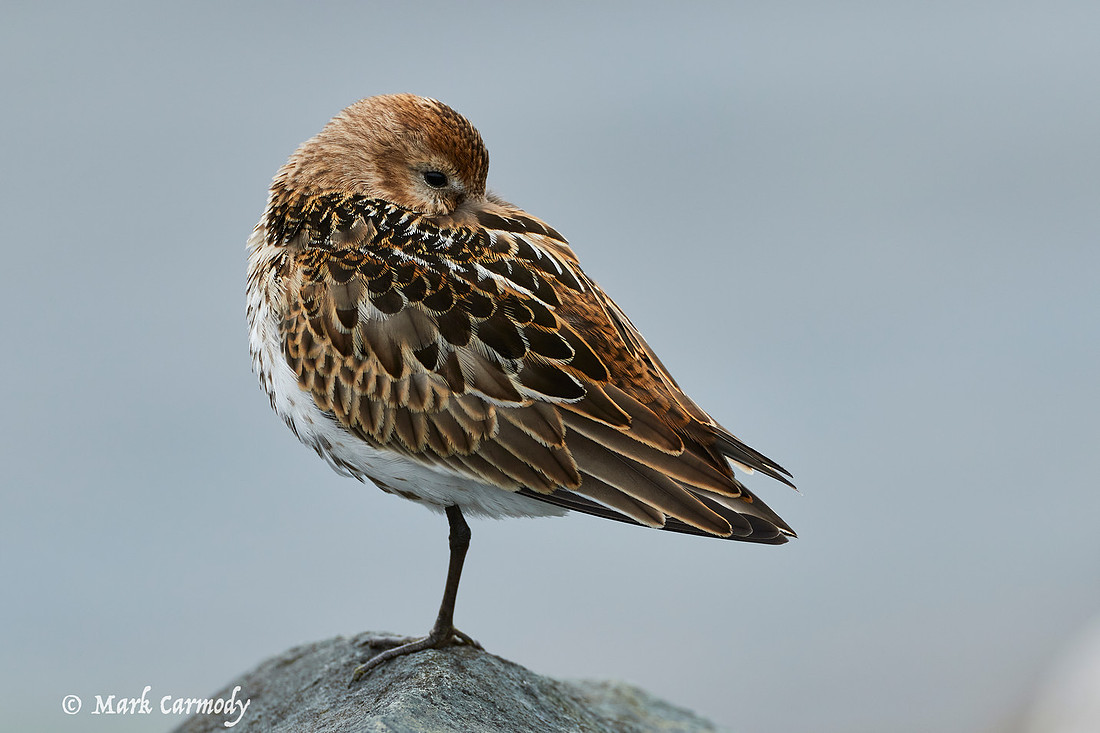 A winter-plumaged Dunlin roosting on the rock armour
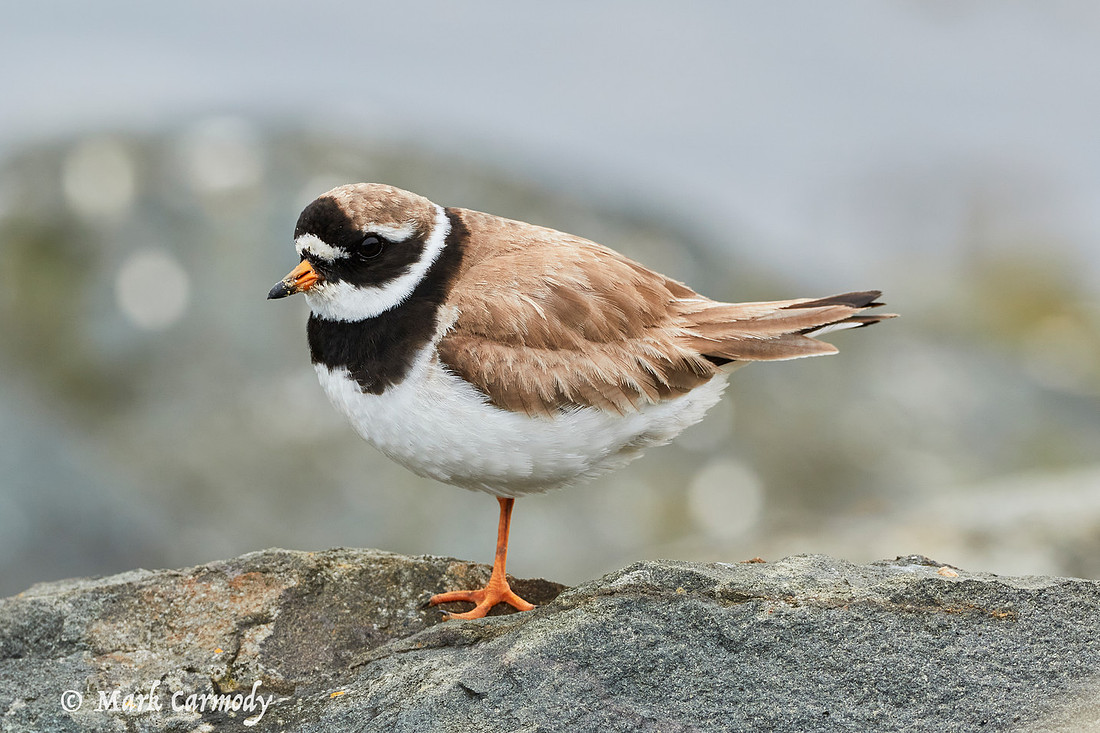
A winter-plumaged Common Ringed Plover roosting on the rock armour
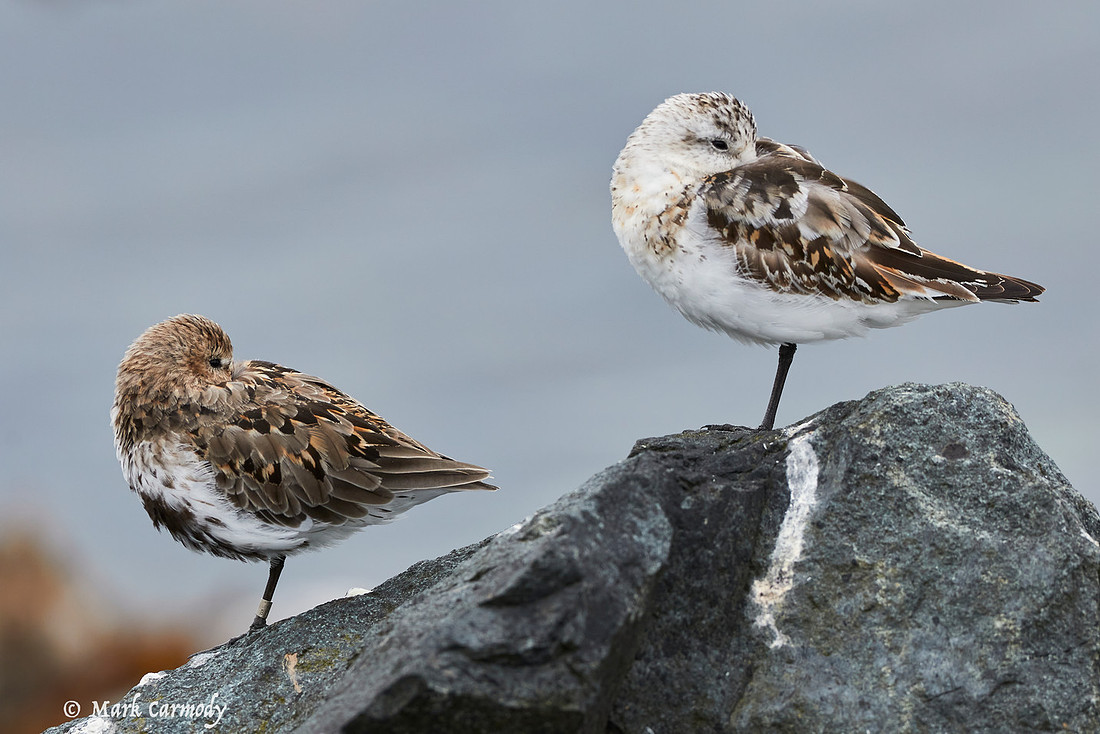
A winter-plumaged Dunlin (left) and a winter-plumaged Sanderling (right) roosting on the rock armour. The Dunlin has a metal ring on its left leg.
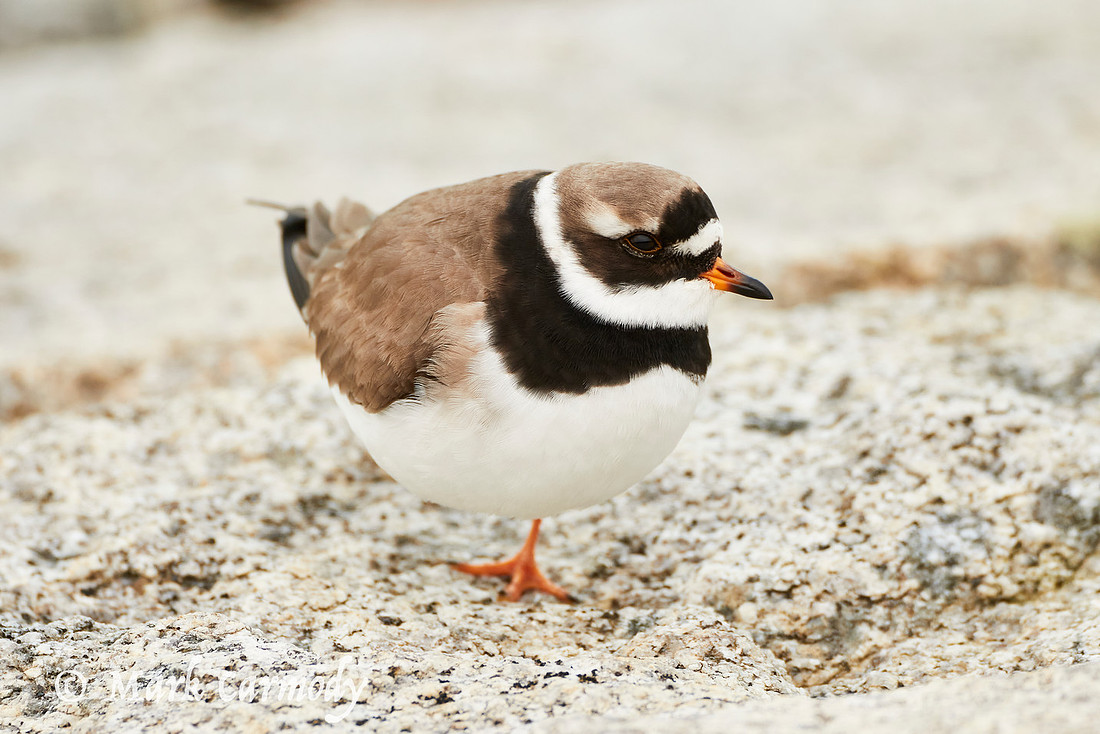
A winter-plumaged Ringed-Plover roosting on the rock armour
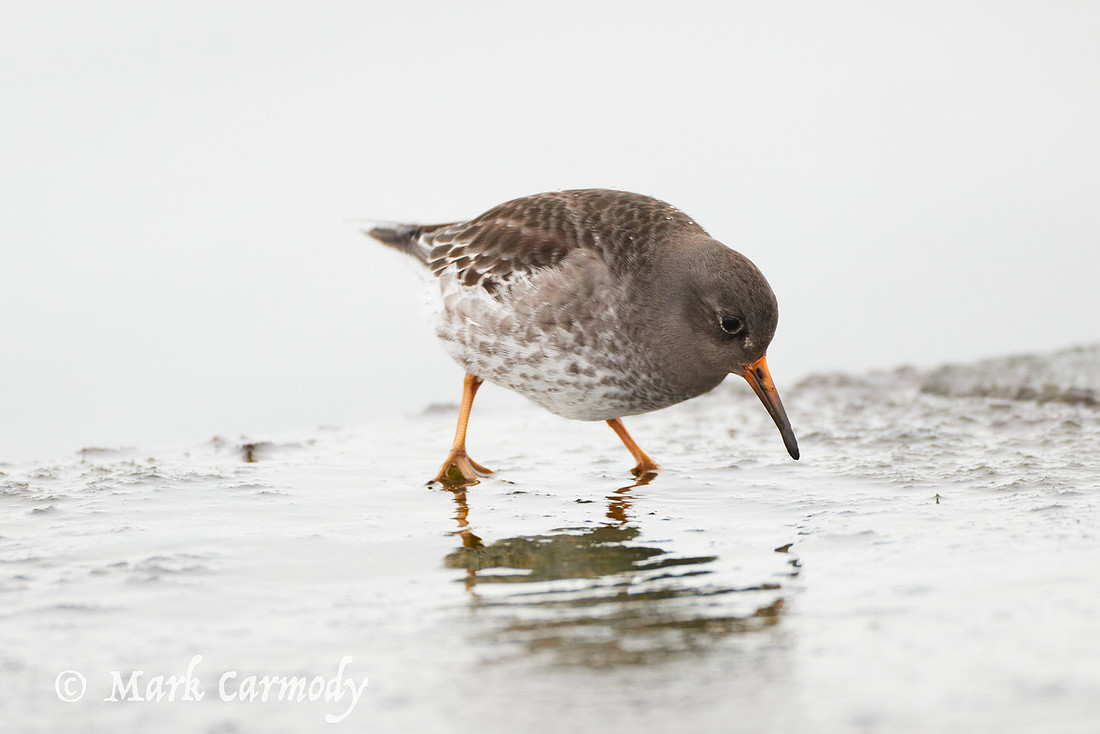
A winter-plumaged Purple Sandpiper feeding on the Great South Wall at high tide
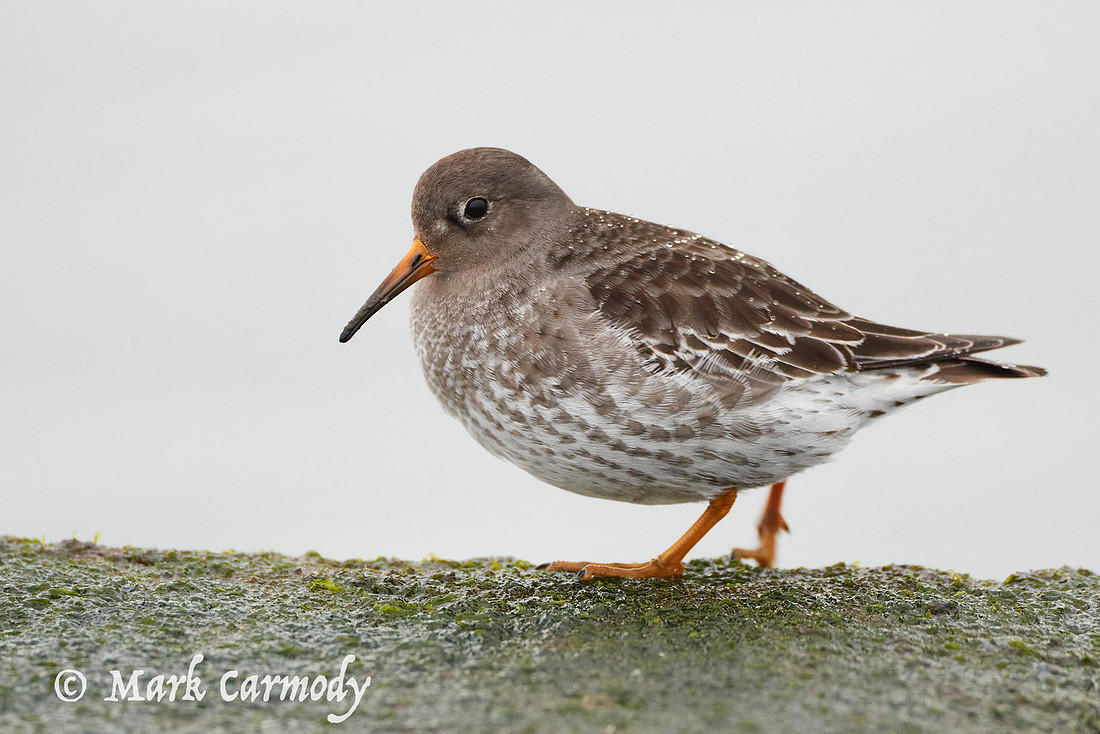
The stunning Purple Sandpiper on the Great South Wall
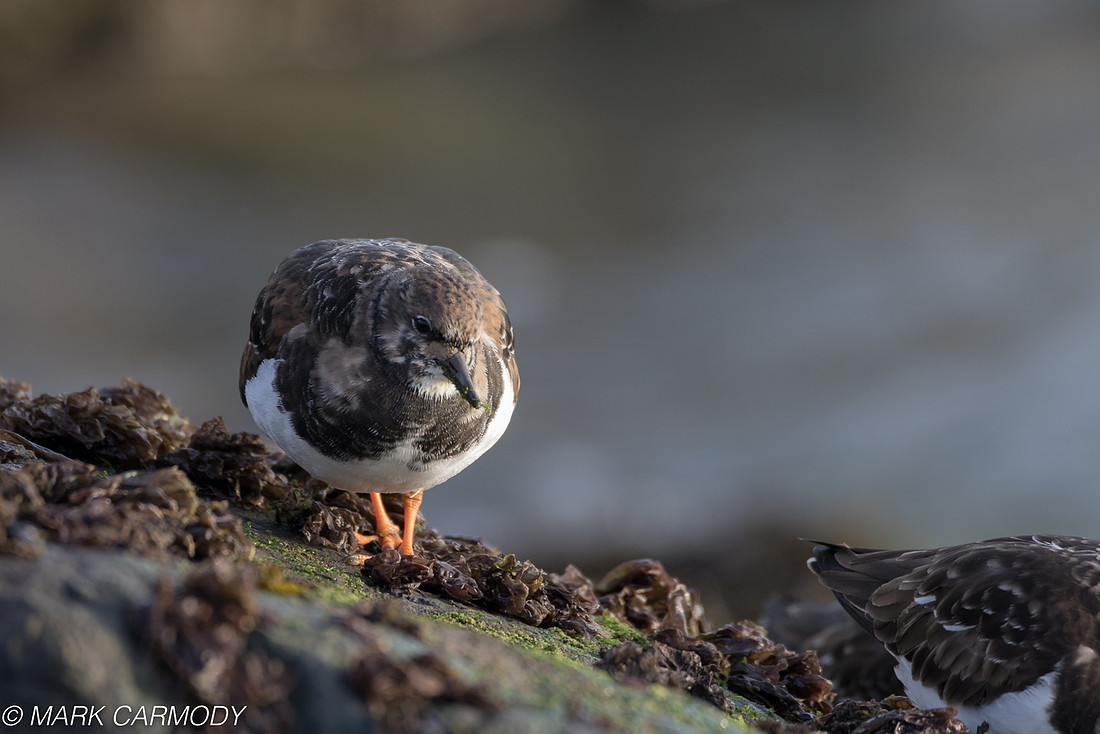
Turnstones feed all along the shoreline and sea protections.
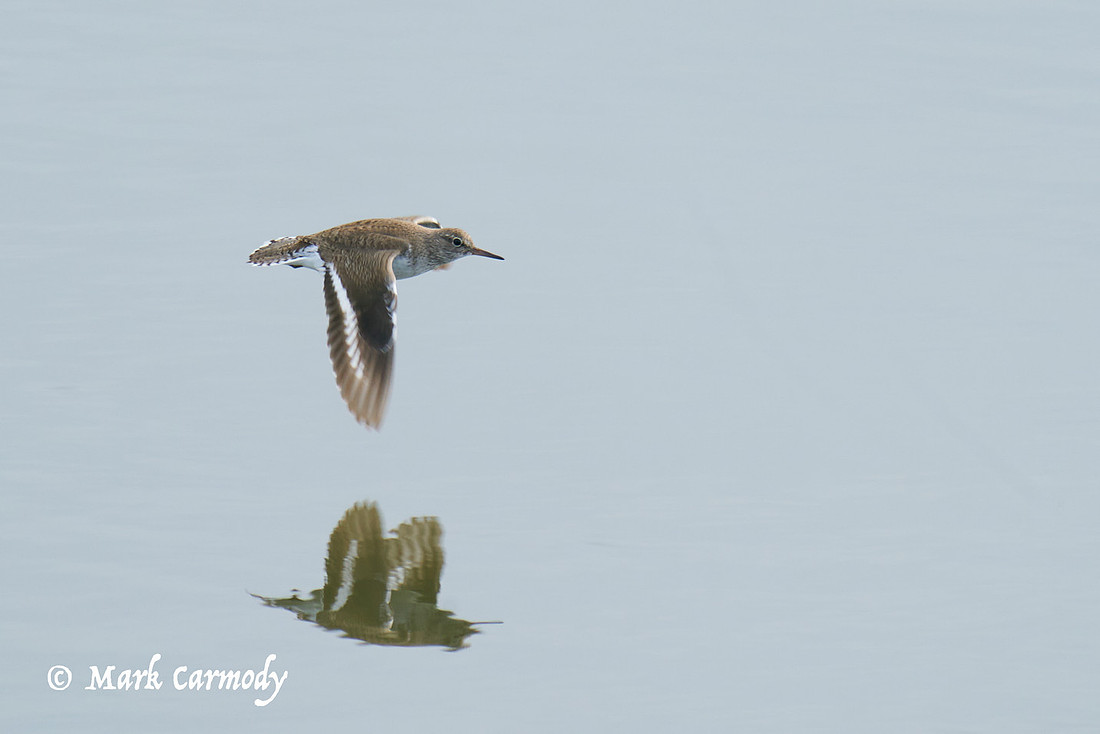
Common Sandpiper in flight across the Bay. While several can be seen on Spring passage heading north, one or two stay in the area for the Winter.
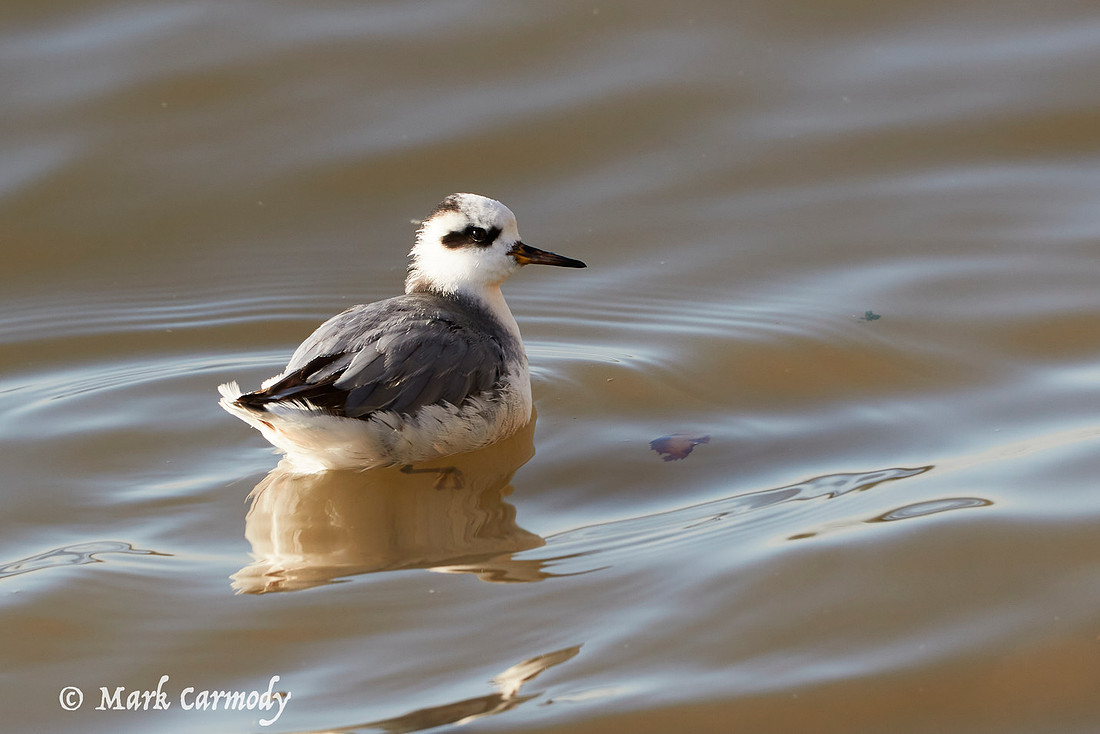 A winter-plumaged Grey (Red) Phalarope off the Great South Wall. There have been one or two records every autumn/winter over the last few years.
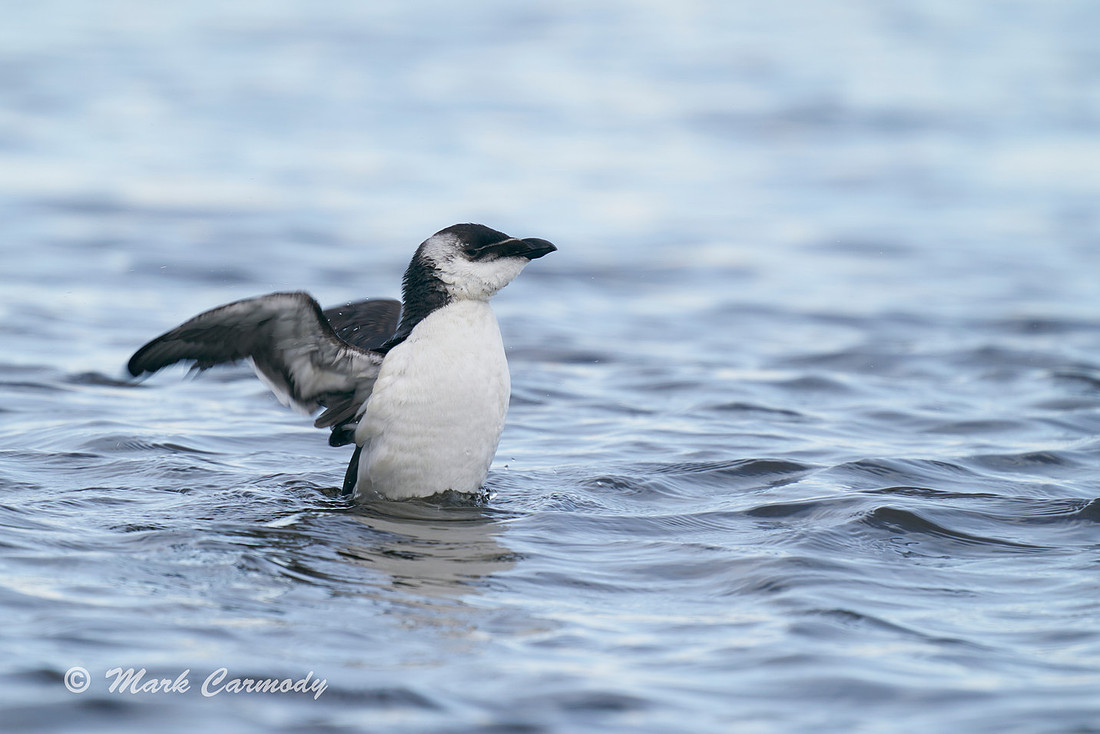 A winter-plumaged Razorbill stretches its wings.
Auks are a group of seabirds that frequent the bay and port areas all year round. There are four species that occur: Common Guillemot, Black Guillemot, Razorbill, and Puffin. All four can be seen during the breeding season (Puffins breed on Lambay and Ireland's Eye islands off the coast of Dublin), while only the first three are found here all year, albeit at lower numbers during the winter months. Black Guillemots are resident all year round.
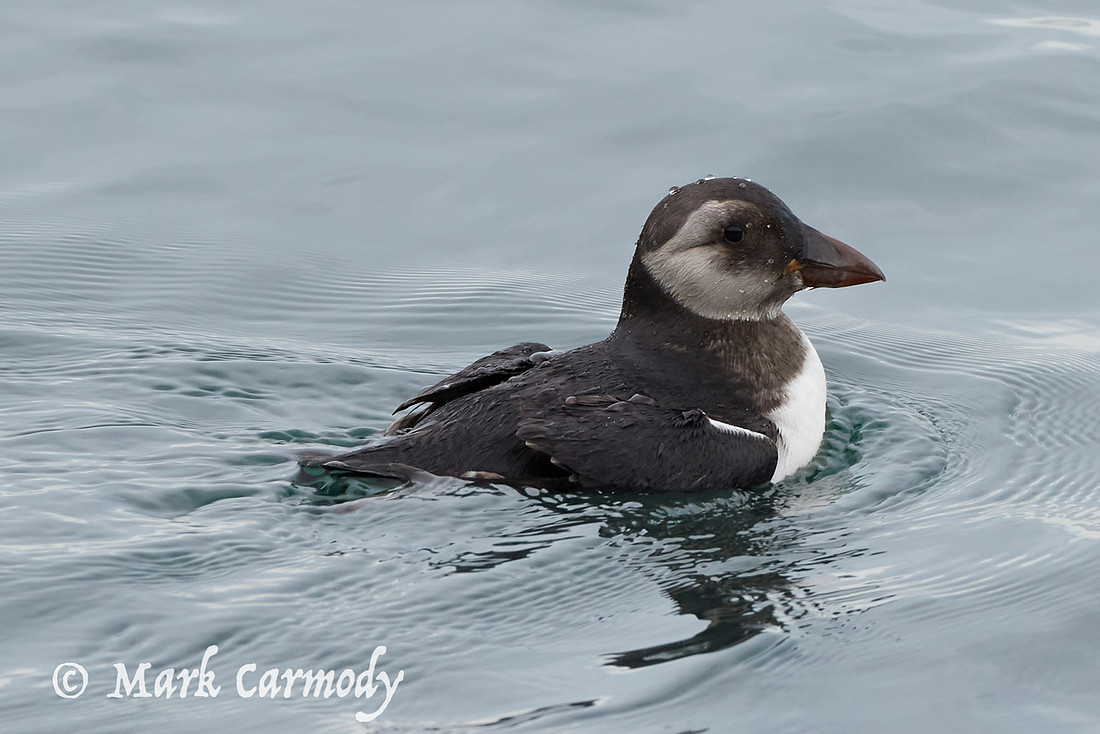
A juvenile Puffin just off the Great South Wall in late autumn
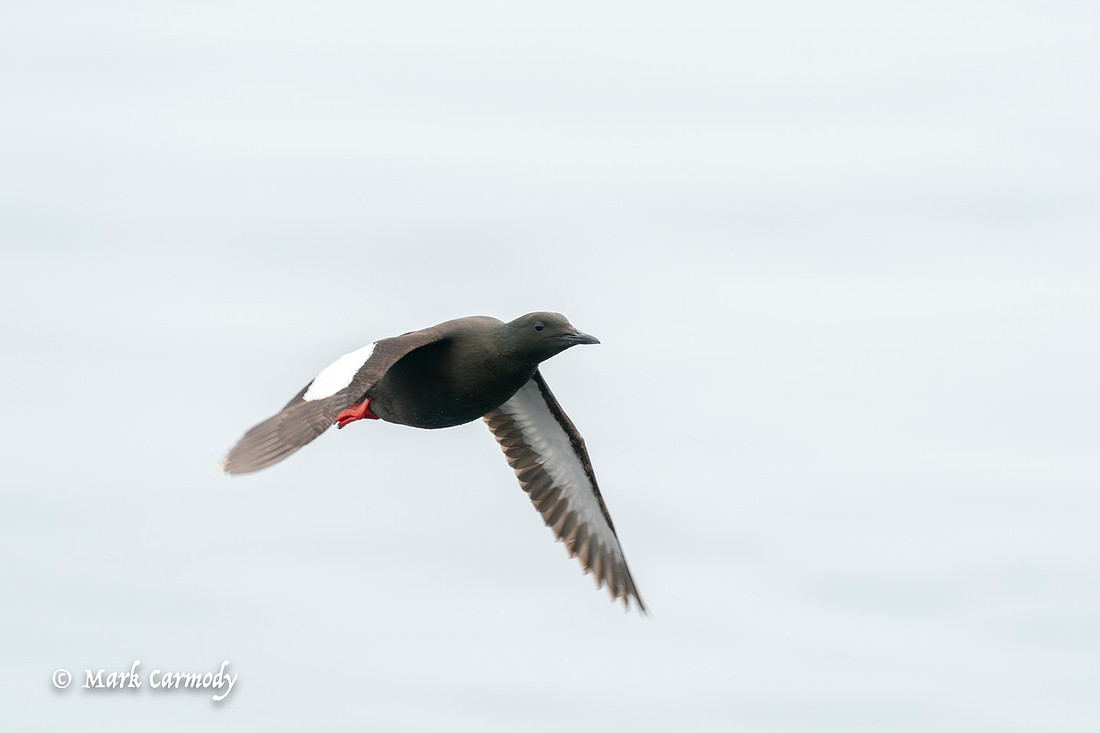
A summer-plumaged Black Guillemot in flight. They nest in cavities of the Great South Wall and are present all year.
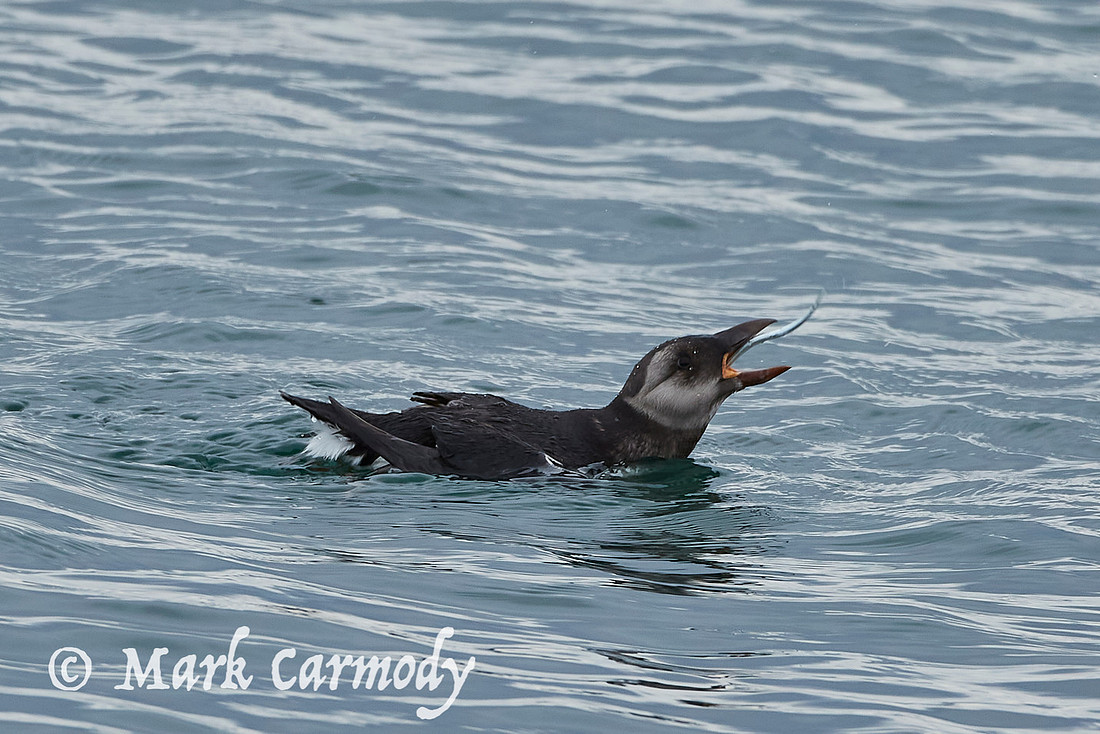
A young Puffin feeding on garfish.
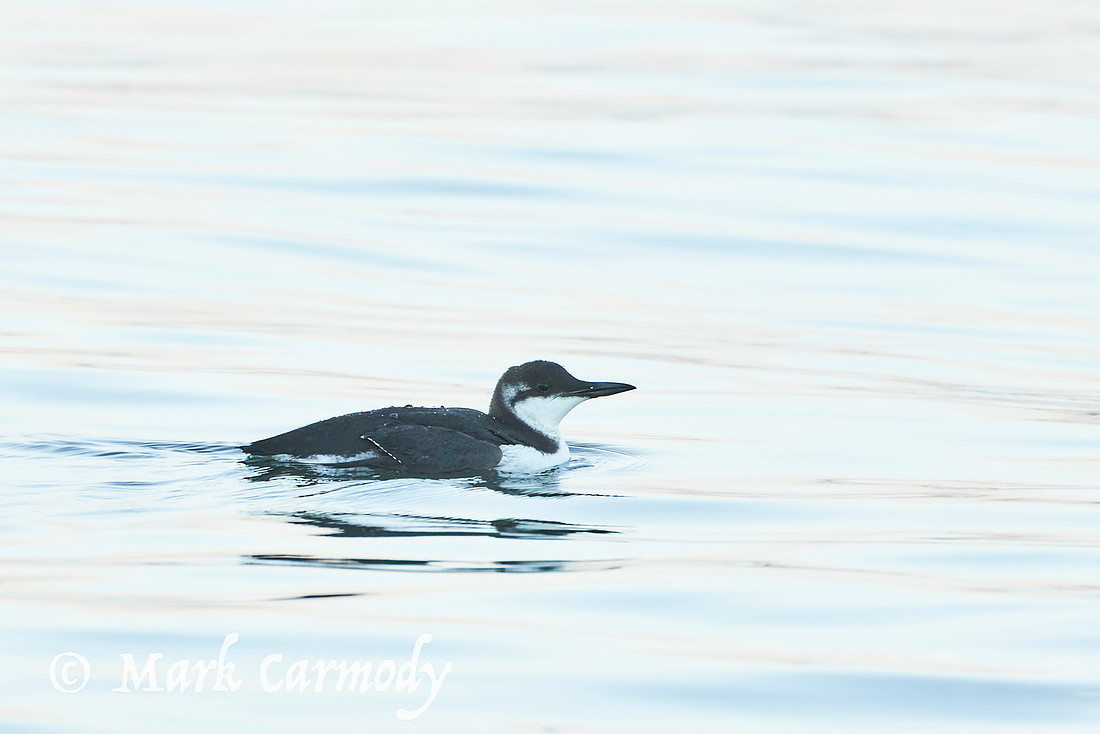
A Common Guillemot in winter plumage.
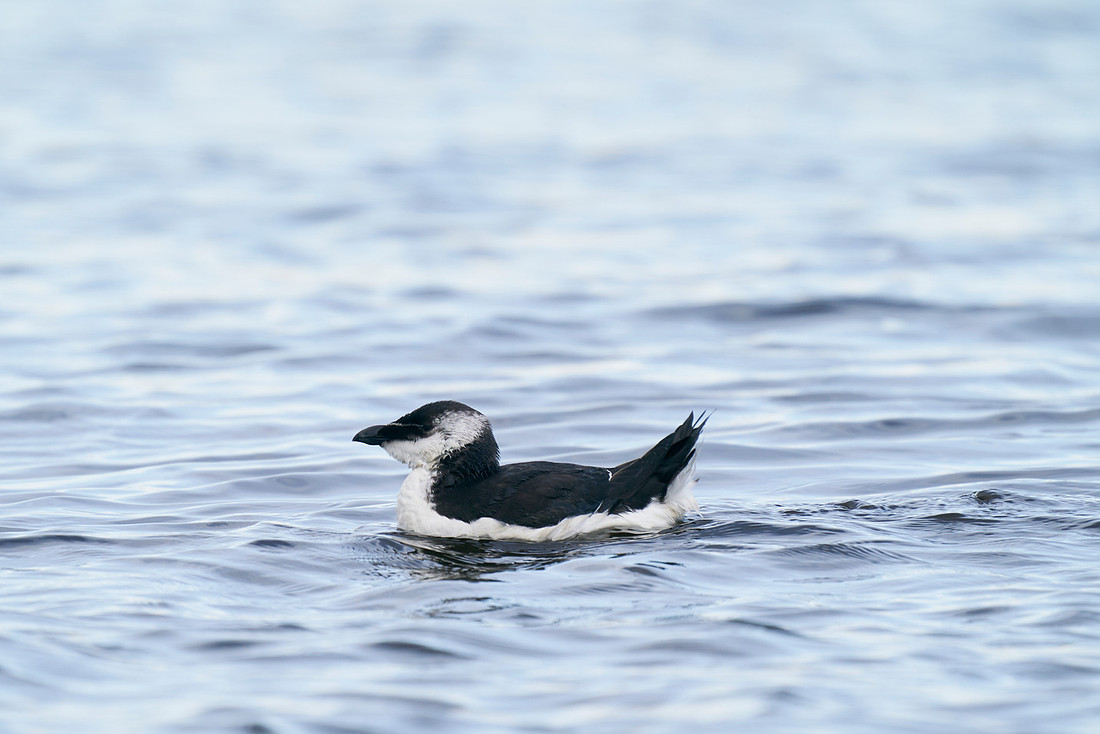
A Razorbill in winter plumage along the Great South Wall.
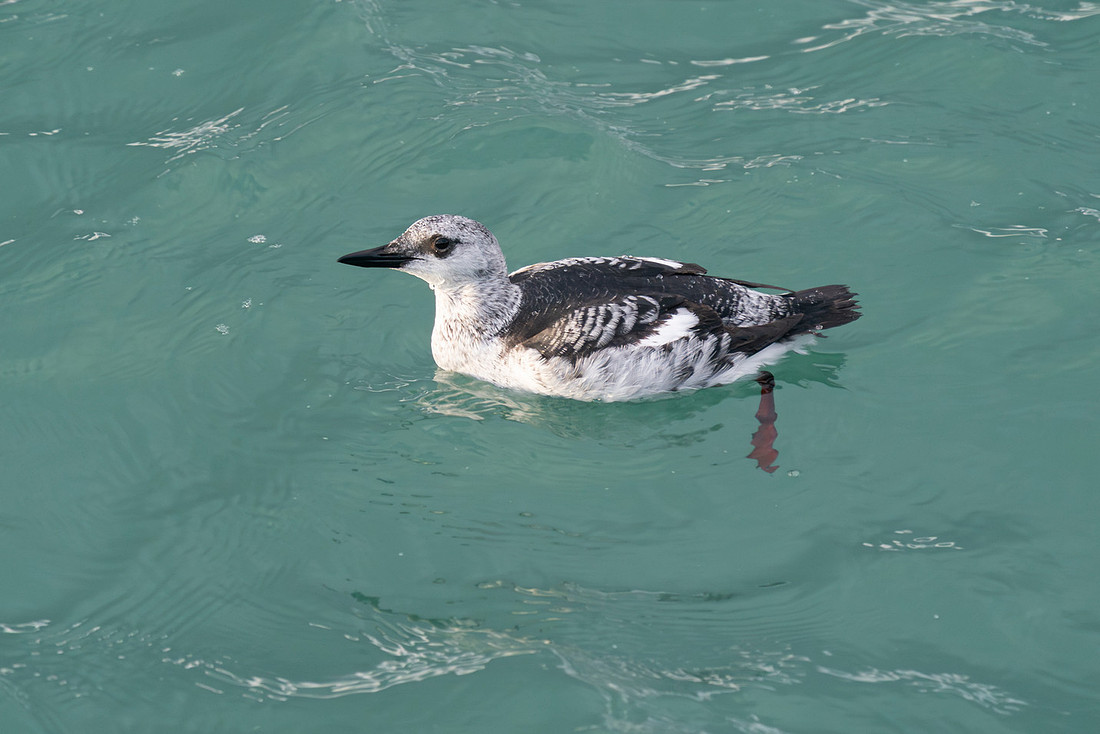 A winter-plumaged Black Guillemot. It looks like a different species when compared to its summer plumage colours!
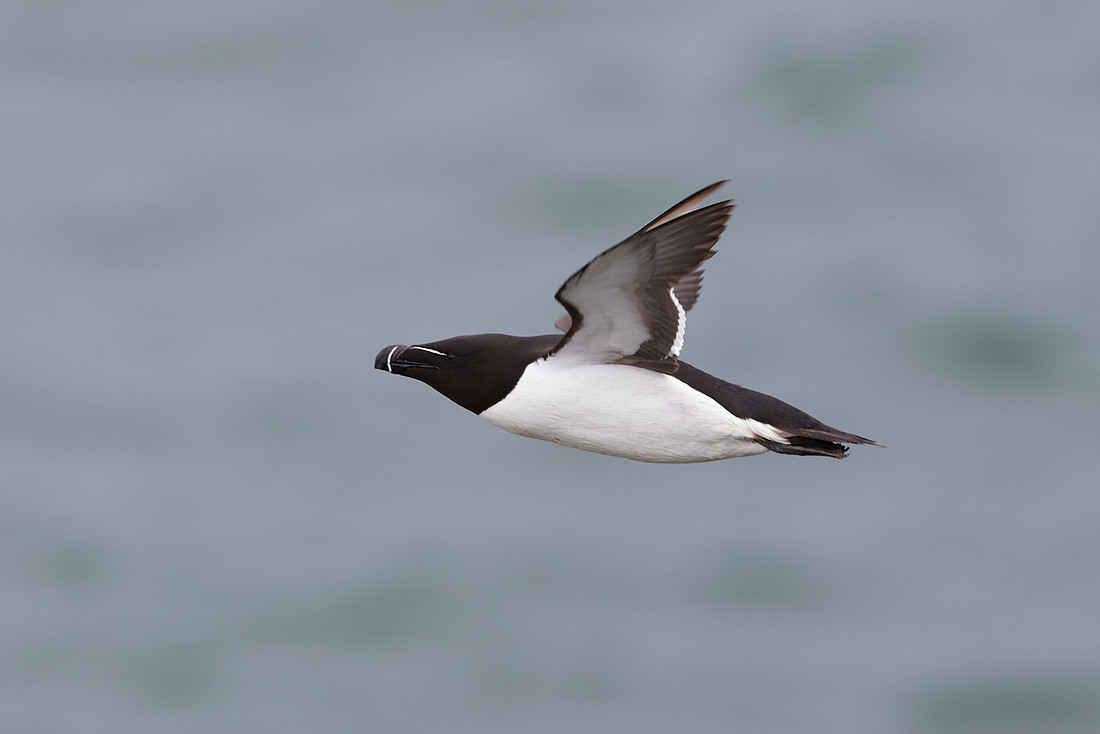
A summer plumaged Razorbill in flight.
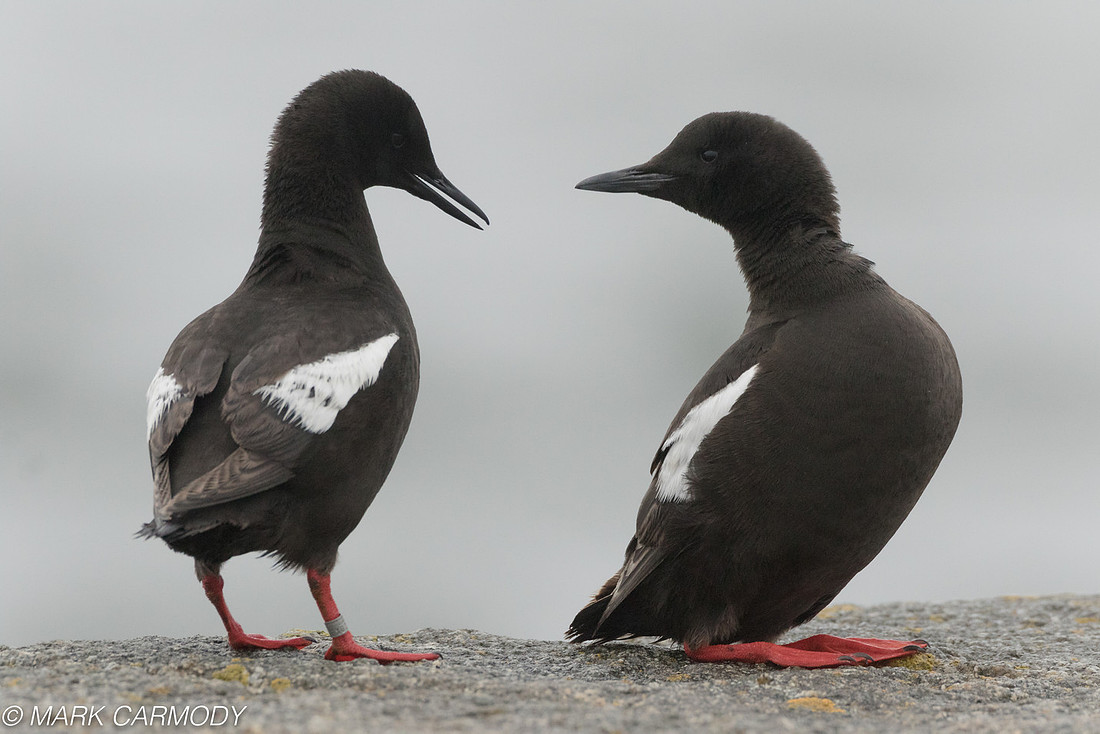
A pair of summer-plumaged Black Guillemots.
Duck are also frequent visitors to the port and the Great South Wall. The commonest species is Eurasian Teal, which are regularly found at the outflow from the water treatment plant. Mallard, Wigeon, and Shelduck also frequent the area. Rarer sea duck such Long-tailed Duck, Goldeneye, Tufted Duck, and Common Scoter are also recorded within the Port area.
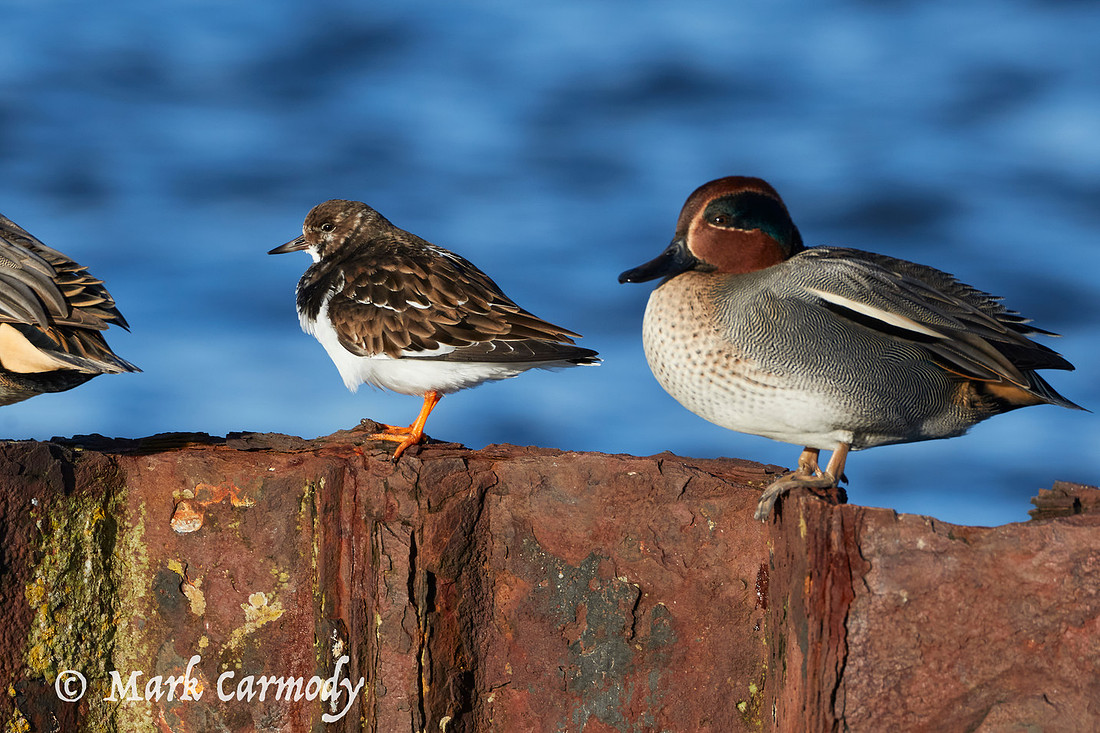
A male Eurasian Teal either side of a Turnstone, perched on one of the rusted pier walls.
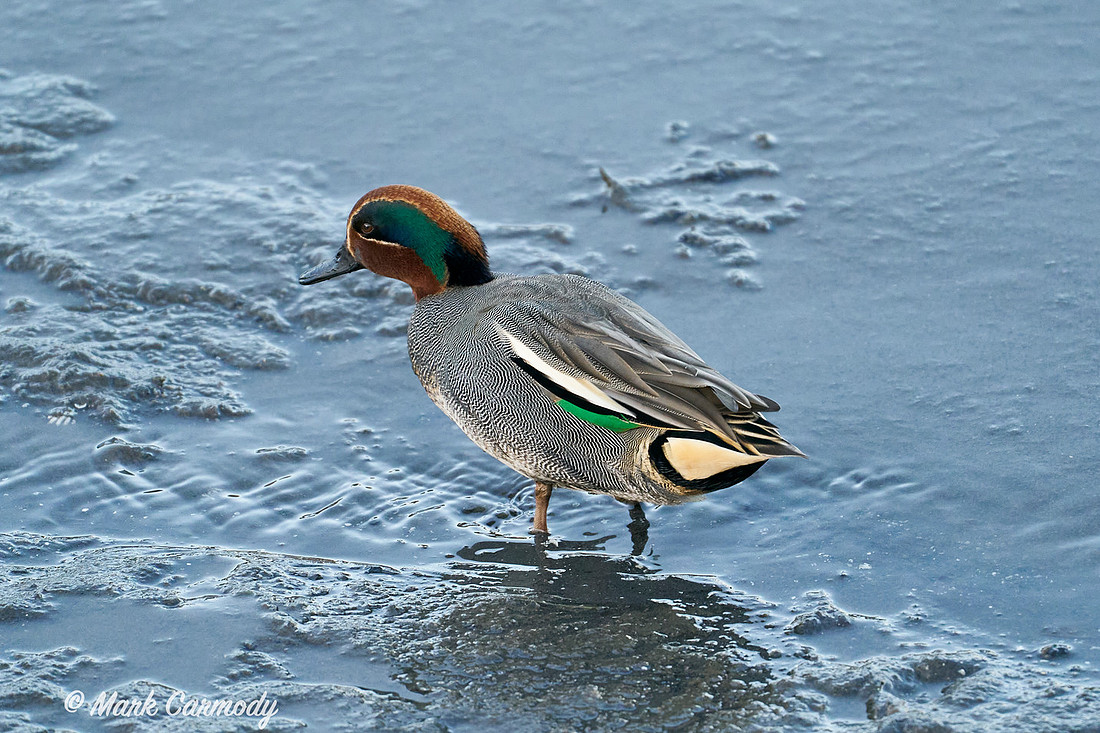
A male Eurasian Teal feeds on the exposed mud at low tide at the base of the Great South Wall.
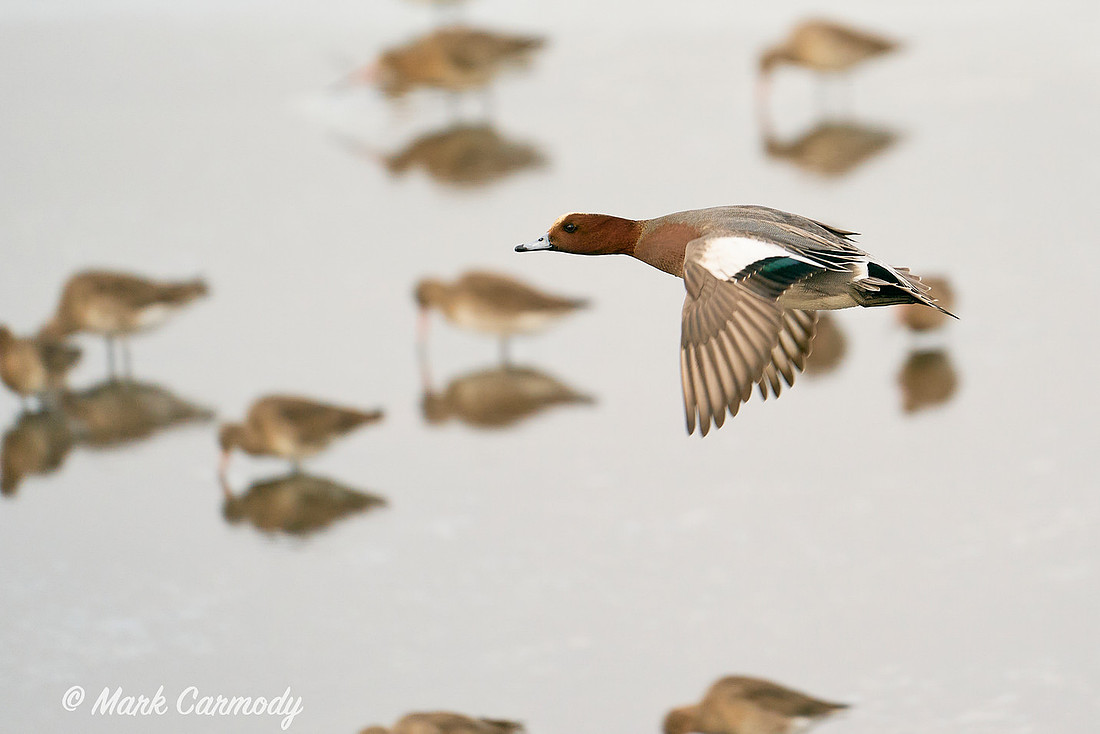 A male Eurasian Wigeon in flight along hte Great South Wall. Black-tailed Godwits feed on the exposed mud in the background.
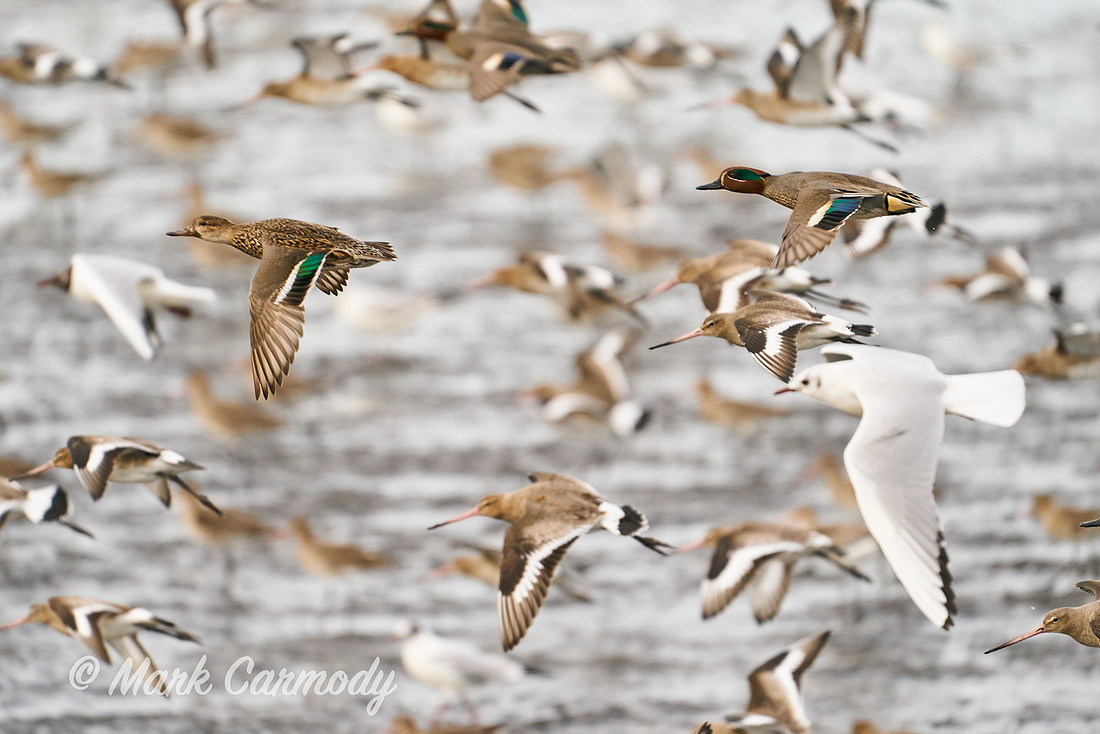
A pair of Eurasian Teal fly in amongst the Black-headed Gulls and Black-tailed Godwit at the base of the Great South Wall at low tide.
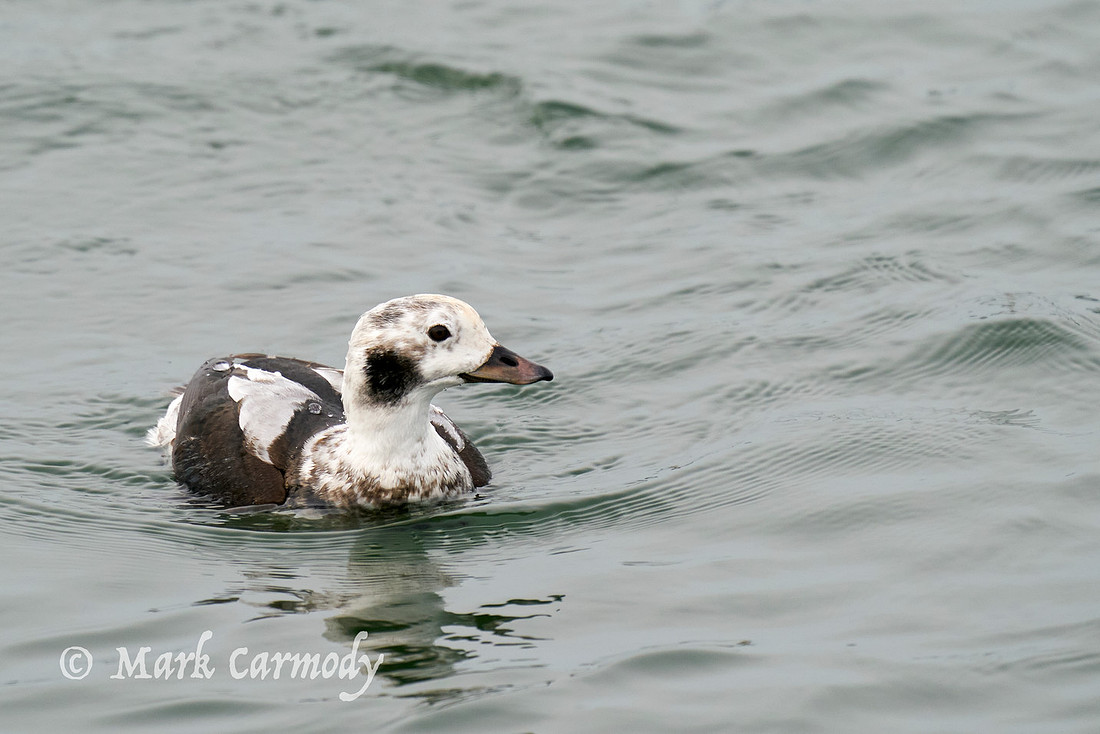
Long-tailed Duck is a rare winter visitor, with up to three birds in the Bay and Port area in recent winters.
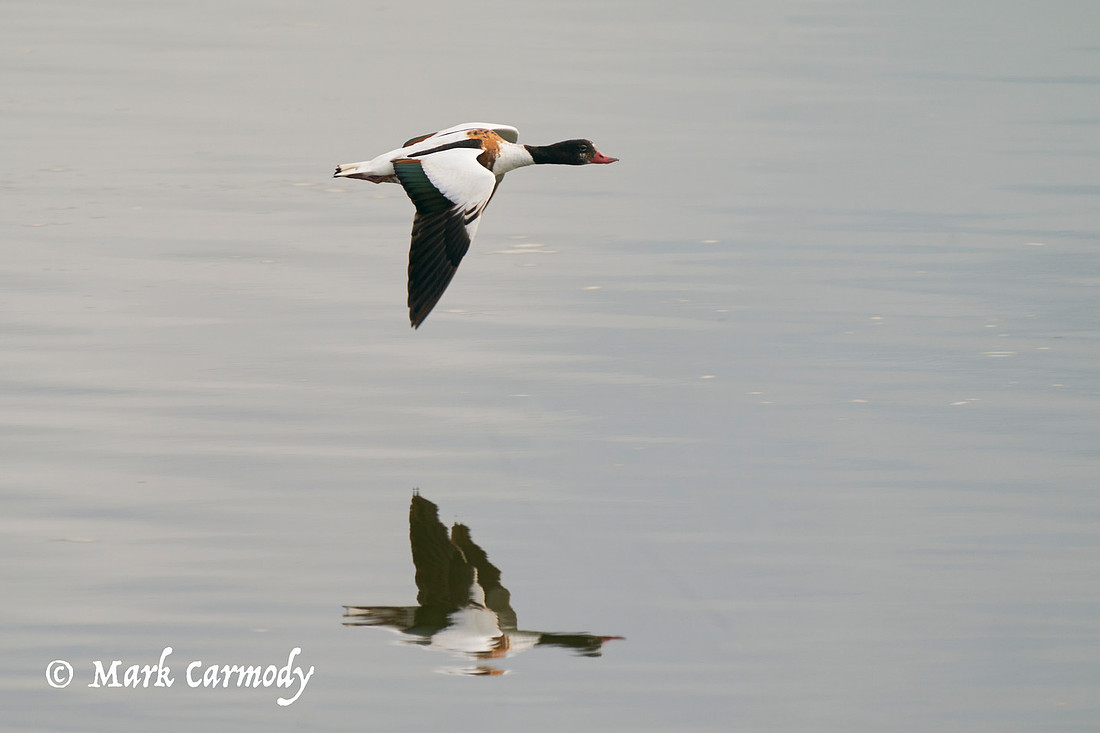
A Common Shelduck flies across the channel between the Great Walls.
Other seabirds use the channel along the Great South Wall as a feeding area during the winter months. A superb example of this is the Great Northern Diver. These birds originate from Scotland, Iceland, Canada, and North America. Atlantic Shags breed off the coast on nearby Ireland's Eye and Lambay Islands, while Red-breasted Mergansers winter in the Bay. The mergansers nest on sheltered lakes and large rivers throughout the west and north of the country. They use a variety of nesting habitats, usually located beside fast-flowing rivers, large and small lakes, also along the coast, on islands and sea-loughs (per Birdwatch Ireland). Red-throated Divers are common winter visitors around our coast, but are scarce enough inside the Walls of Dublin Port.
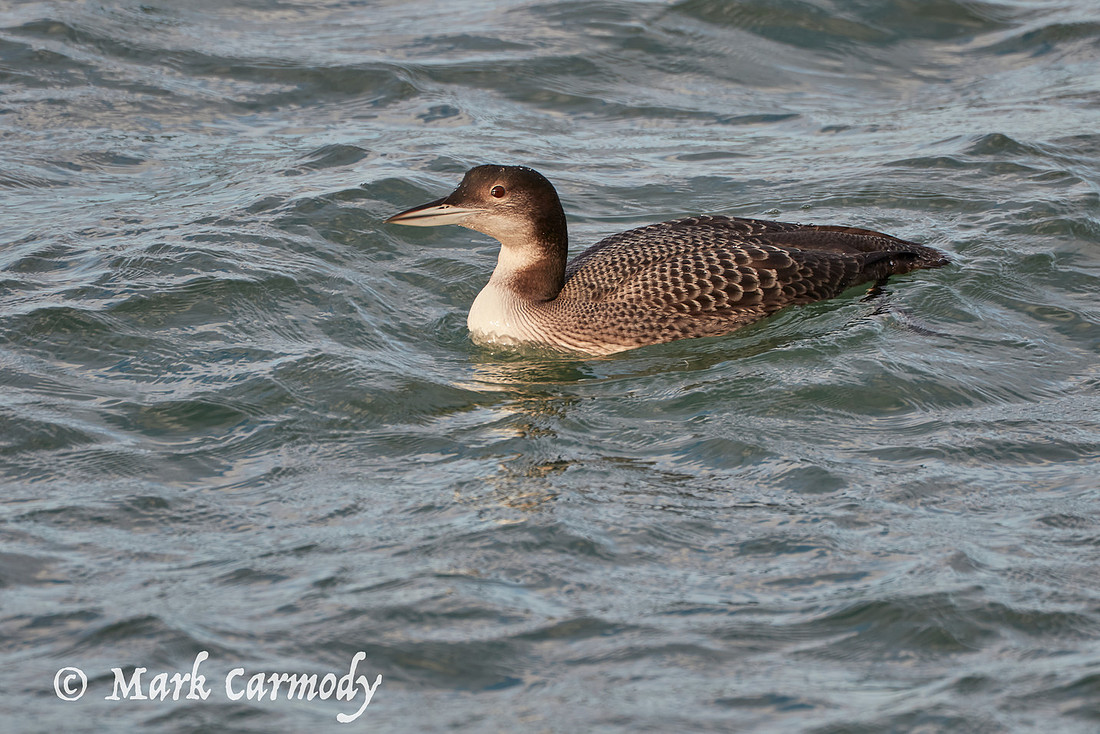 A Great Northern Diver along the Great South Wall.
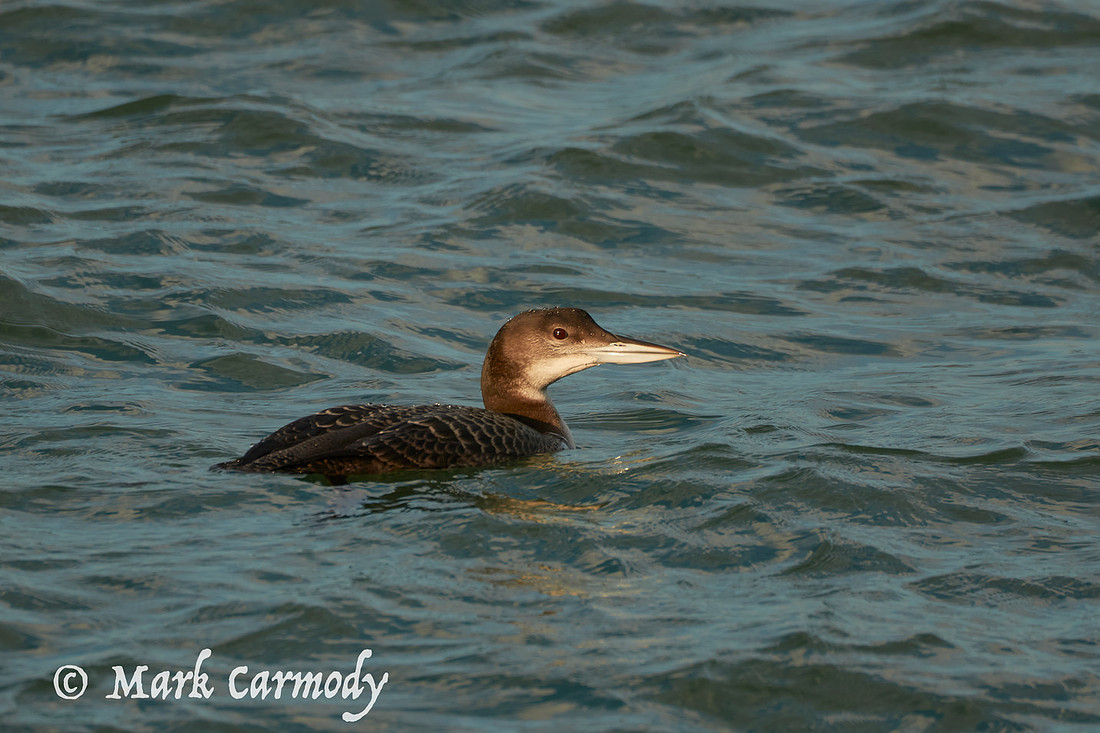
A Great Northern Diver along the Great South Wall.
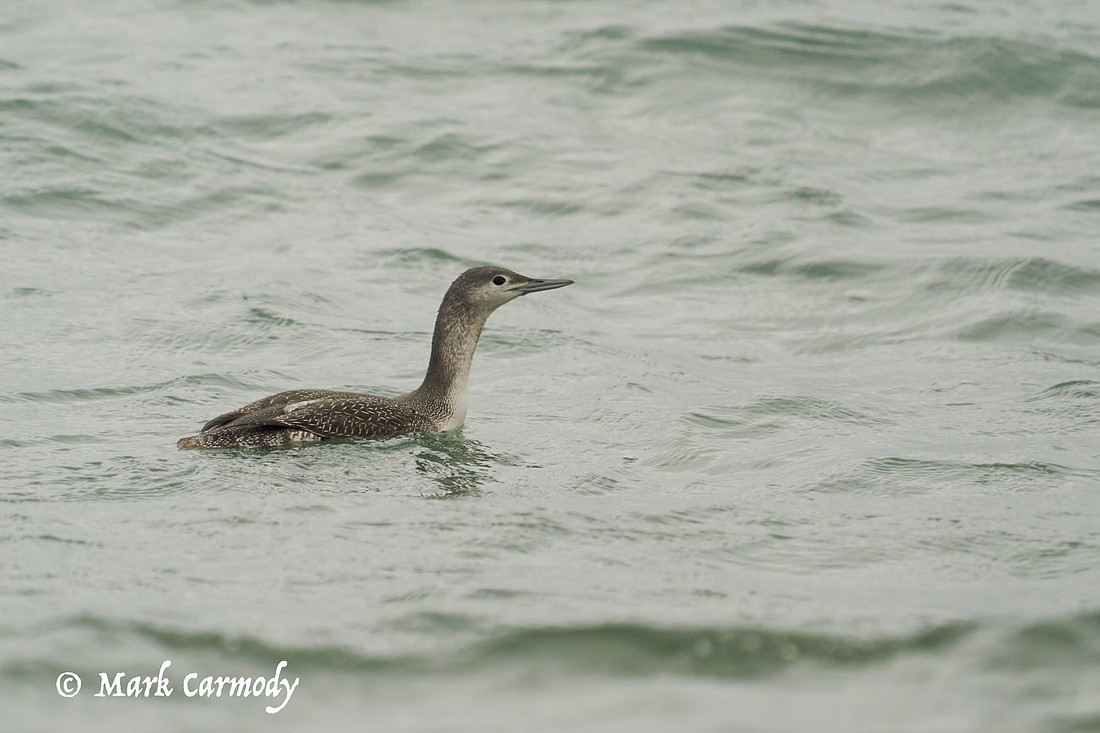 A Red-throated Diver (in winter plumage) is a scarce visitor inside the Great South Wall.
Red-breasted Mergansers, Great Cormorants, and Atlantic Shags also frequent the bay in good numbers during the winter months. The male Mergs (such as the bird below) are resplendent in their summer garb. Both Cormorants and Shags breed on nearby Ireland's Eye and Lambay Island.
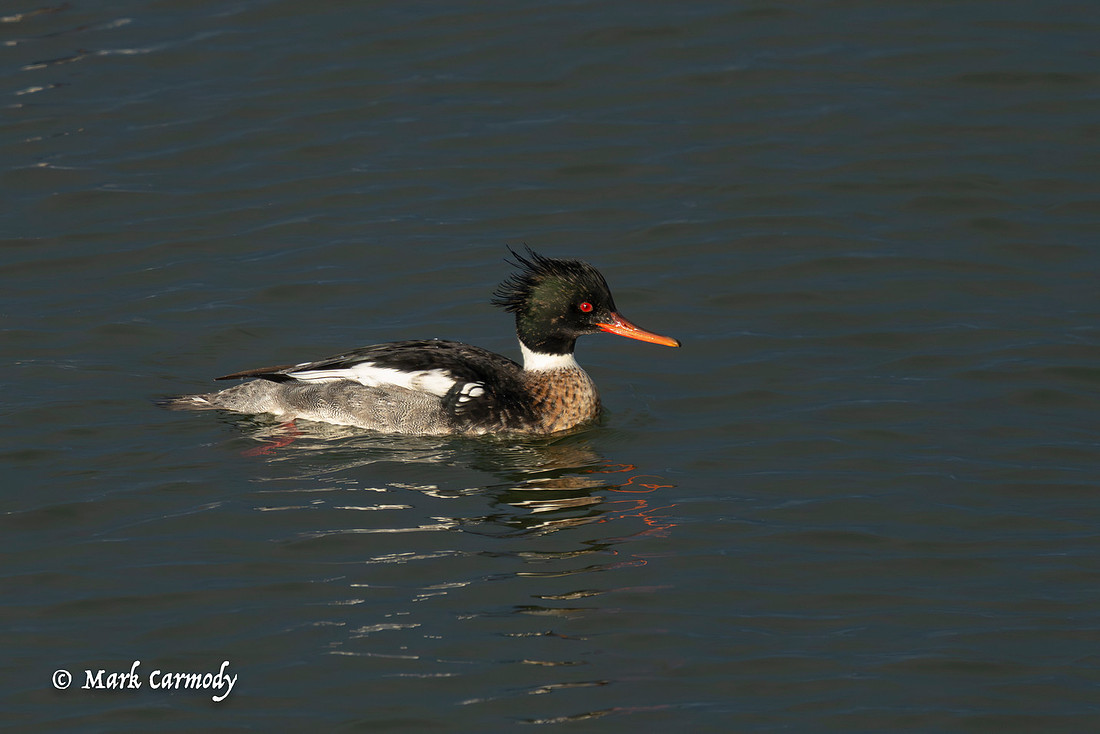
A male Red-breasted Merganser cruising along the Great South Wall. They do not always come this close.
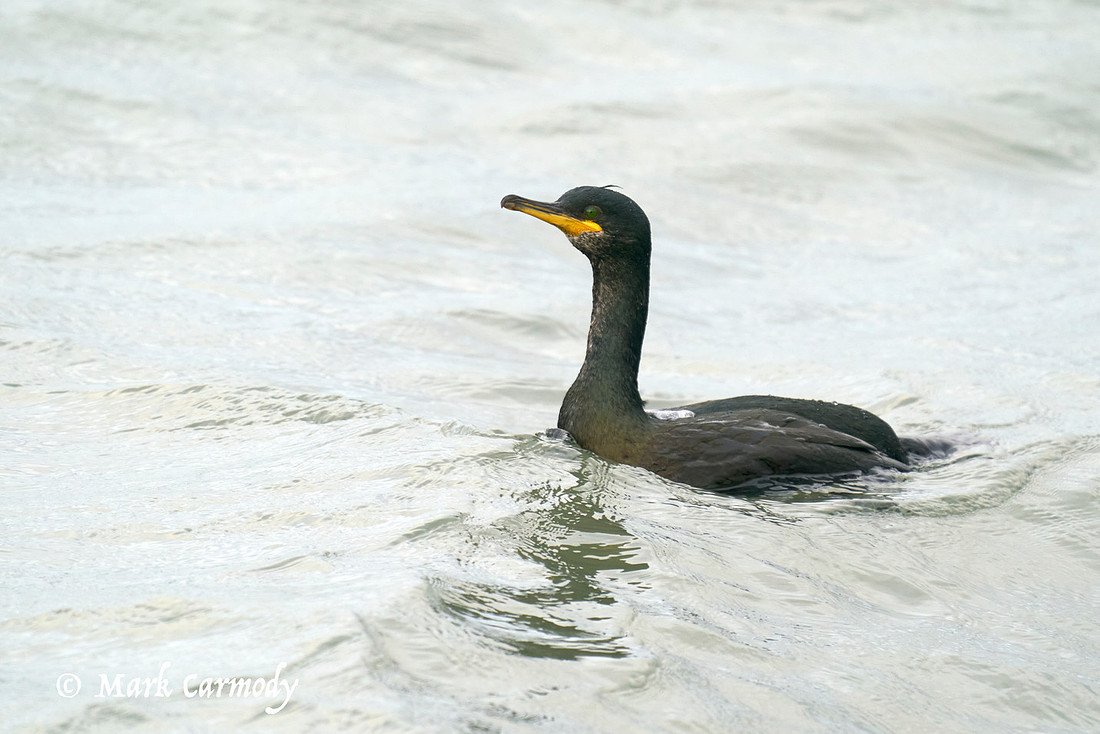
An Atlantic Shag is also found along the Great South Wall.
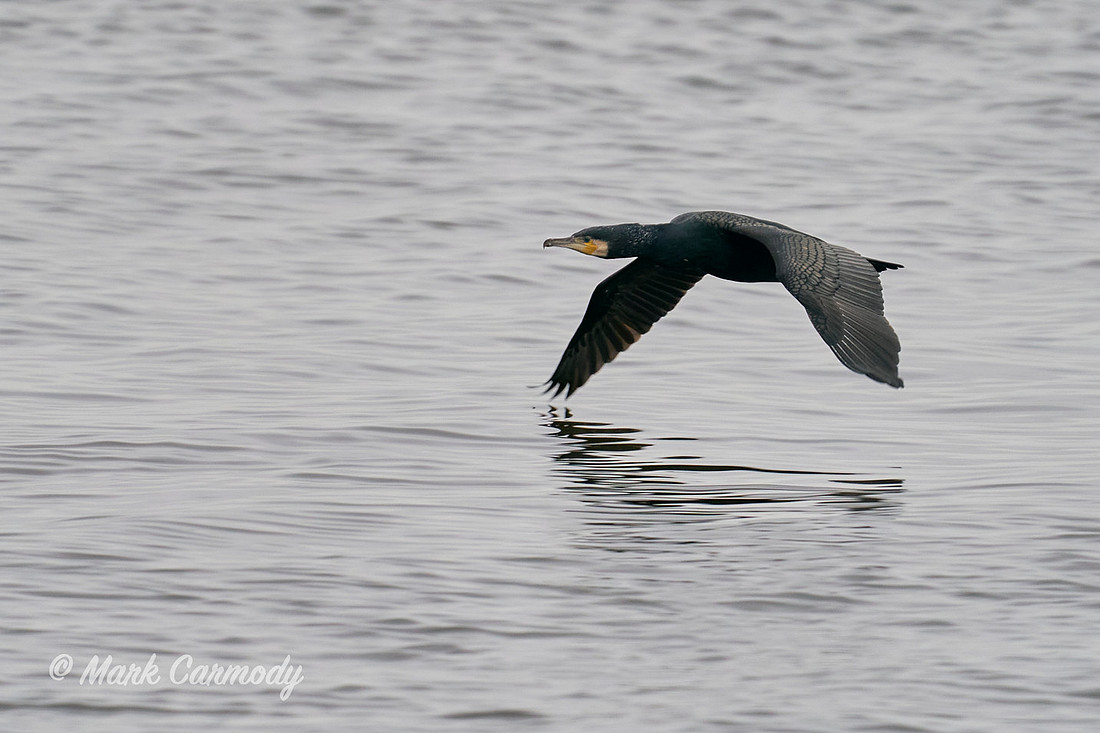 A Great Cormorant in flight heading towards the outflow.
Passerines can also be found around the beach and waste ground areas of Poolbeg/Great South Wall areas. Starlings are quite common, with all the various plumages observable throughout the year. Stonechats, Meadow Pipits, Goldfinches, Linnets, and Pied Wagtail are regularly encountered in the area.
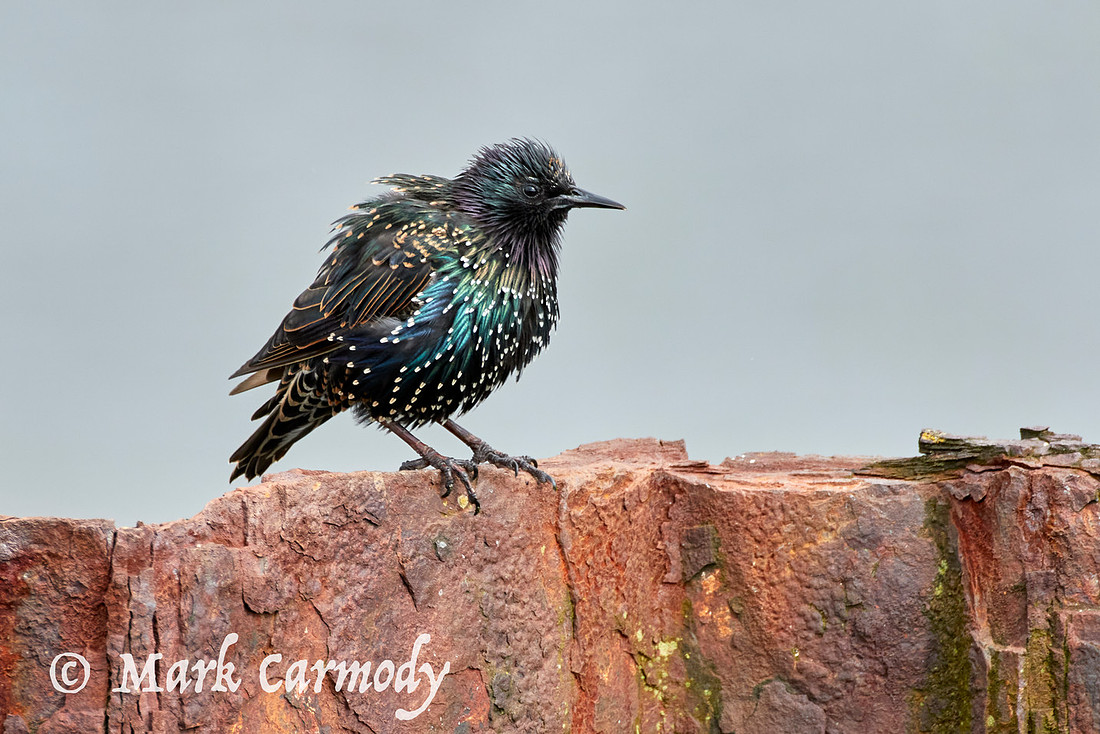
A Starling in breeding plumage looking quite distressed!
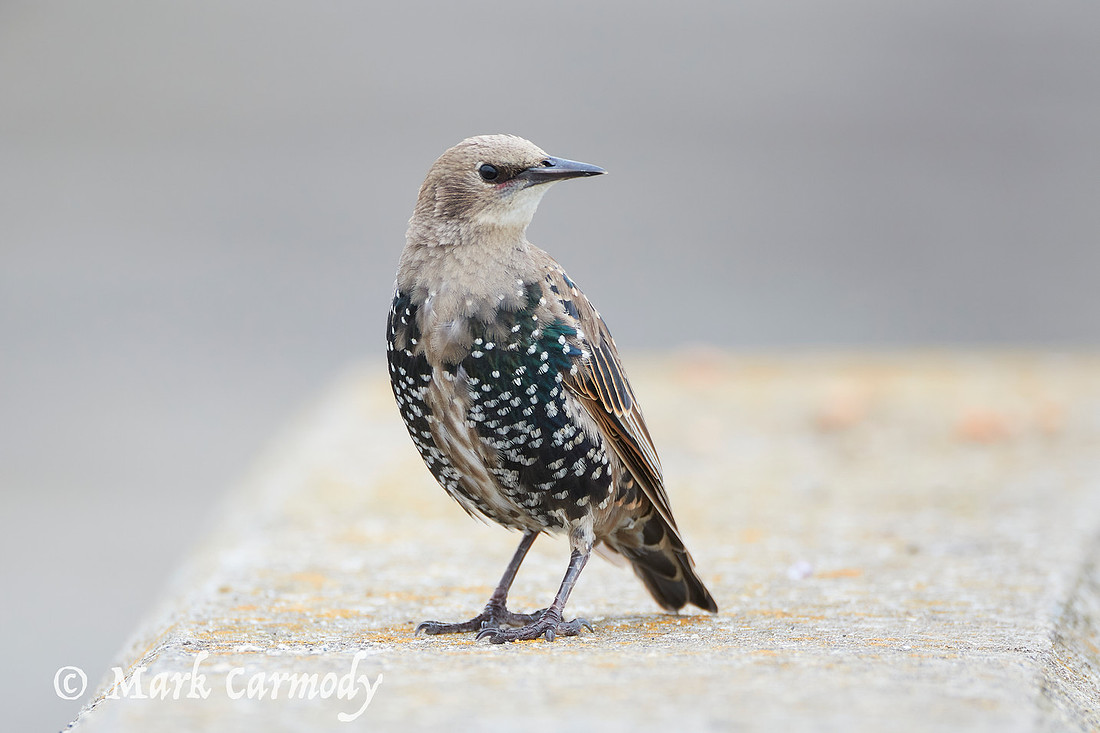
A juvenile Starling transitioning to their 1st winter plumage. Quite a striking plumage phase.
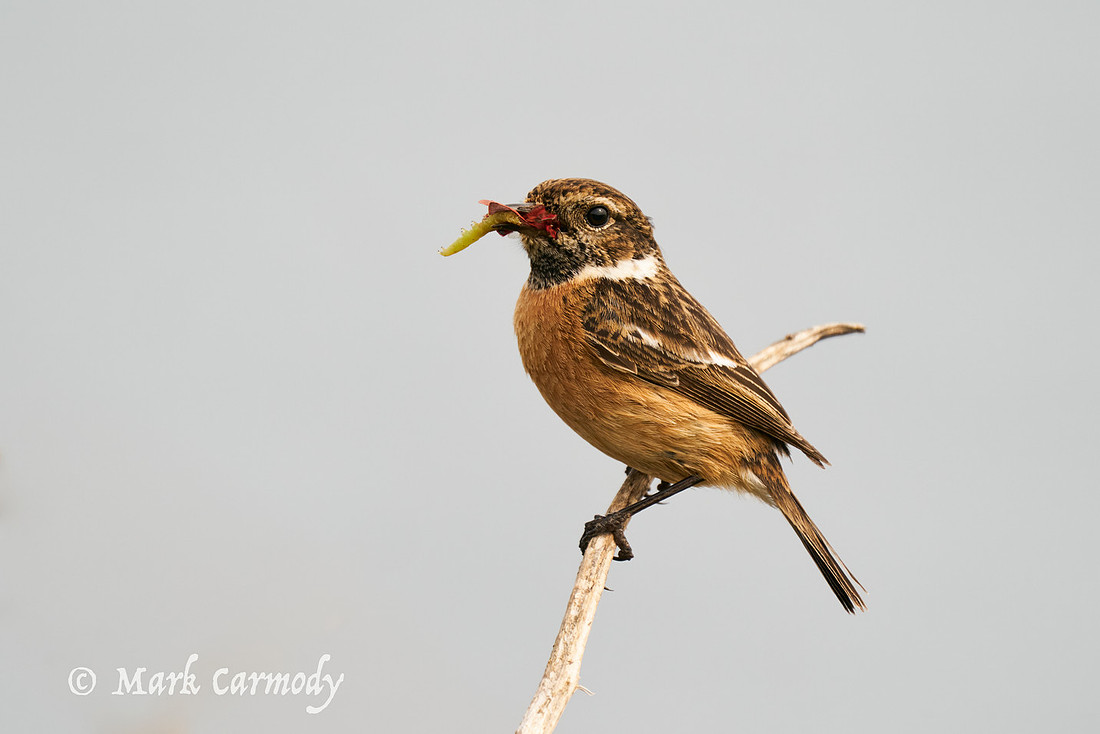
A Stonechat carrying food.
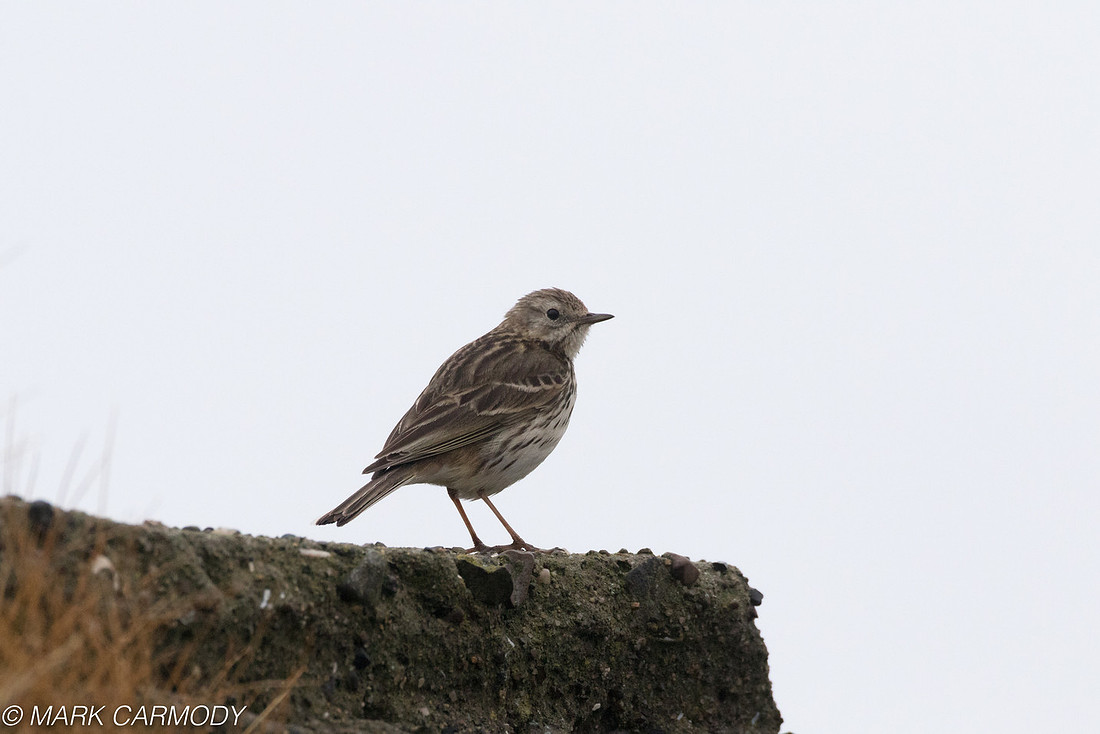
A cold Meadow Pipit in the morning fog.
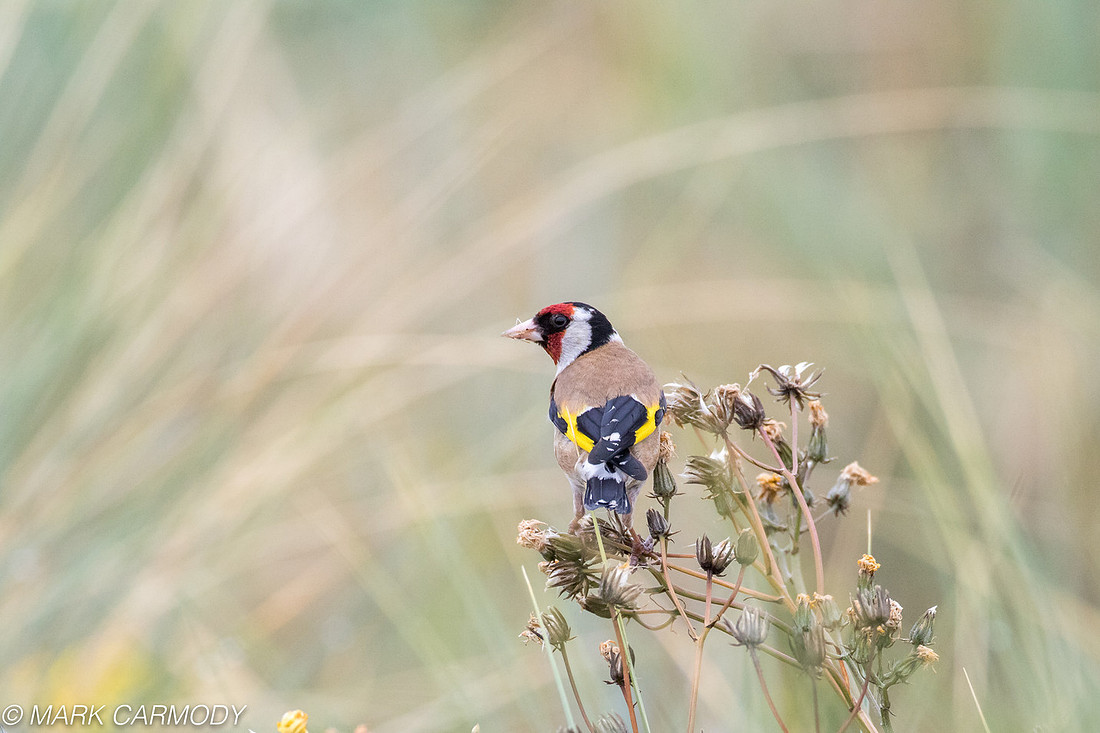
Goldfinches can be found in small numbers along the coast here...
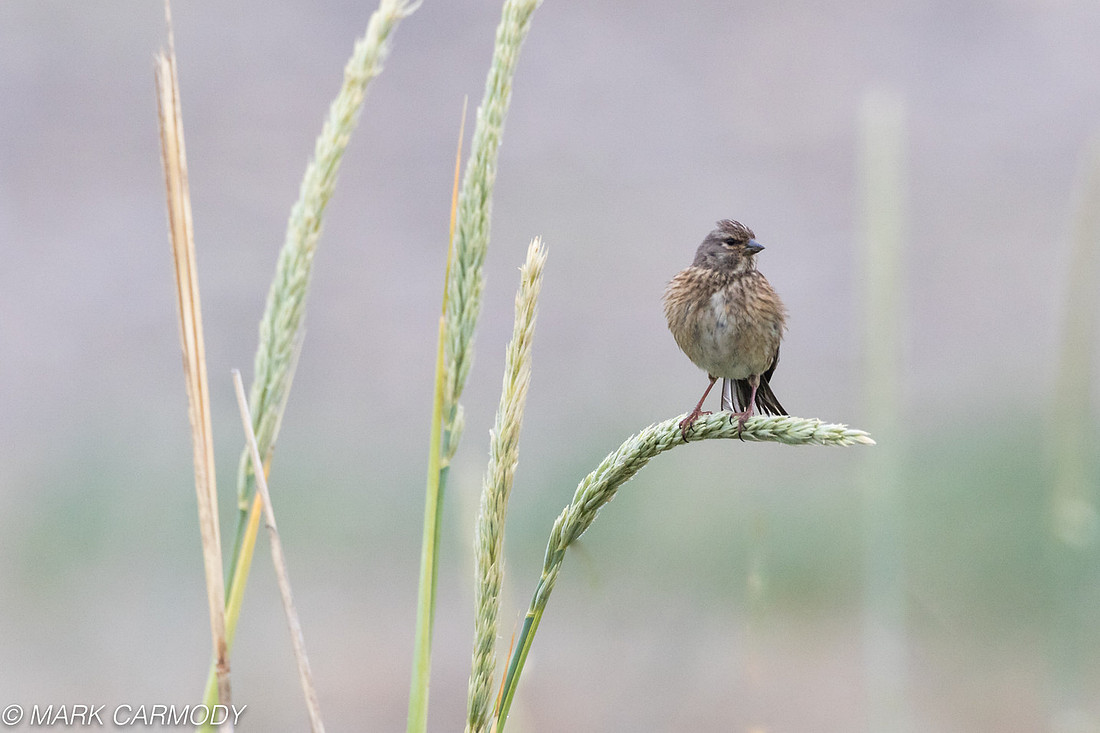
...as can Linnets.
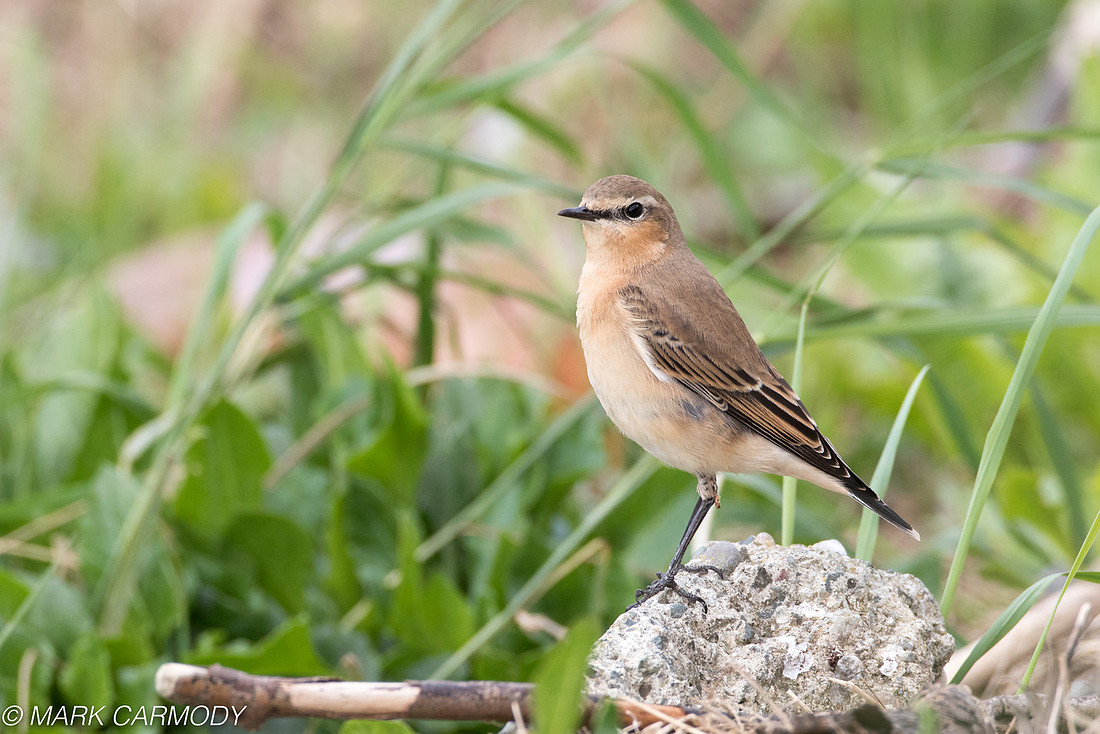
Northern Wheatears pass through during Spring and Autumn passage. It is not clear whether they breed at this location. There is a shortage of suitable breeding habitat.
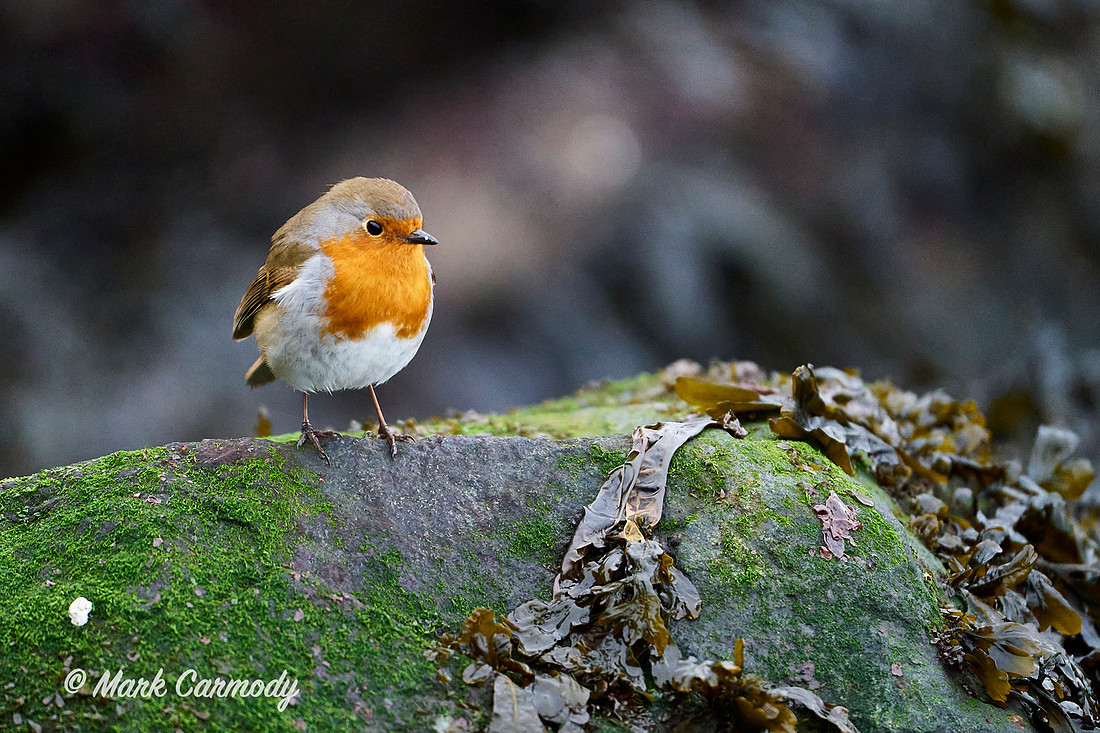
Robins are usually present and can be quite tame.
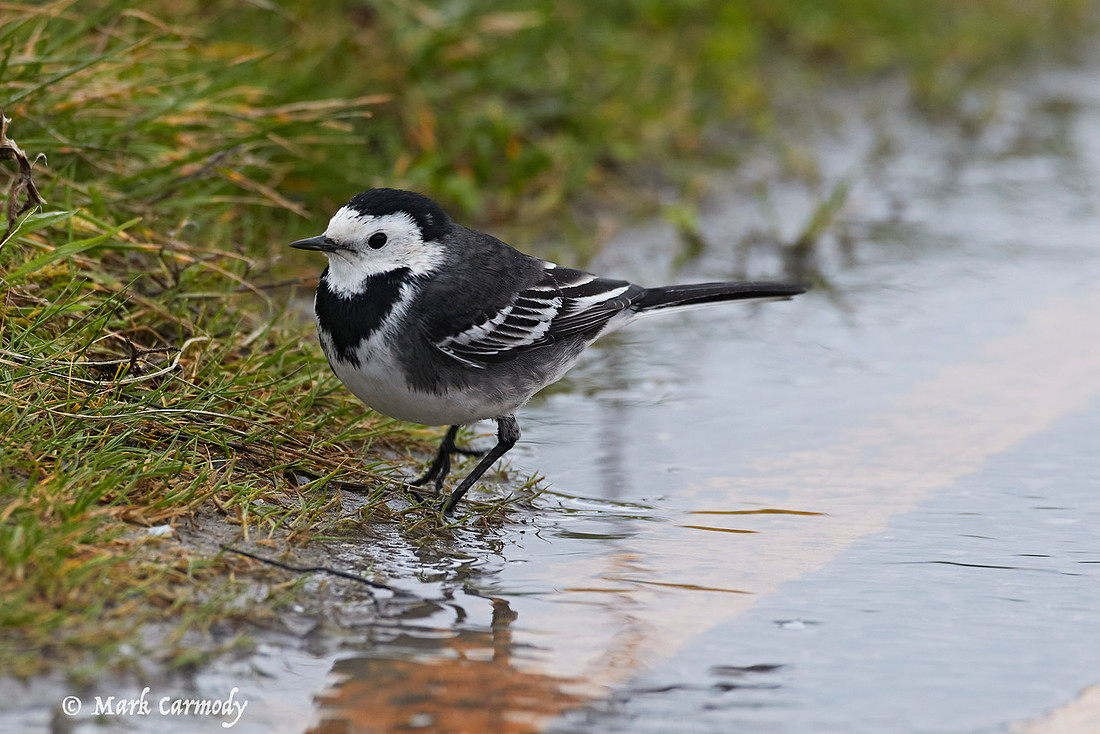
Pied Wagtails are also present and seem to breed successfully every year.
Overall, there is a decent spread of species from this location in Dublin Bay. There is always the chance of finding rare and scarce birds during migration and winter time. In addition, it is a great place to get some good photographs of our commoner coastal birds, particularly our diving seabirds and gulls.
Summer Holidays in France...not quite a birding holiday
We were fortunate to have a 10-day family holiday in the south of France in August 2025. It was quite hot for the first part, but quite manageable for the latter part. It most certainly was not a birding holiday. However, i did manage to get out for walks with my camera on a couple of mornings and a couple of evenings to make the most of the first and last shafts of light. Some of the species I did get to see were those I would not see in Ireland, such as Crested Tit (see image below), but some I can see at home (see the Woodpigeon and Cattle Egrets below).
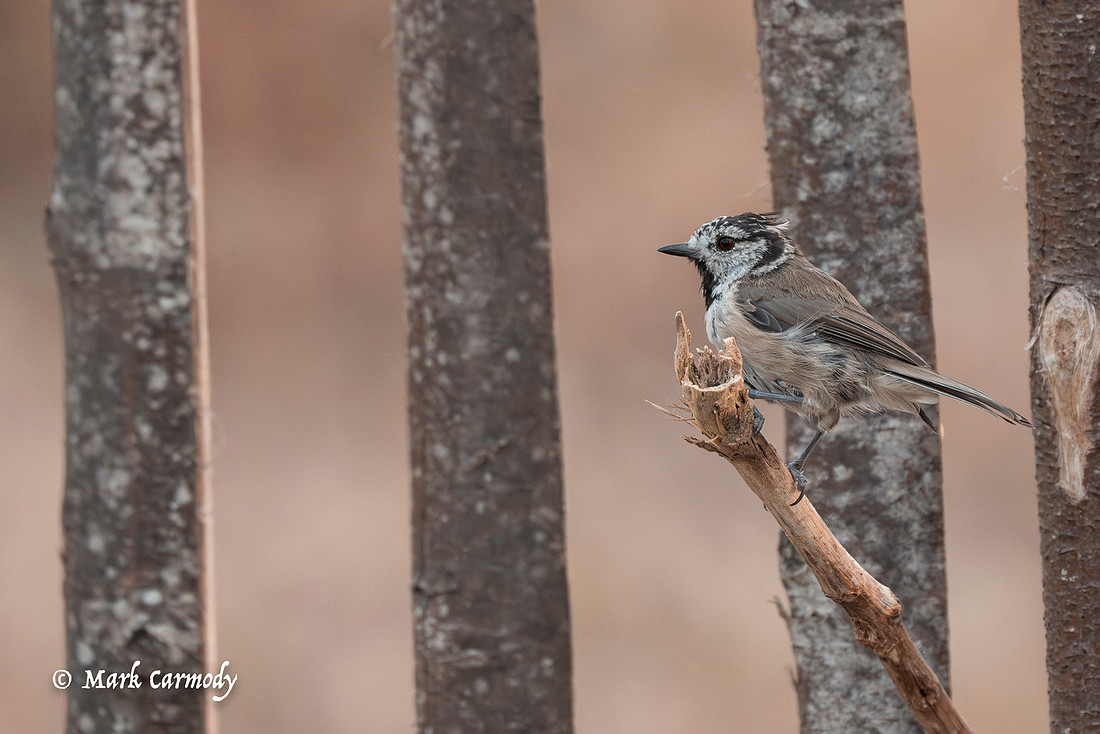 Crested Tit (Lophophanes cristatus)
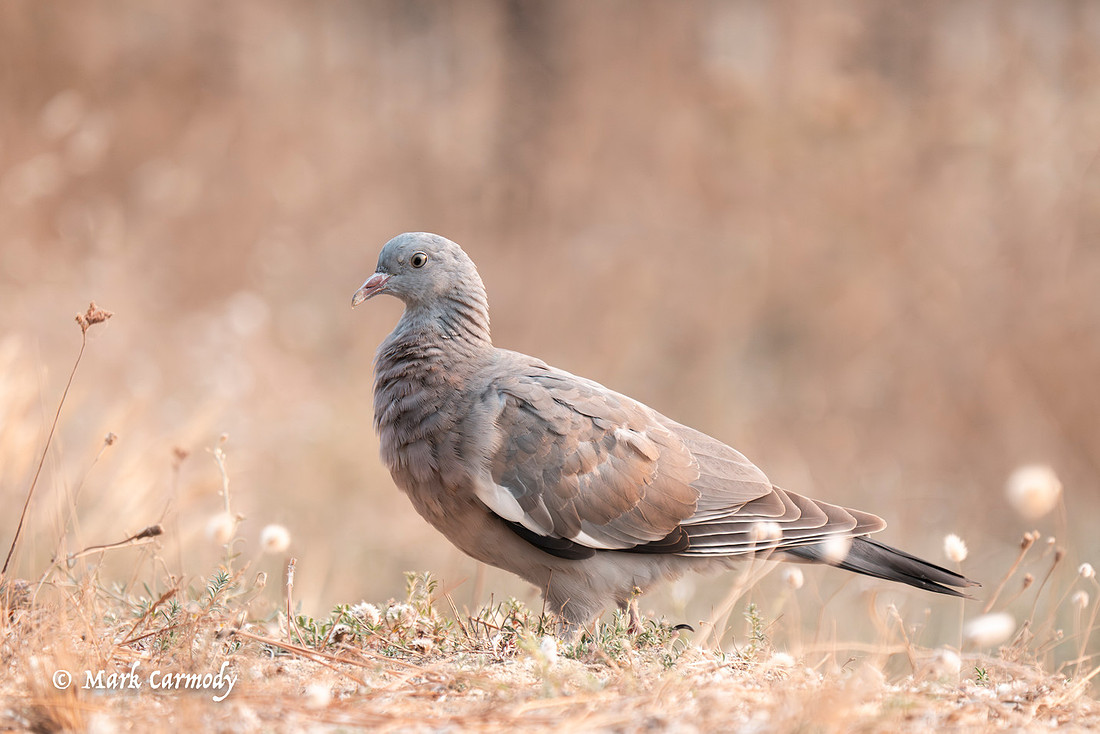 Common (White-necked) Woodpigeon/Colm coille (Columba palumbus)
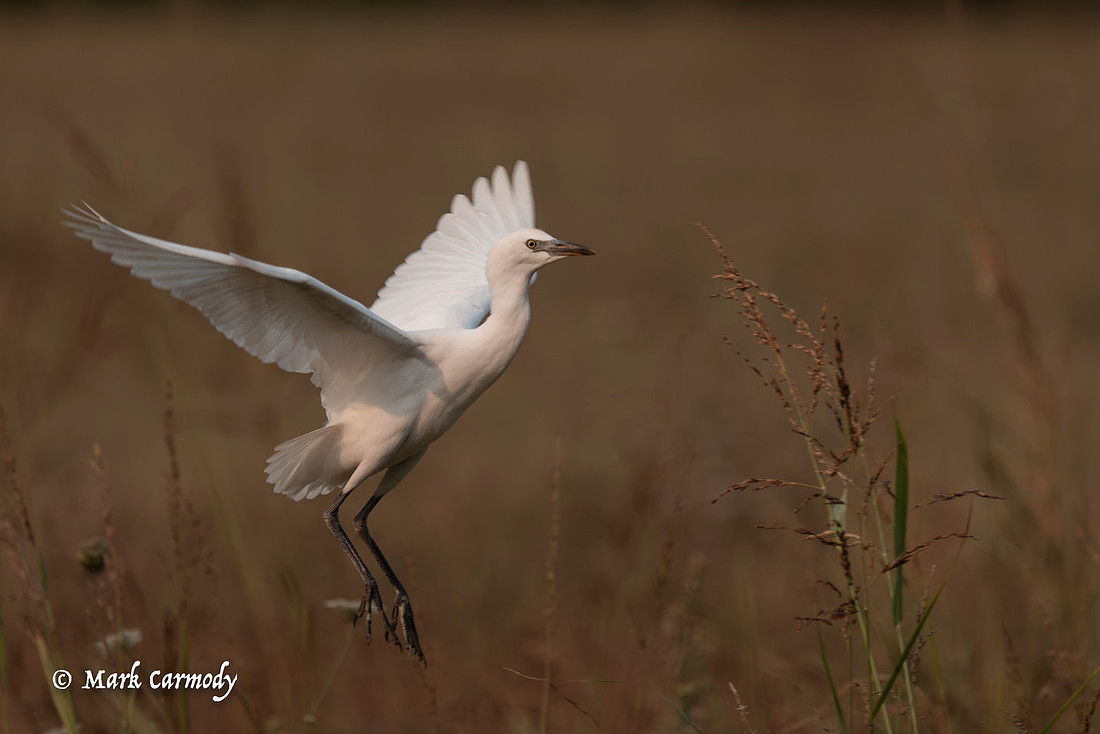
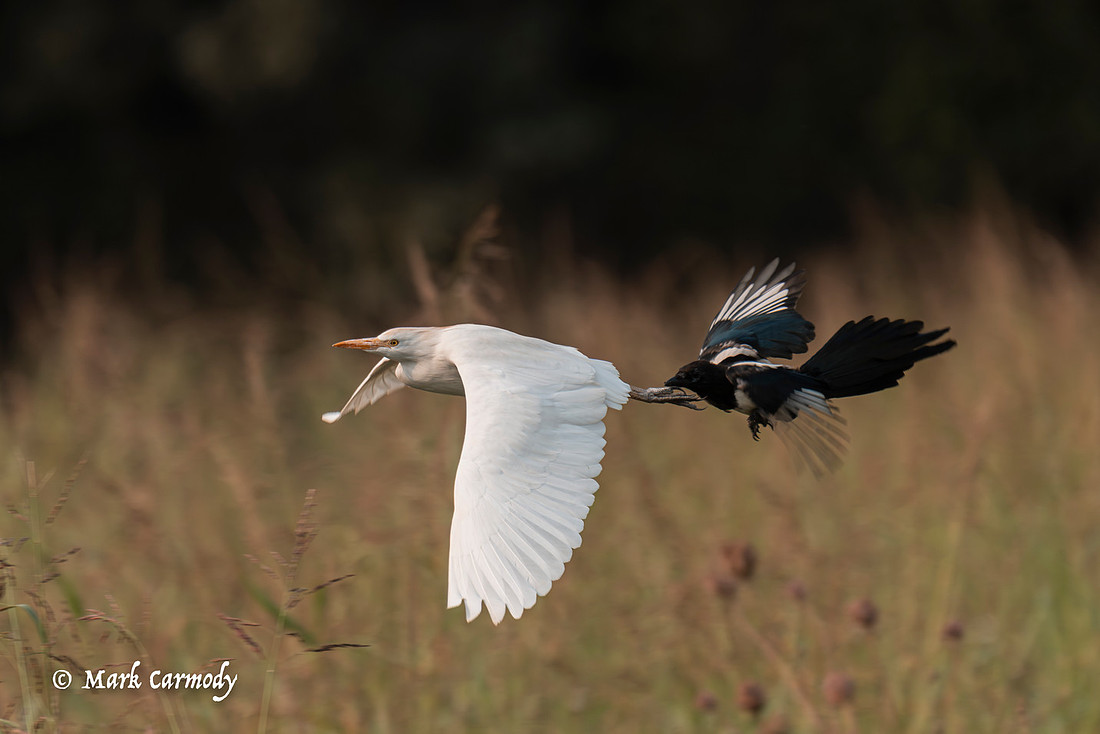
Cattle Egret/Éigrit Eallaigh (Bubulcus ibis)
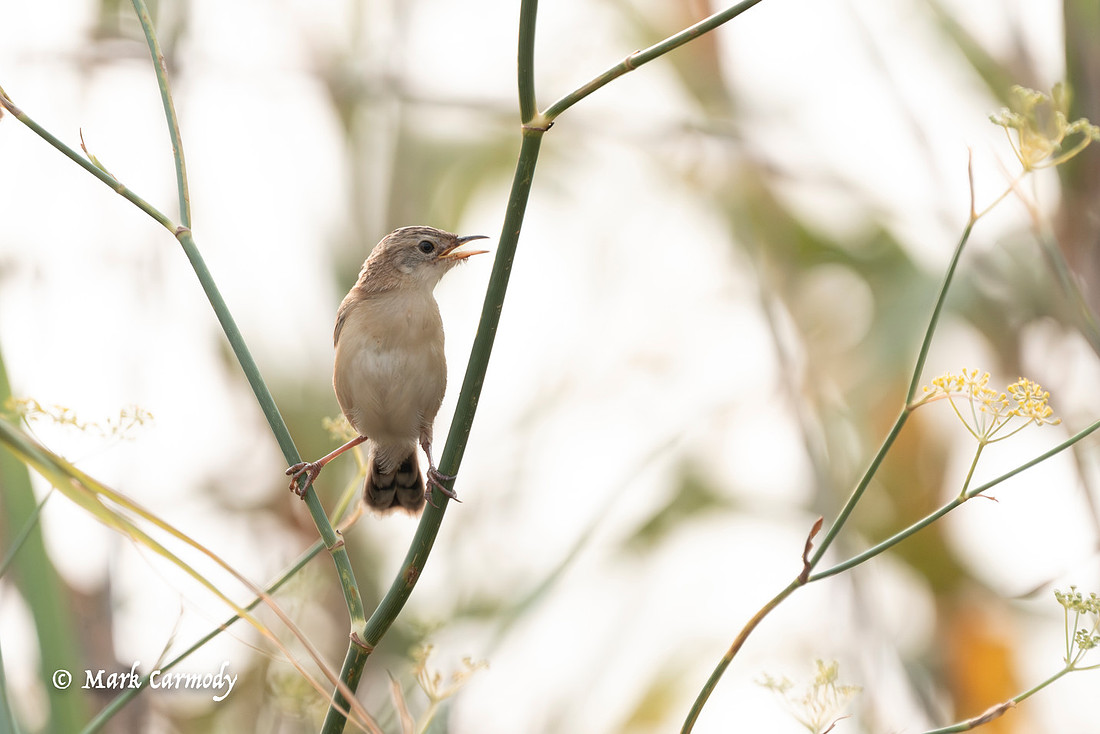
Zitting Cisticola (Cisticola juncidis)
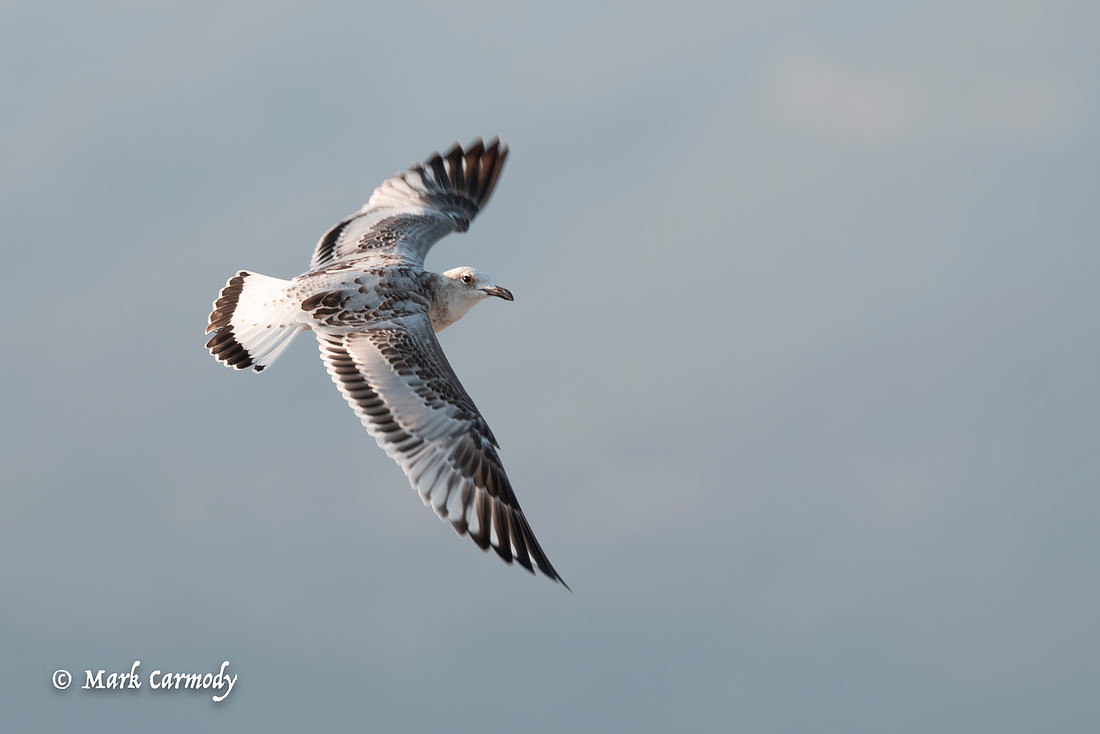
Mediterranean Gull/Sléibhín meánmhuirí (Larus melanocephalus)
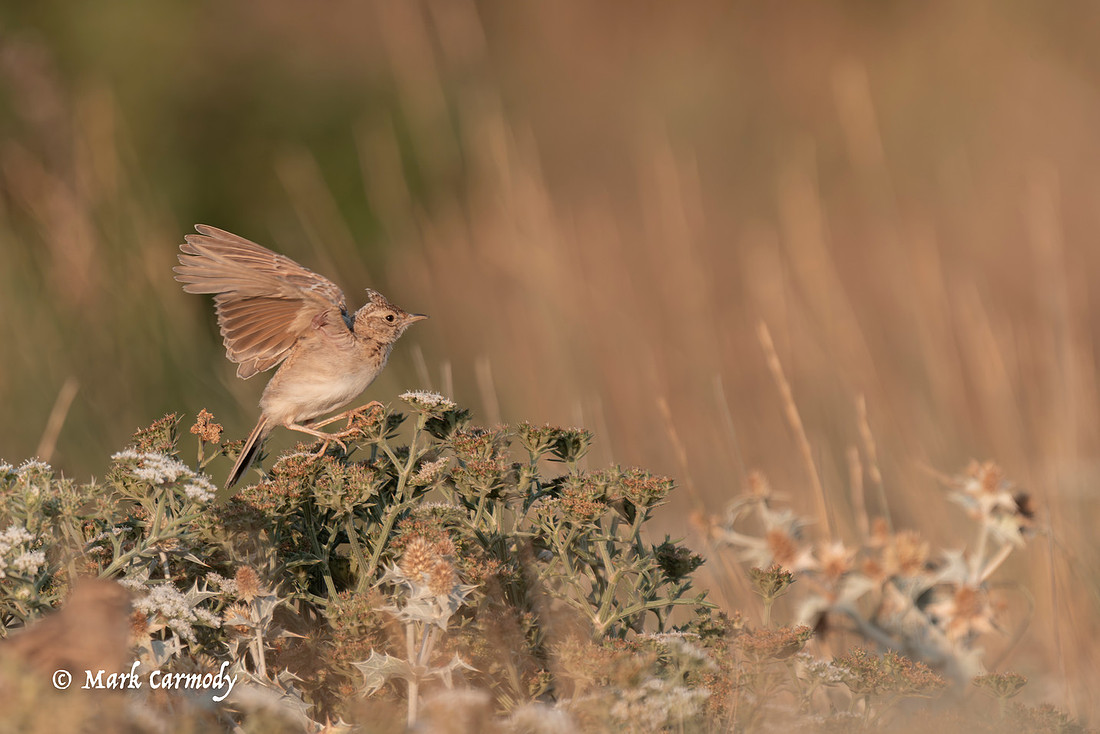
Crested Lark (Galerida cristata)
In the end, I think I only clocked up one lifer (brand new species for me) in the shape of a few Cirl Bunting, singing high from a copse of trees a few minutes walk from our campsite. A support case of Short-toed Treecreeper, Green Woodpecker, Nuthatch, Alpine Swift, Pallid Swift, Melodious Warbler, Golden Oriole, White Stork, and the zitting Zitting Cisticola made sure I was well aware I was not in Kansas.
Photo opportunities were few, but those that I did manage to capture I was happy enough with. I made proper use of eBird was on holidays for the first time and I found that it was a most helpful tool in recording what i saw, and where I went. A fantastic tool to have at our fingertips.
The Birdlife of Griffith Park, Dublin
On first glance, or while walking through the park, it seems to be bereft of a lot of birdlife, with just Magpie, Black-headed and Herring Gulls, Feral Pigeons, the resident Mute Swans, and Mallard on the river. However, if one spends some time strolling around, a lot more species can be found. When I track my walk through the park on eBird, I regularly clock up 20+ species in a 30 minute stroll. It is quite good considering how poor the general habitat is. The park could be improved with better management from Dublin City Council. The Tolka River that runs through the park is one of the attractions that lures the varied species one can encounter. However, the quality of the water is mixed, with some discharge at the Glasnevin Bridge near the Our Lady of Dolours Parish Church in Glasnevin.
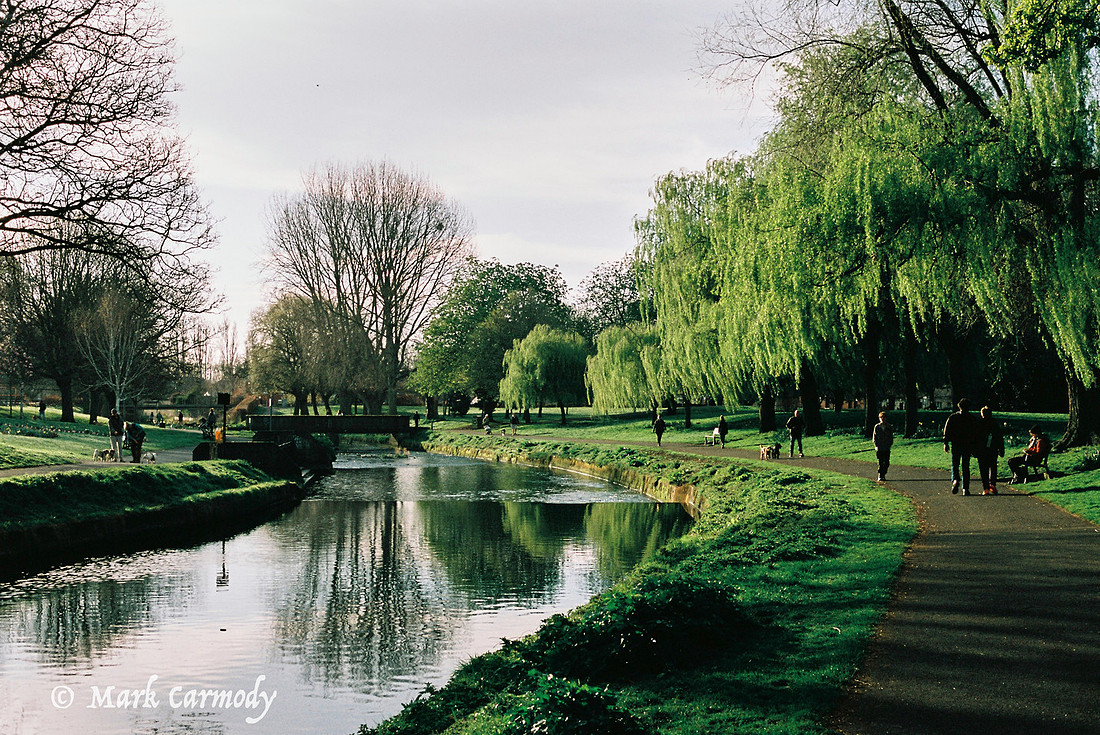 Looking east from the southern path
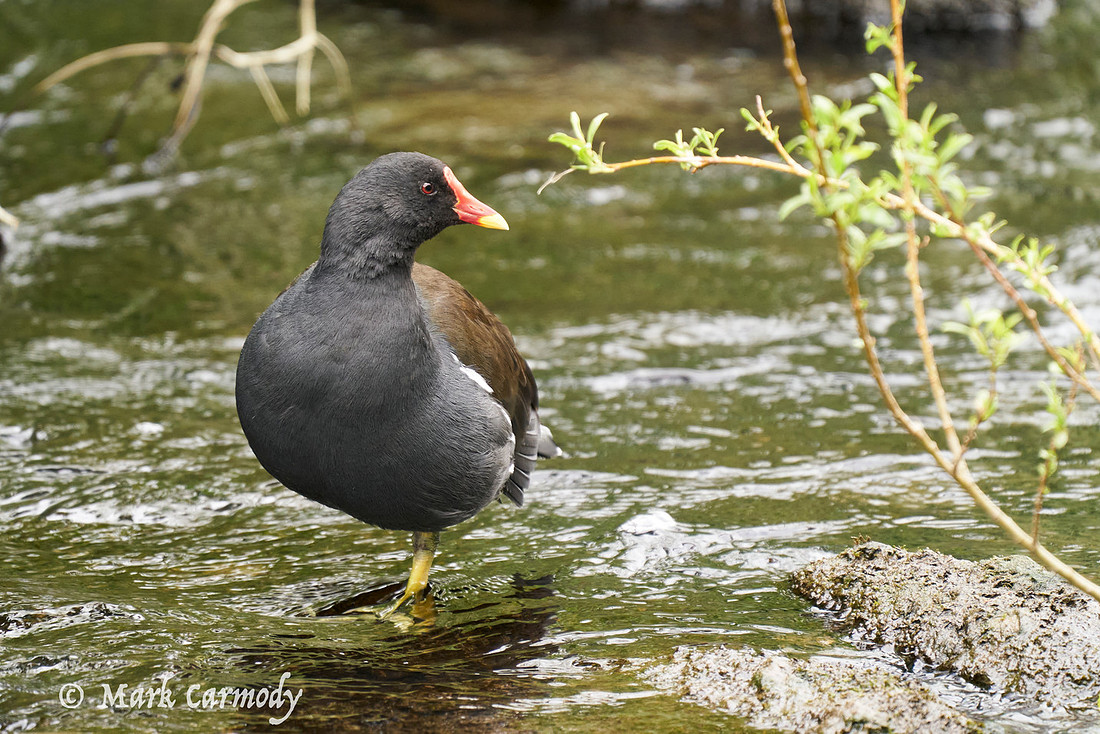 A few Moorhen inhabit the edges of the river and are usually quite comfortable near one of the faster-flowing bends of the Tolka where one can get excellent view of them.
The spread of trees throughout the park lends itself to attract woodland-typic species such as Chaffinch, Treecreeper, Woodpigeon, and thrushes. Song Thrush, Mistle Thrush, and Blackbird all breed in the park. Treecreeper is hard to find at times, but their song is easily heard during the breeding season.
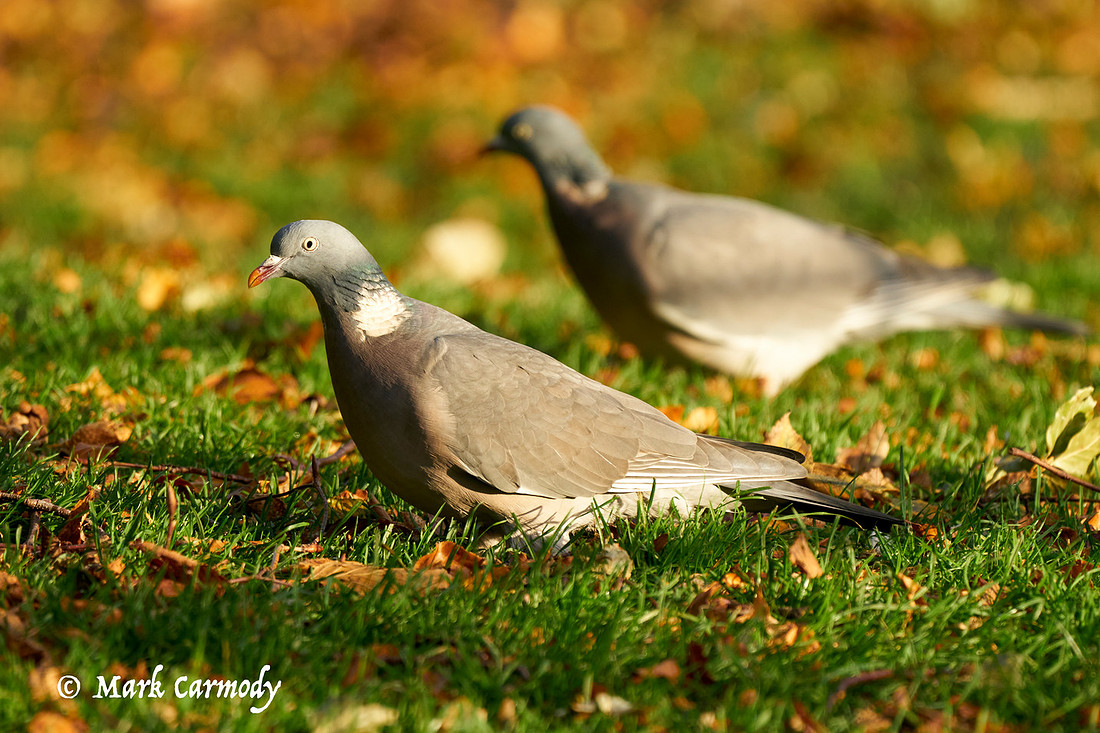
Woodpigeons are a common sight all over the park.
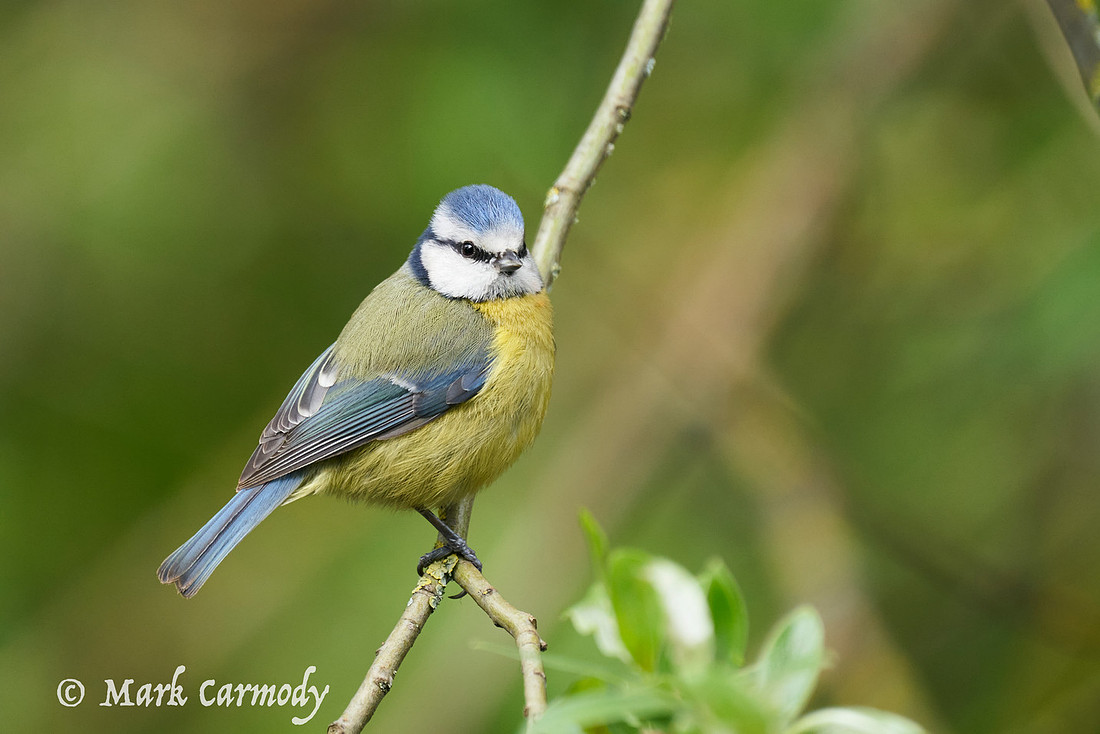
Blue Tits roam the park in mixed flocks during the winter. They probably breed in the park judging from the amount of fledglings present following breeding season.
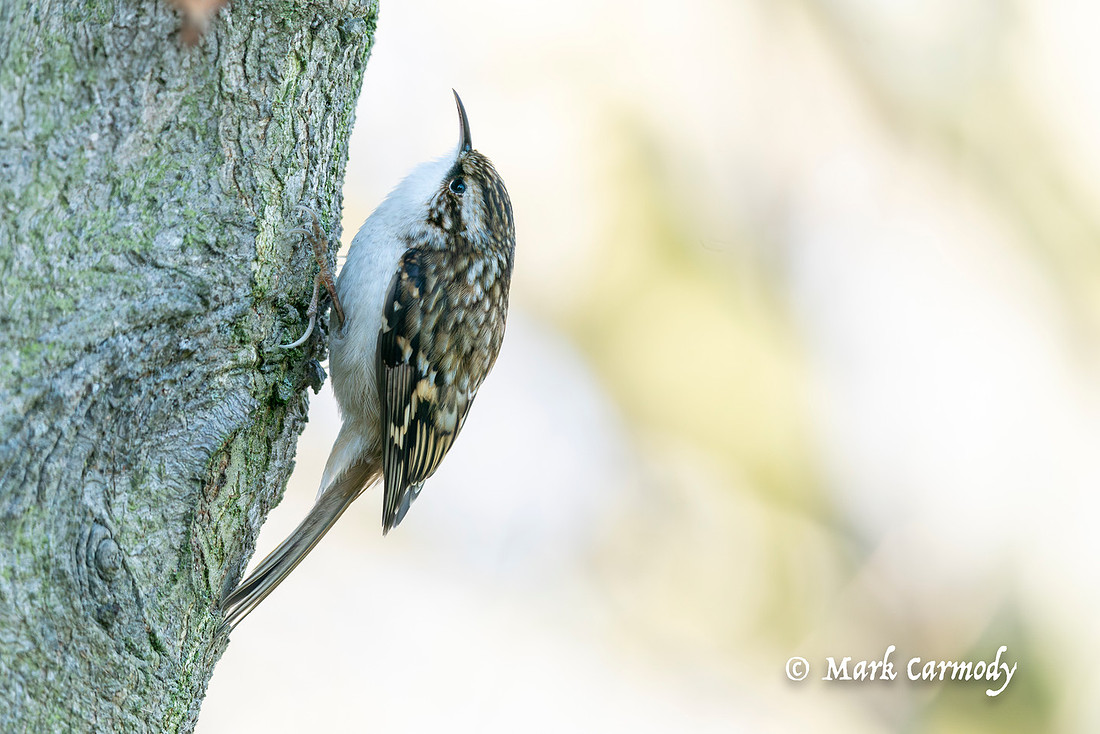 A Treecreeper doing its thing and creeping up a tree
The river places an important role in the biodiversity of the park. Being so close to Dublin city centre, it is quite amazing what freshwater birds can be found here. Jewels in the crown are the Kingfisher. They are breeding upriver towards Finglas, not far beyond the National Botanic Garden borders. Usually one would hear its distinctive call and a flash of azure would whizz by. However, up to 3 Kingfishers were regularly seen along the river in the park during the winter of 2024/ They would perch no more than 20 metres away, diving and catching minnows in the shallows and shadows of the tree-lined river bank.

Kingfisher on a nice perch over the Tolka River. We are fortunate to have this Amber-listed breeding species using the river.
Other water birds include Moorhen, Mallard, Mute Swan, Grey Heron, Cormorant, Herring Gull, Lesser Black-backed Gull, Black-headed Gull, and the scarcer Little Egret and Dipper.
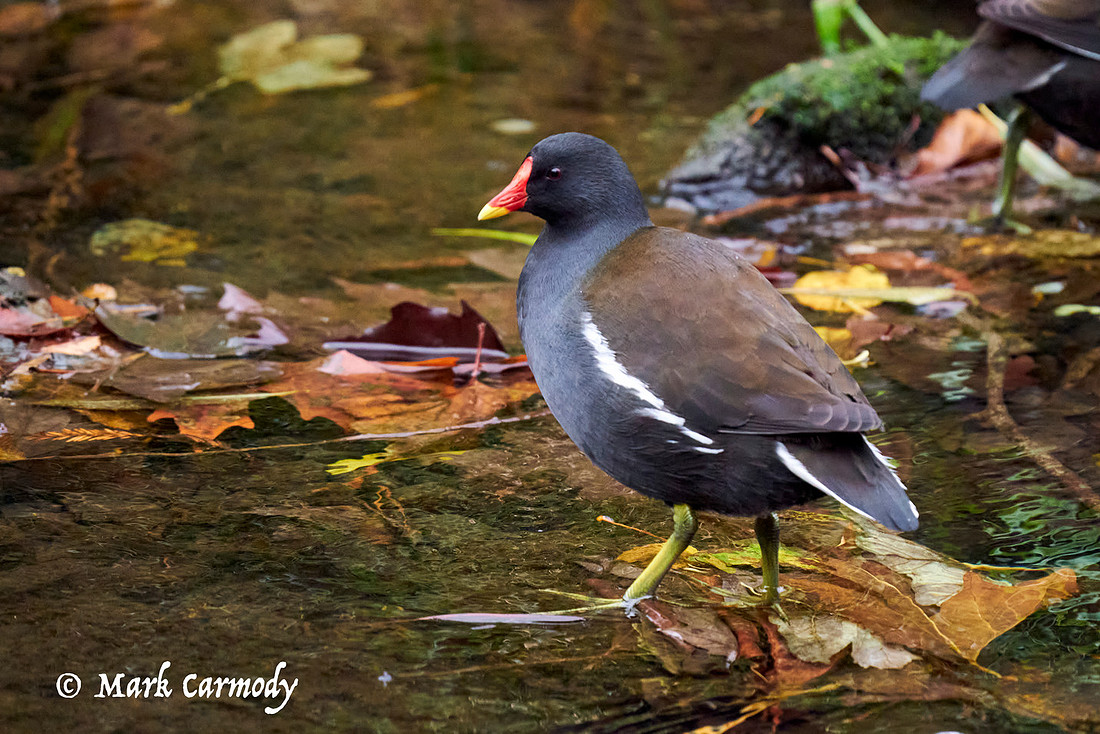
An adult Moorhen along the river's edge.
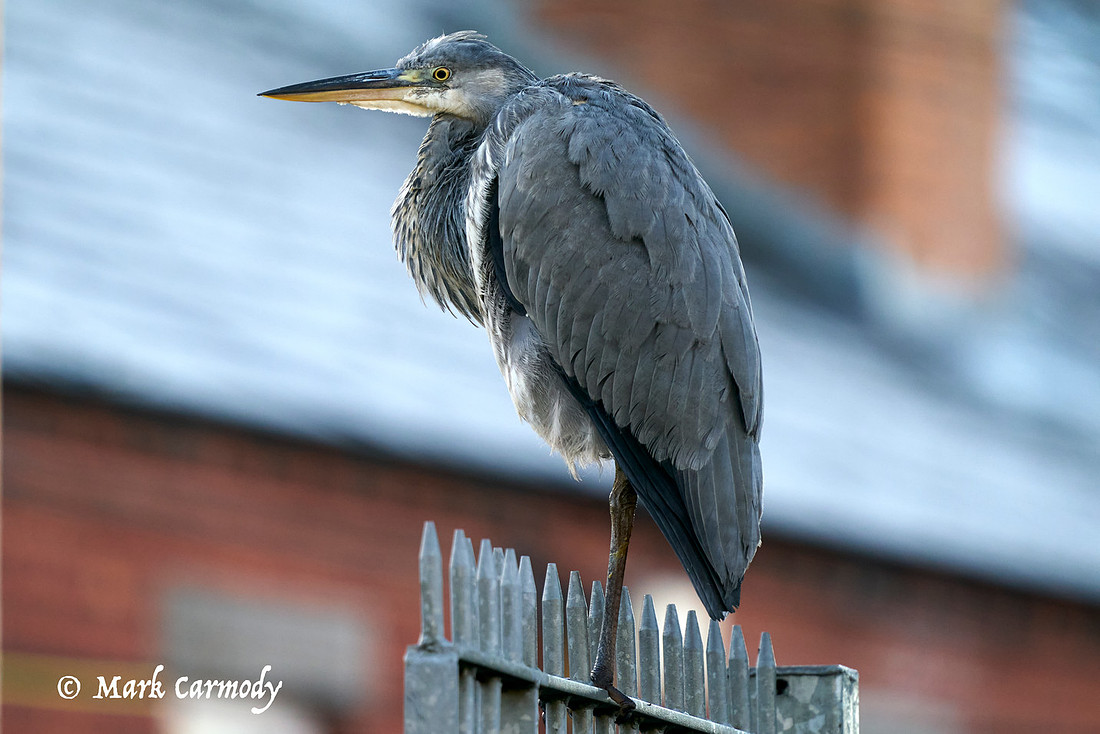
A Grey Heron sitting on a fence at the edge of the park.
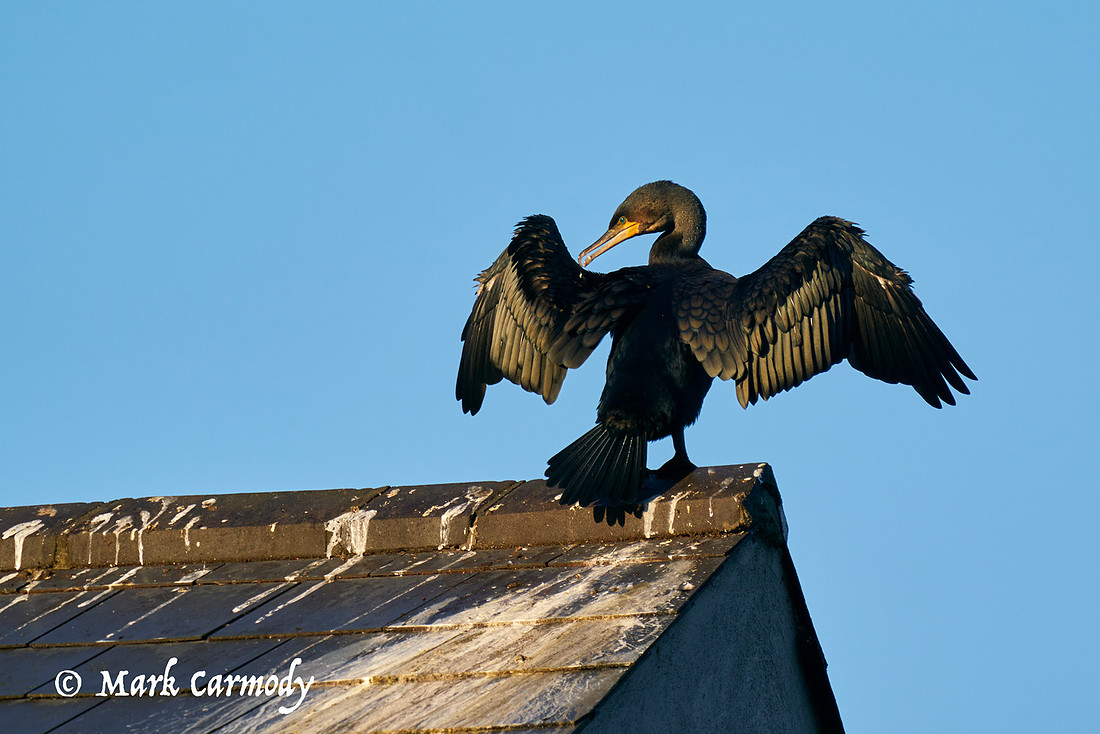
A Great Cormorant stretching its wings on the apex of a house bordering the park. They are frequent hunters in the river.
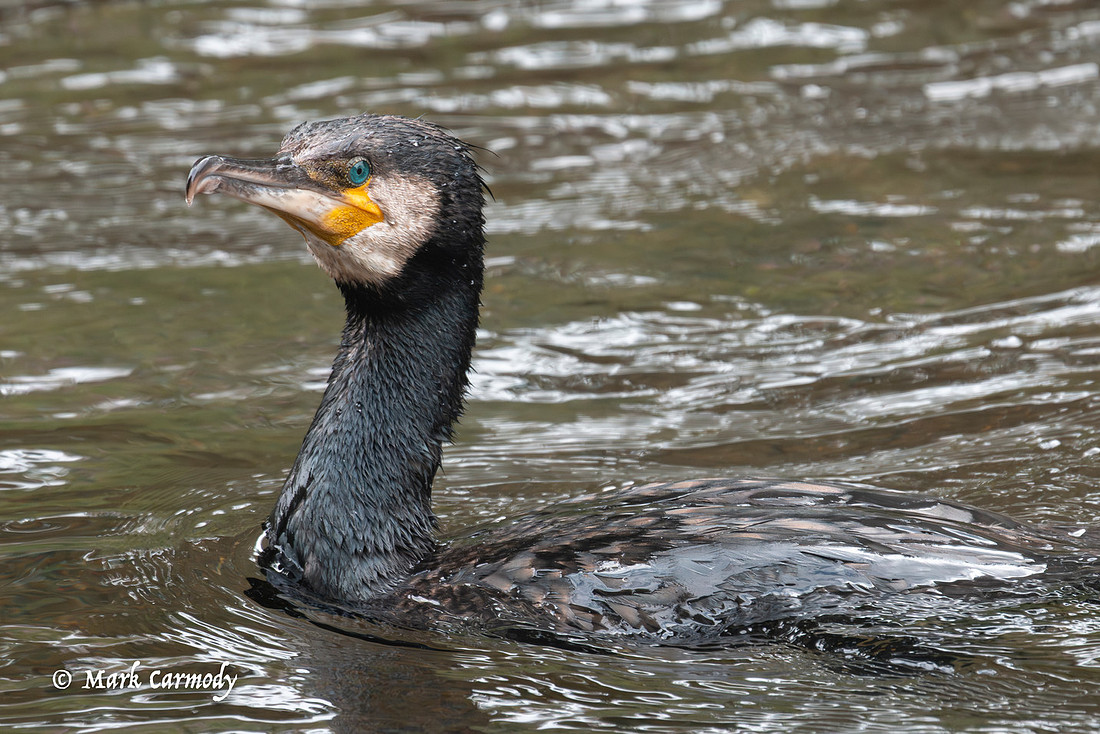
A Great Cormorant fishing in the Tolka River.
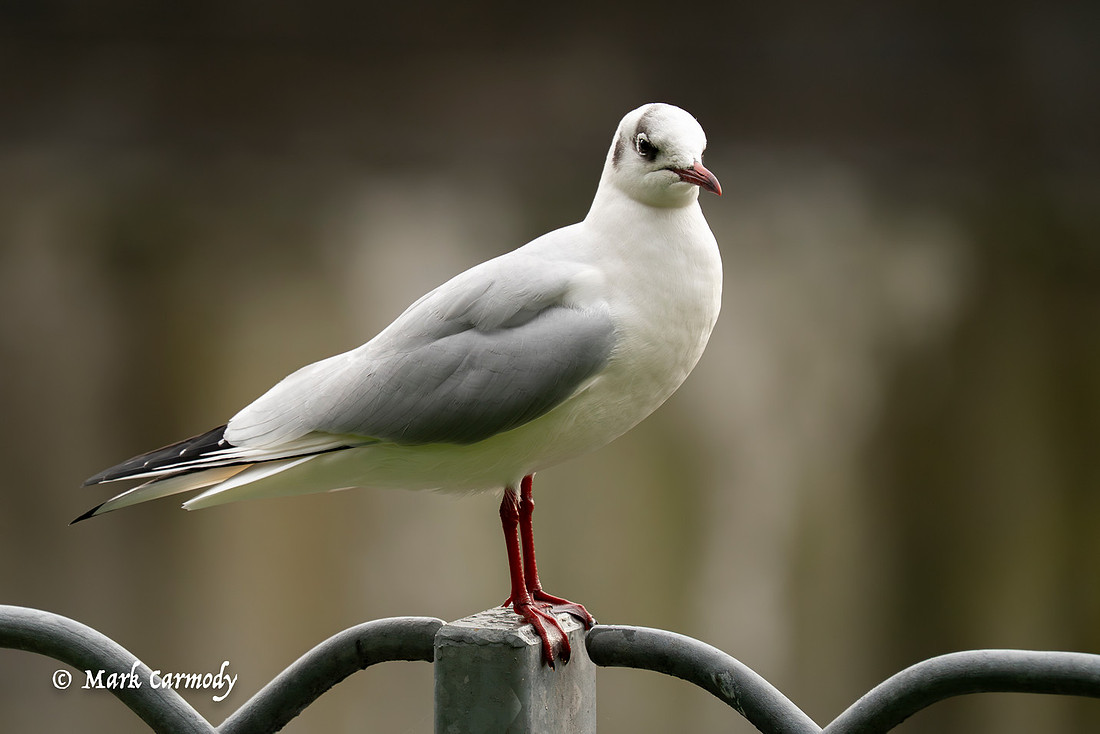
A Black-headed Gull in winter garb. They disappear from April to August, dispersing to the midland lakes of Ireland, the UK and Eastern Europe to breed.
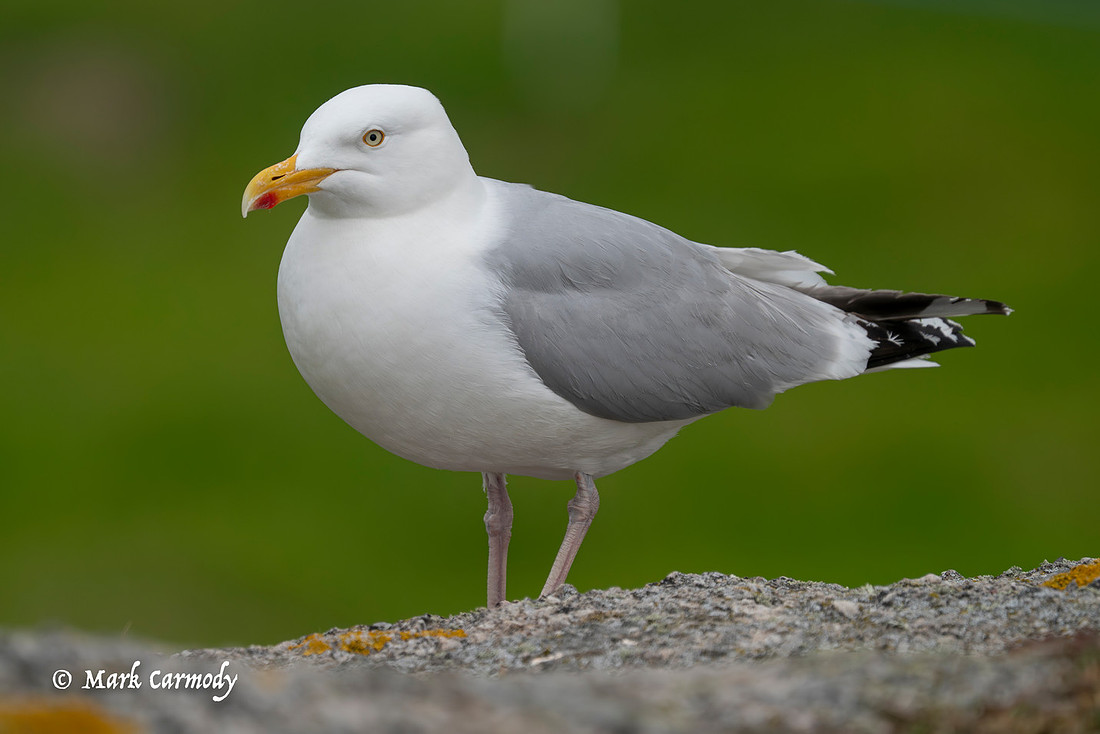
The much maligned but stunning Herring Gull. Almost extinct as a breeding species herein the 1980s due to Botulsim, they have made a great recovery and have adapted well to living within cities and their suburbs.
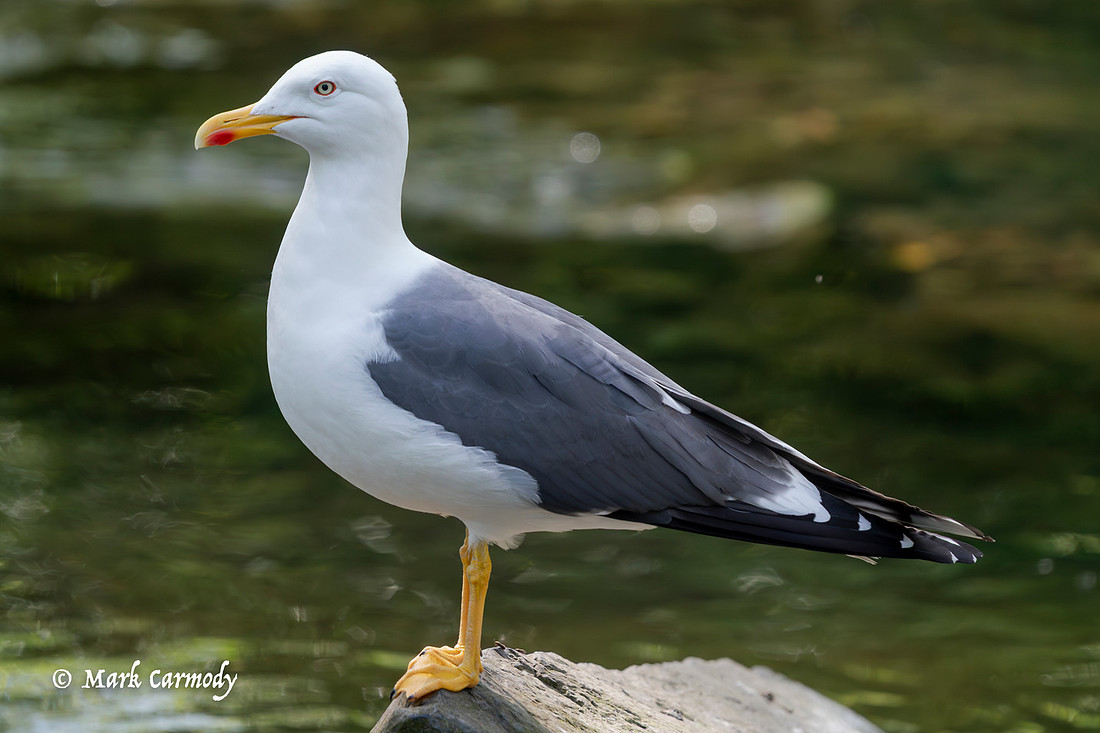
The stunning Lesser Black-backed Gull arrives here around St. Patrick's Day/weekend to set up shop to breed. They leave again in August and spend the winter off the Spanish and North African coasts.
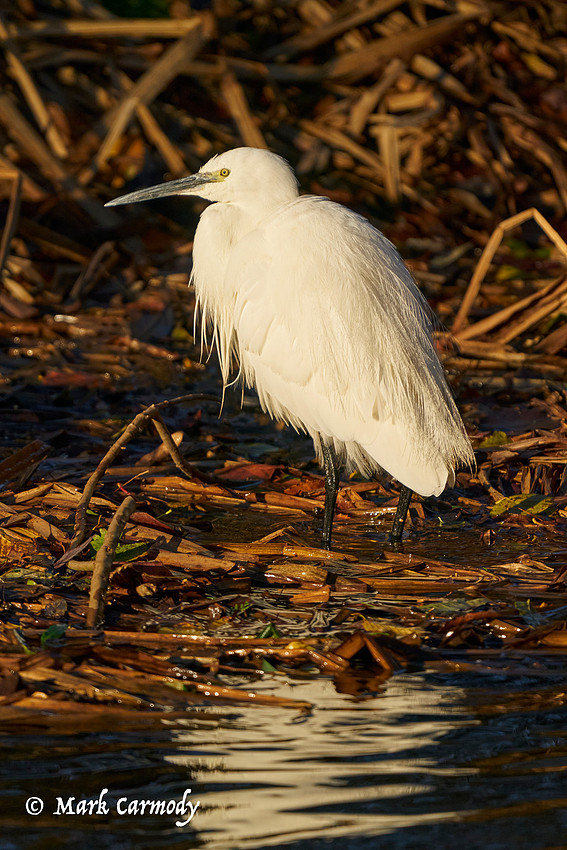
There are also Little Egret fishing the river, with up to 4 the most I have seen at any one time. Usually it is one or two birds. They sometimes perch on top of the Willow Trees. They first started breeding in Ireland in the 1990s.
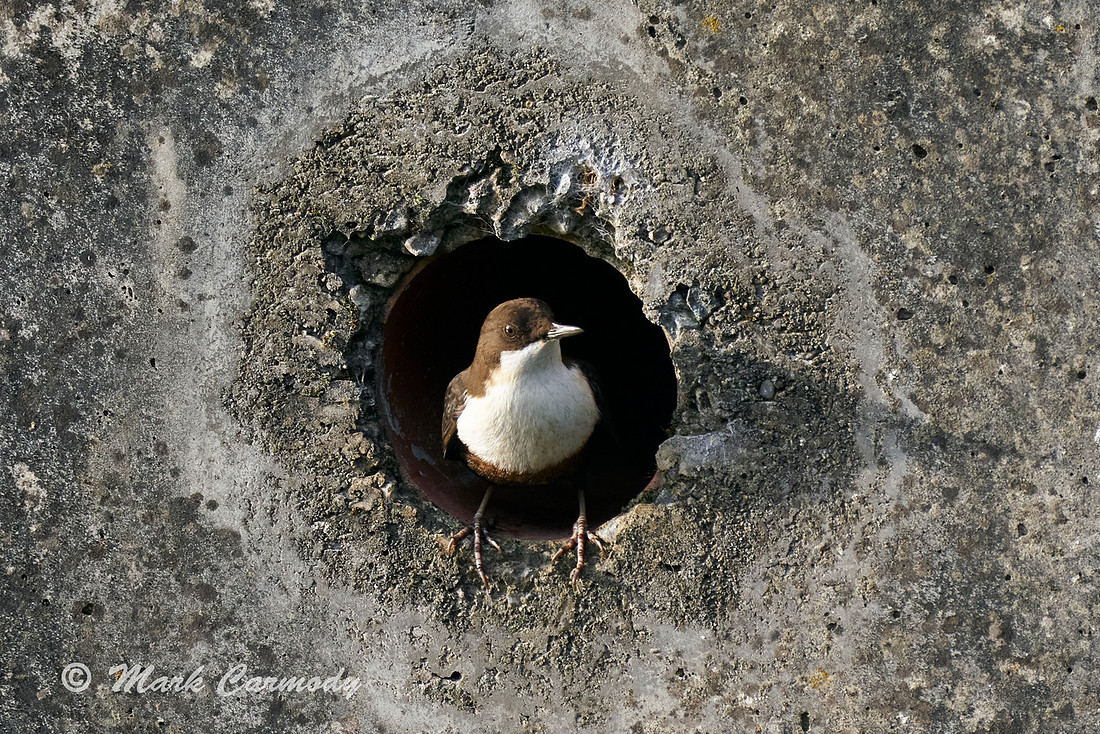
An adult Dipper sitting in the drainage pipe of one of the concrete support walls along the river bank.
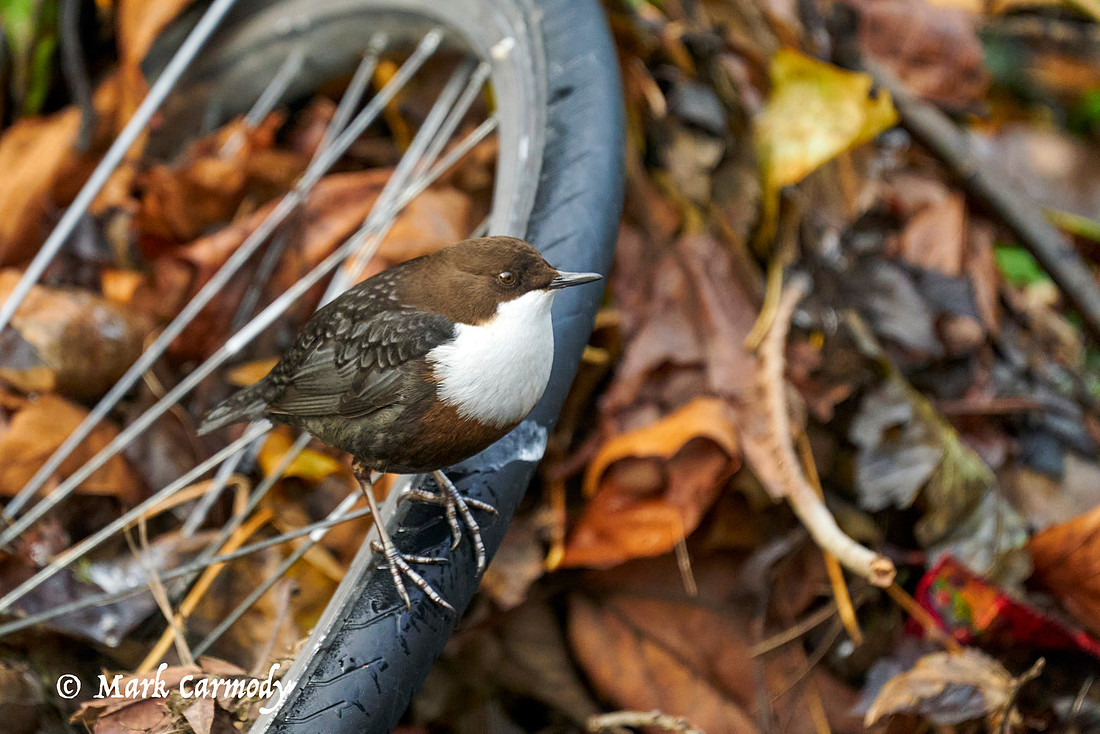
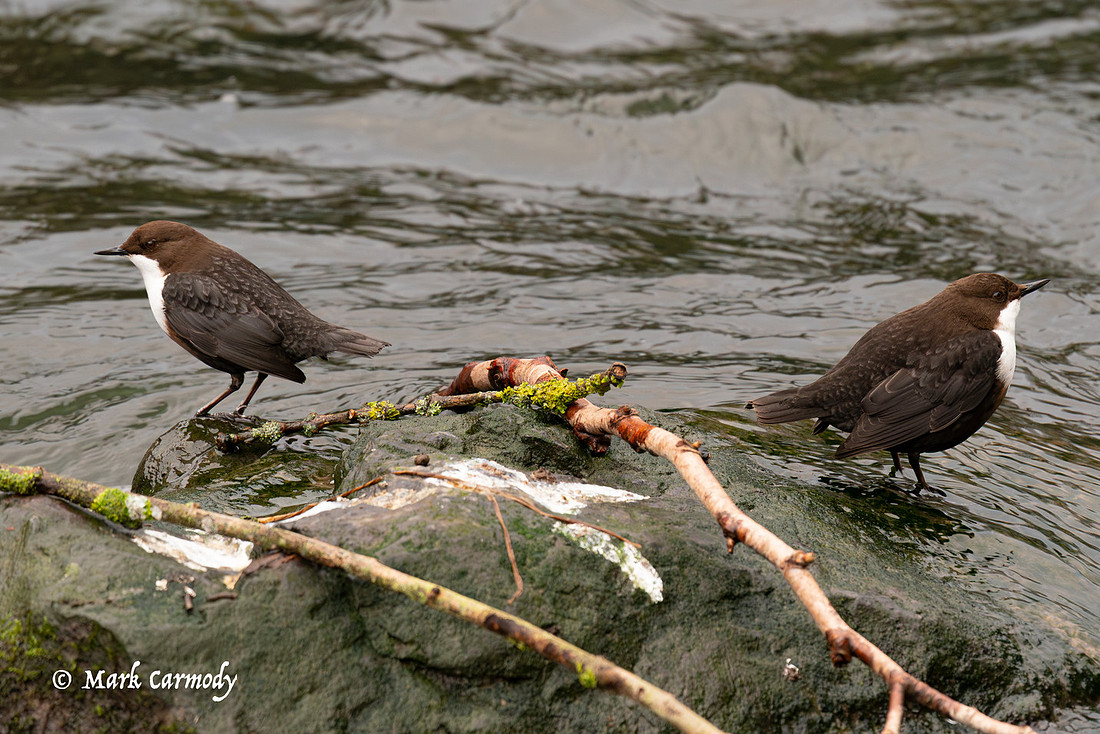
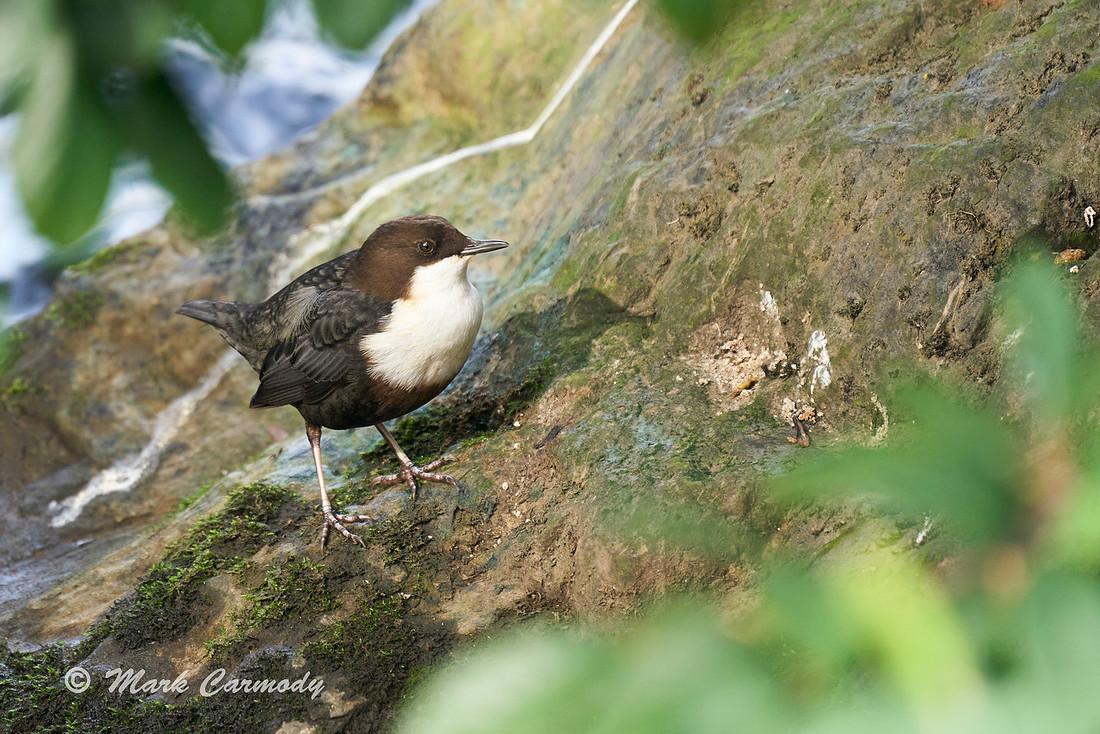
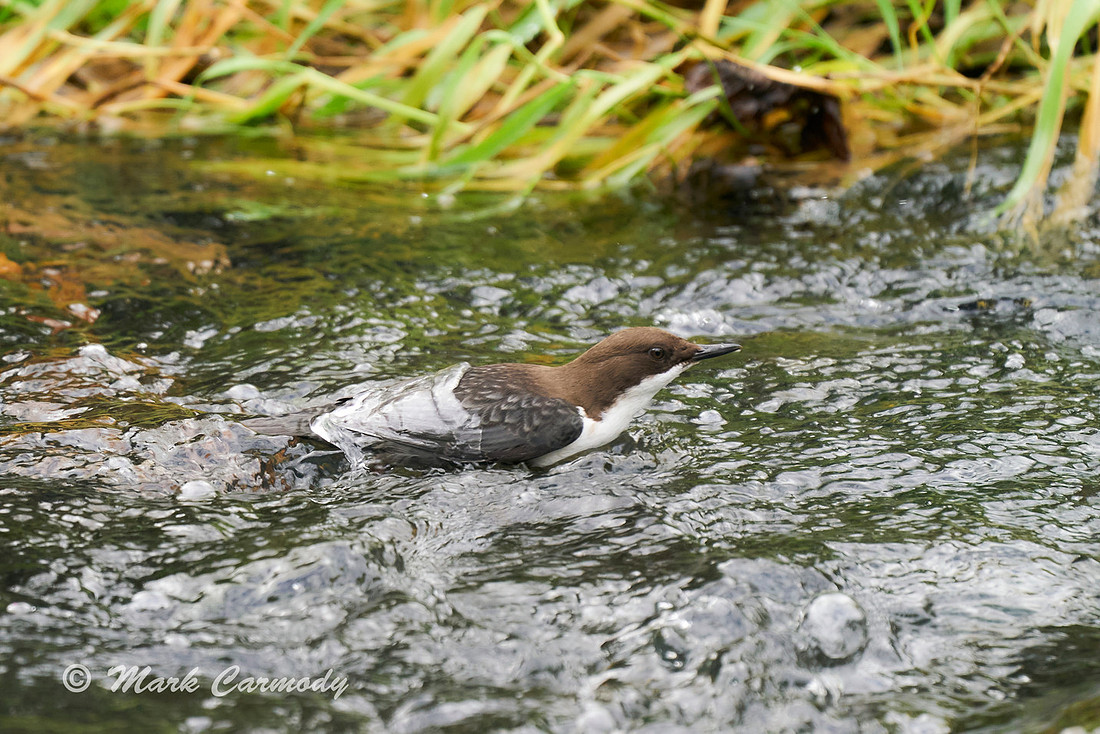
We are very fortunate that a pair of Dipper have taken up residence along the river in the park. Their song can be heard from December onwards. Although they are freshwater birds, they are also a passerine (includes over half of all living birds and consists chiefly of altricial songbirds that also perch). I have yet to see any juveniles from this courting pair. I am not sure there is enough habitat for them to build their nest. It would be so good if the DCC built an artificial nest for them under one of the bridges in the park (more than likely the Dean Swift Bridge). If regulars of the park would like to lend their voice to this initiative, it would be great.
The piping that was inserted into the reinforced concrete walls along the river is being used by Sand Martins as nesting burrows. Up to 12-14 pairs of Sand Martin use the pipes every year. They arrive around St. Patrick's Day and depart in early September. They are the first of the swallows and martins to arrive in Ireland every Spring. They are the first hargingers of warmer weather to arrive in the park.
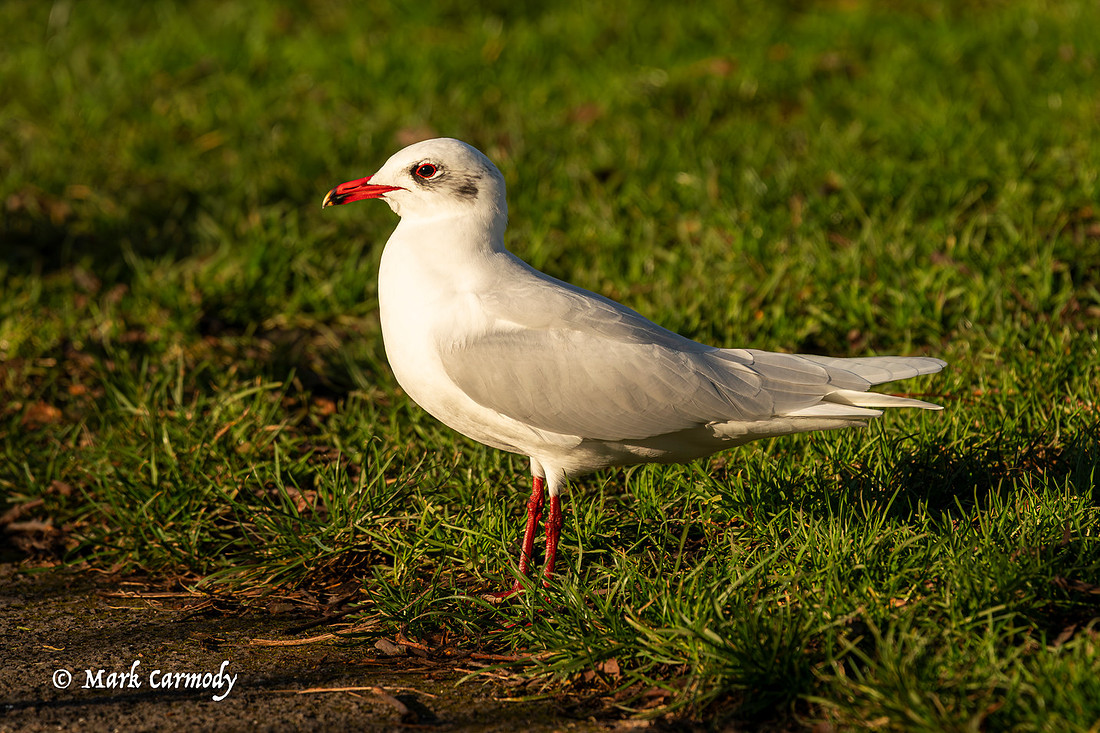
There are some unusual gull visitors to the park every now and then, such as the stunning Mediterranean Gull pictured above. This is an Amber-listed breeding species in Ireland.
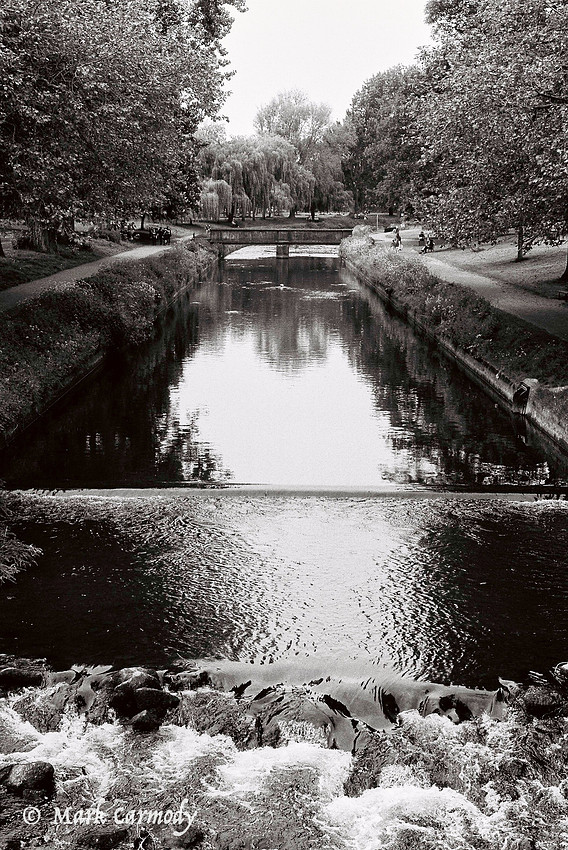
Looking west from the footbridge at the Millmount Avenue end
Other passerines that occupy the park range from the common, such as Robin, Dunnock, Rook, and Jackdaw, to the red-listed species such as Stock Dove and Grey Wagtail, to our smallest bird, the Goldcrest. It is hugely important that we ensure that these birds have safe and clean areas for them to feed and raise young.
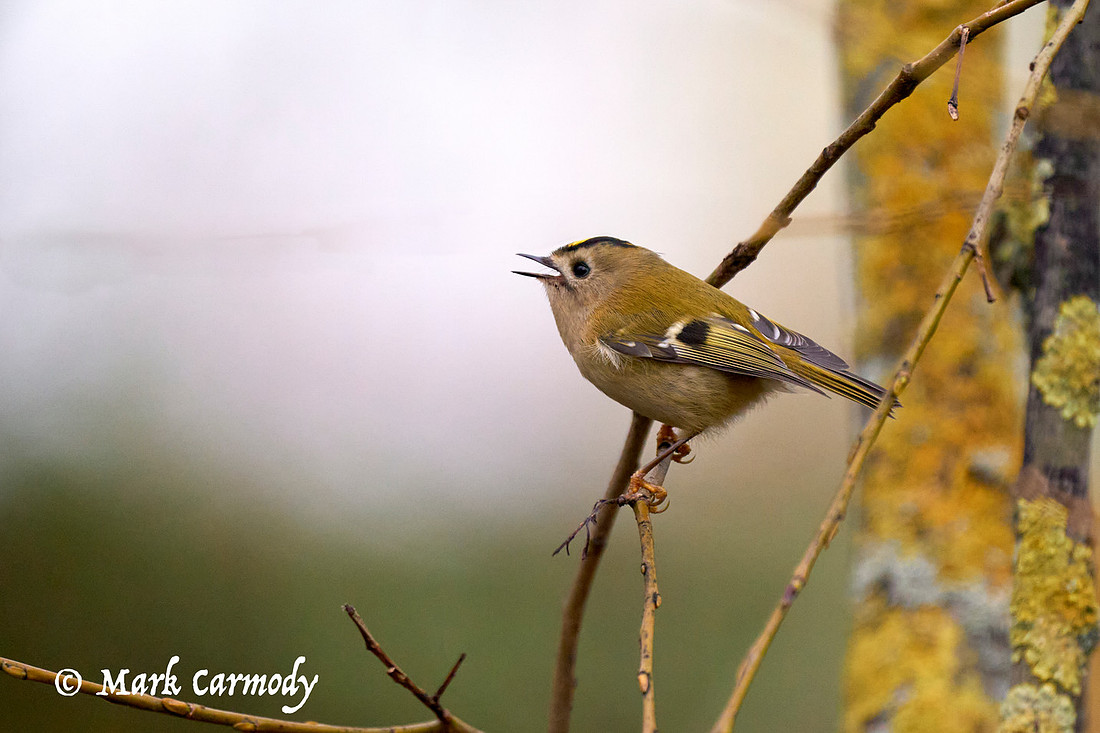
The Goldcrest is Ireland's (and Europe's) smallest bird. They are regular visitors to the park, usually heard from the treetops and scrub. It is an Amber-listed breeding species.
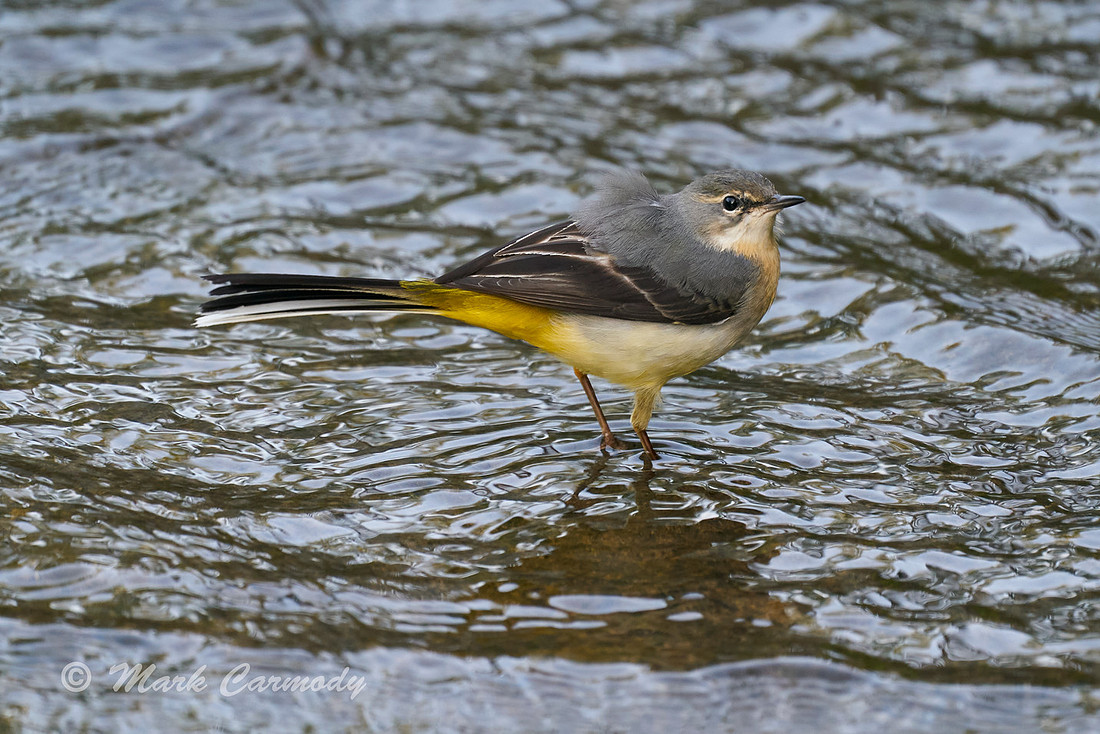
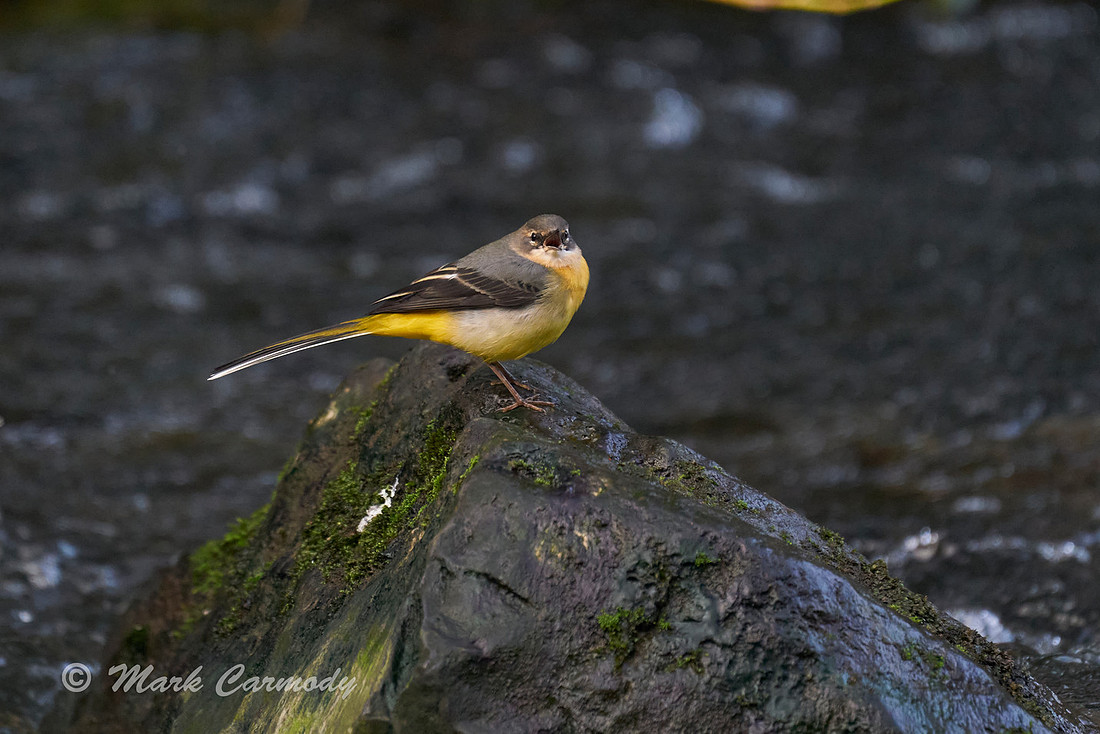
The Grey Wagtail bred on the river this year, rearing 3 fledglings. They have a beautiful song and are always a pleasure to see. Unfortunately, they are now Red-listed as a breeding species in Ireland.
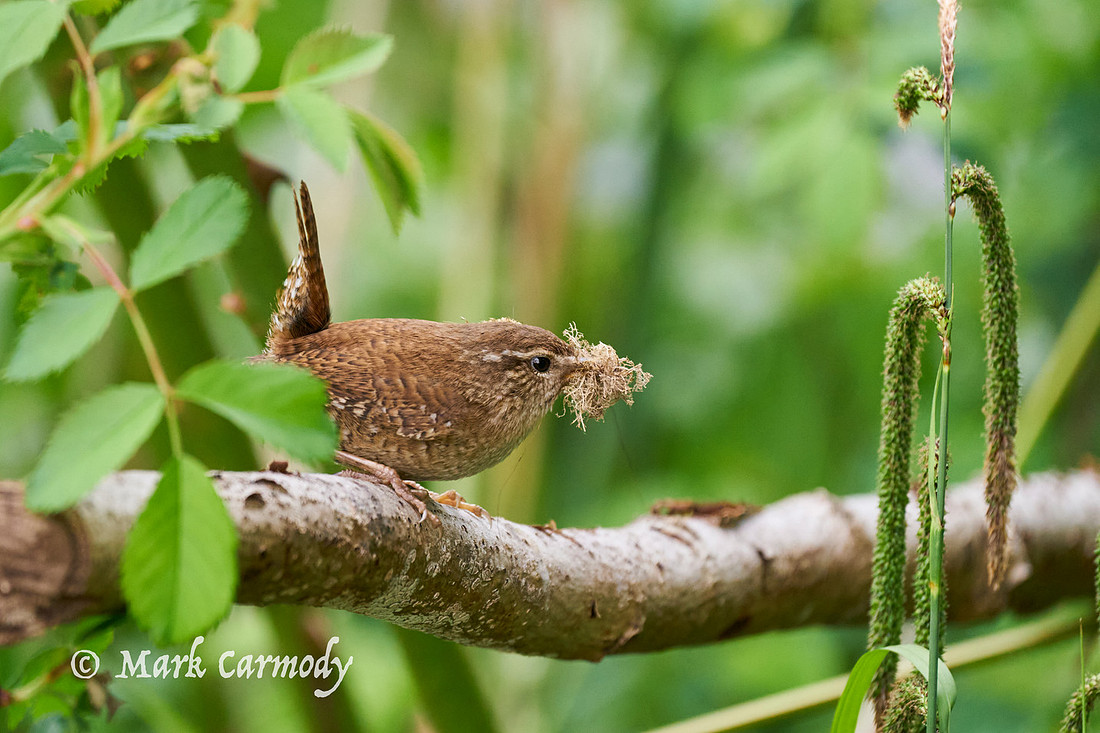
The Wren is Ireland's second smallest, but probably the loudest of all Irish passerines! Their explosive song can be heard throughout the park.
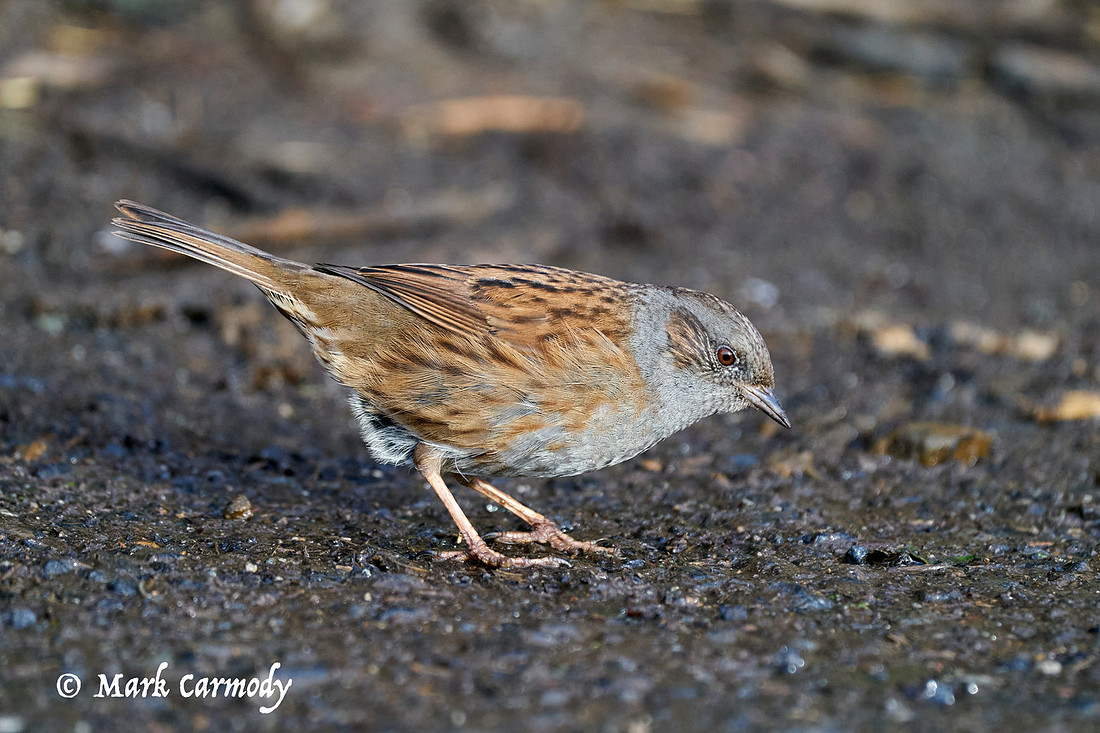
The Dunnock skulks amongst the hedgerows, undergrowth and river bank undergrowth. A very understated yet beautiful bird.
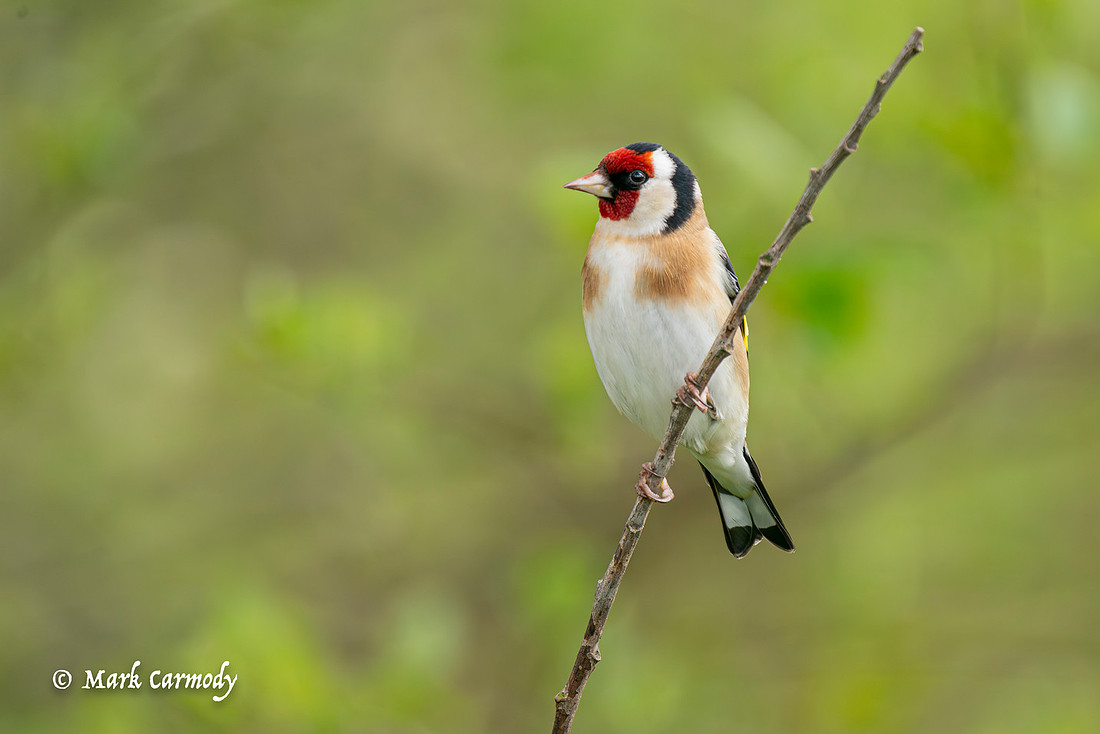
A Goldfinch perched on a twig. One of our more colourful passerines.
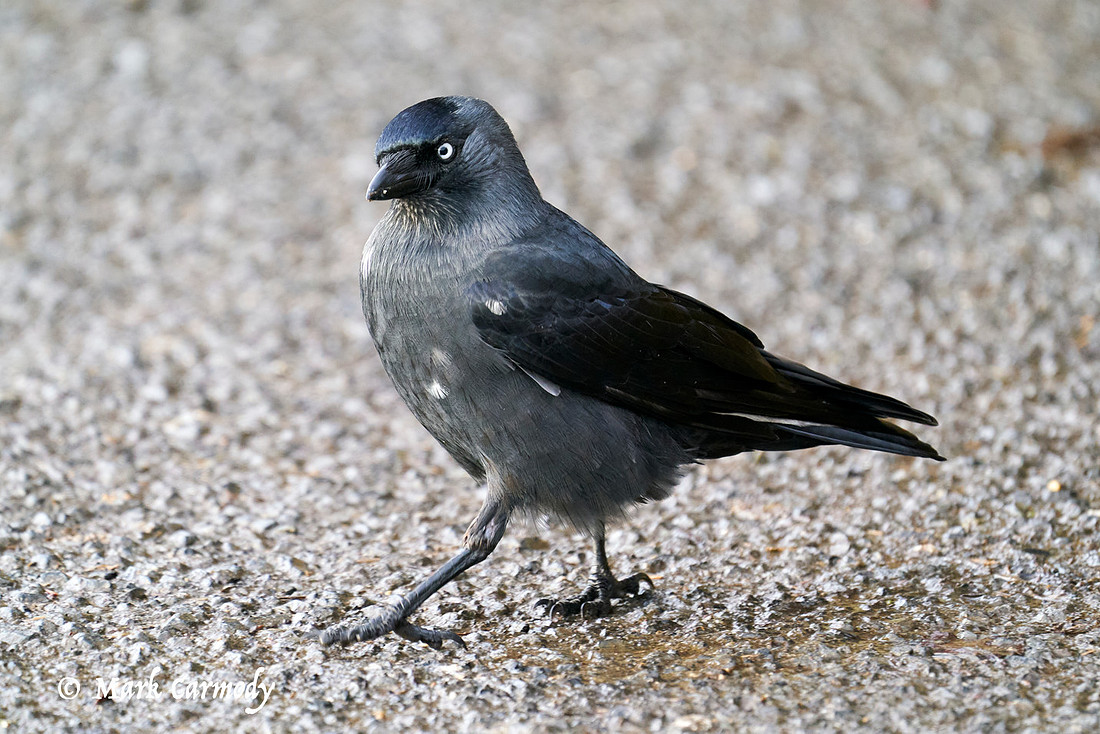 A Jackdaw with some small smudges of white in its feathering. A very curious and intelligent bird.
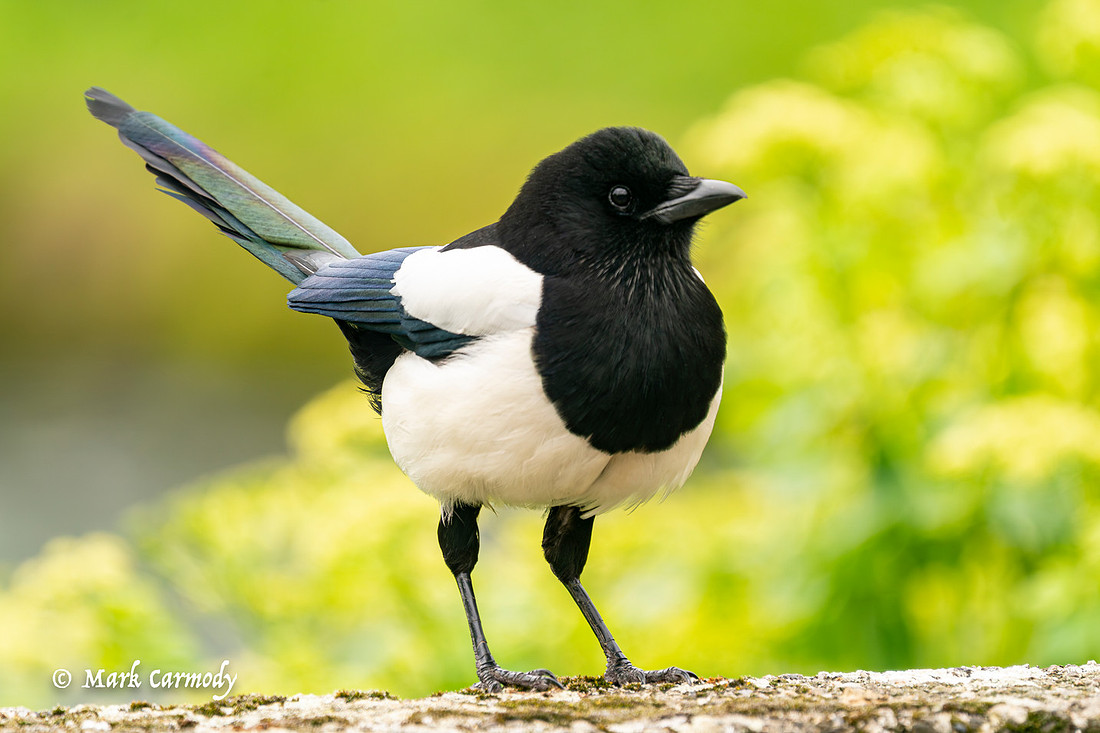
The Magpie is a common bird in the park, and probably seen as a pariah. However, they are a beautiful bird with an important role to play in the ecosystem.
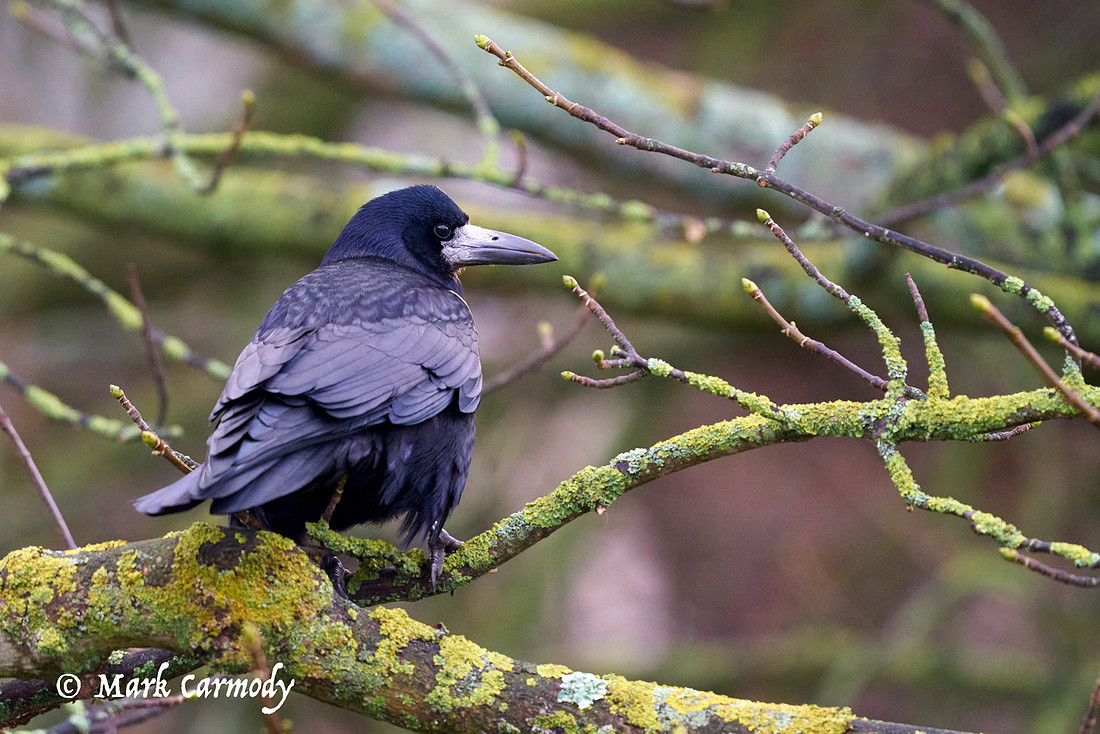
The Rook is another recent arrival to the avifauna of the park. They seem to be spreading in from the suburbs to the park. I always love seeing them walk around looking for grubs and other insects in the grass.
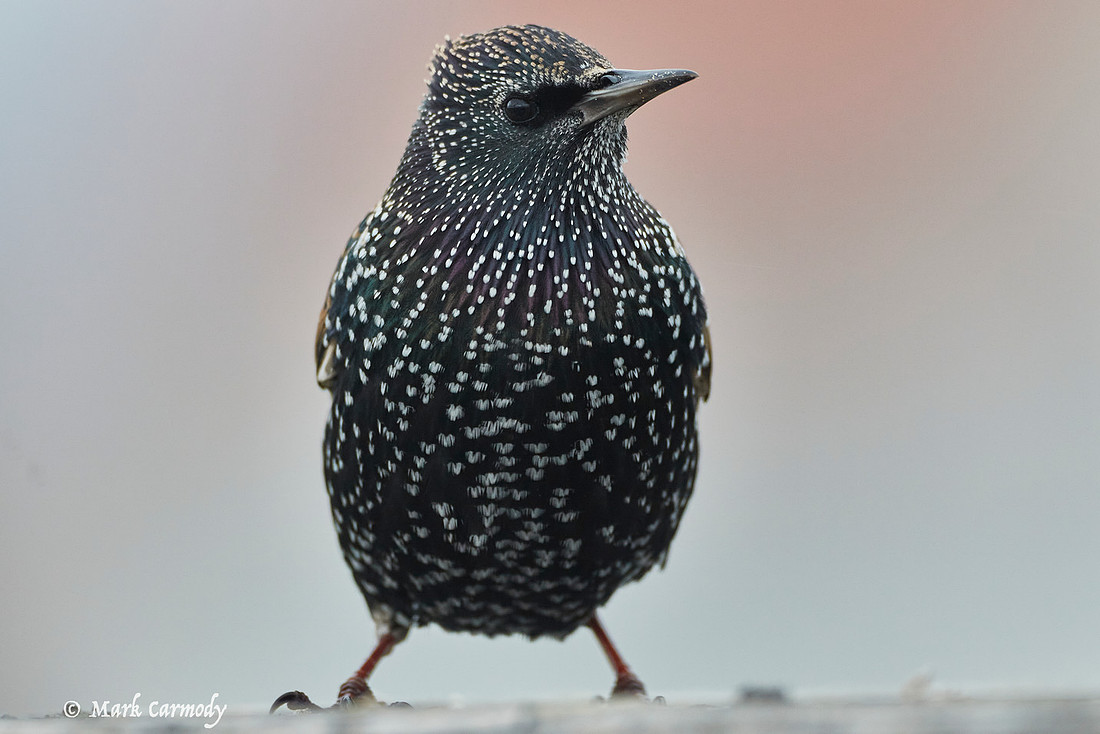
The Starling, another Amber-listed breeding species, has only recently started featuring in the park on a regular basis.
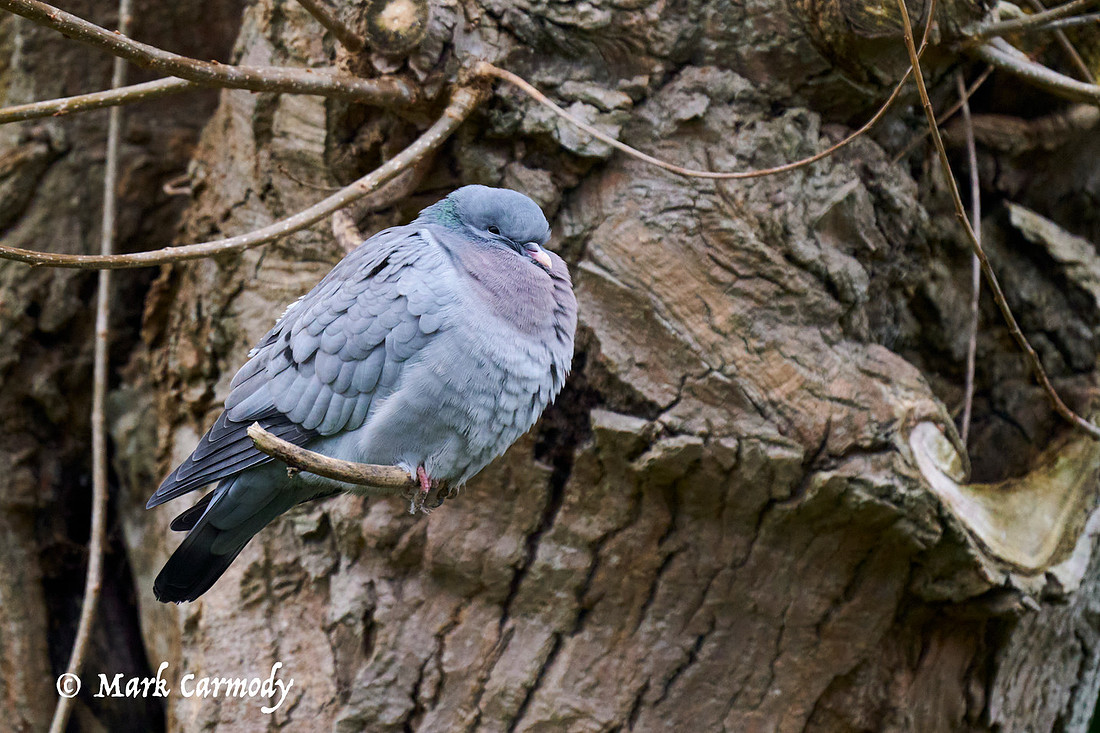
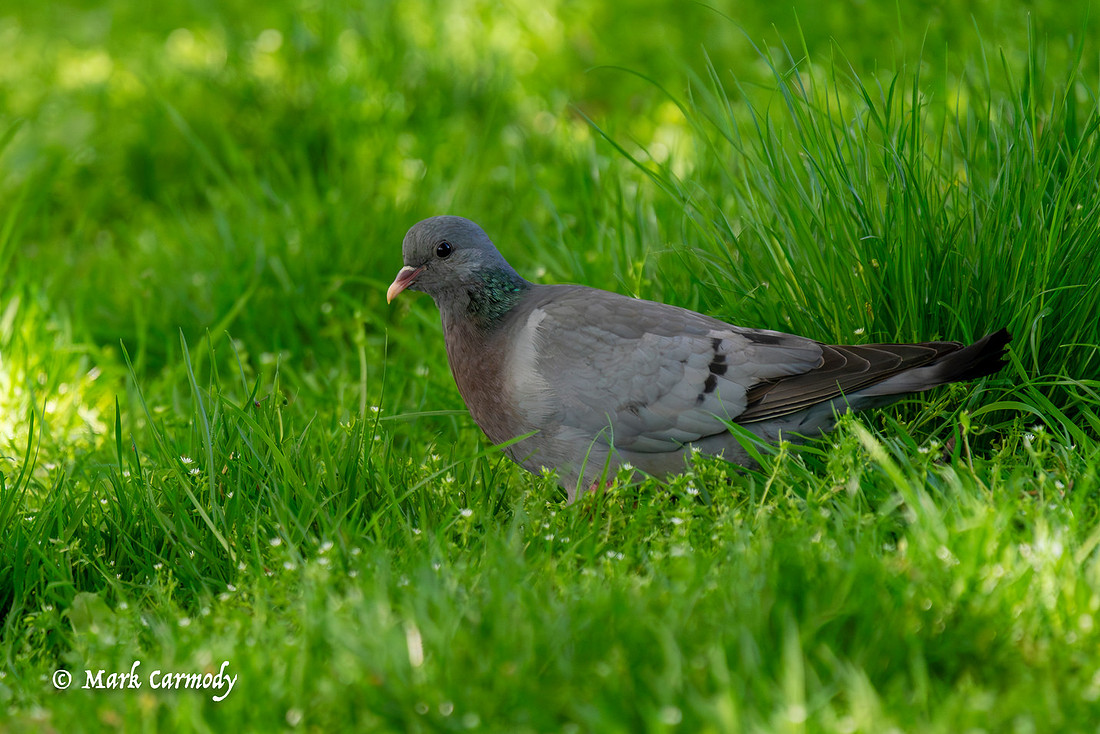 The Stock Dove is one or Ireland's rarest breeding passerines and is currently a Red-listed breeding species, unfortunately. To have one (or possibly two) urban breeding pairs in and around the park is very special indeed.
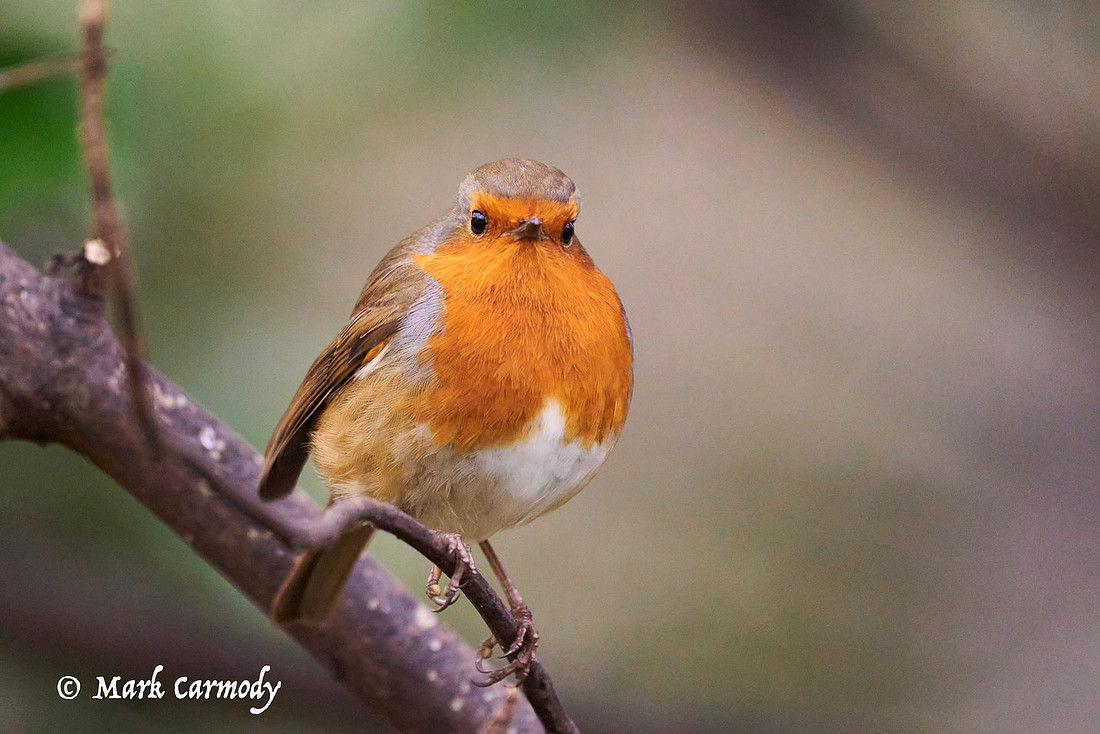
The well-known Robin. Several pairs breed in the park
There are also a couple of glamour escapees that occupy the grounds of the park. One is the beautiful Mandarin Duck. A male has been travelling from the National Botanic Gardens to the Tolka River in the park for several years now. In 2025, the male was paired up with a female Mallard.
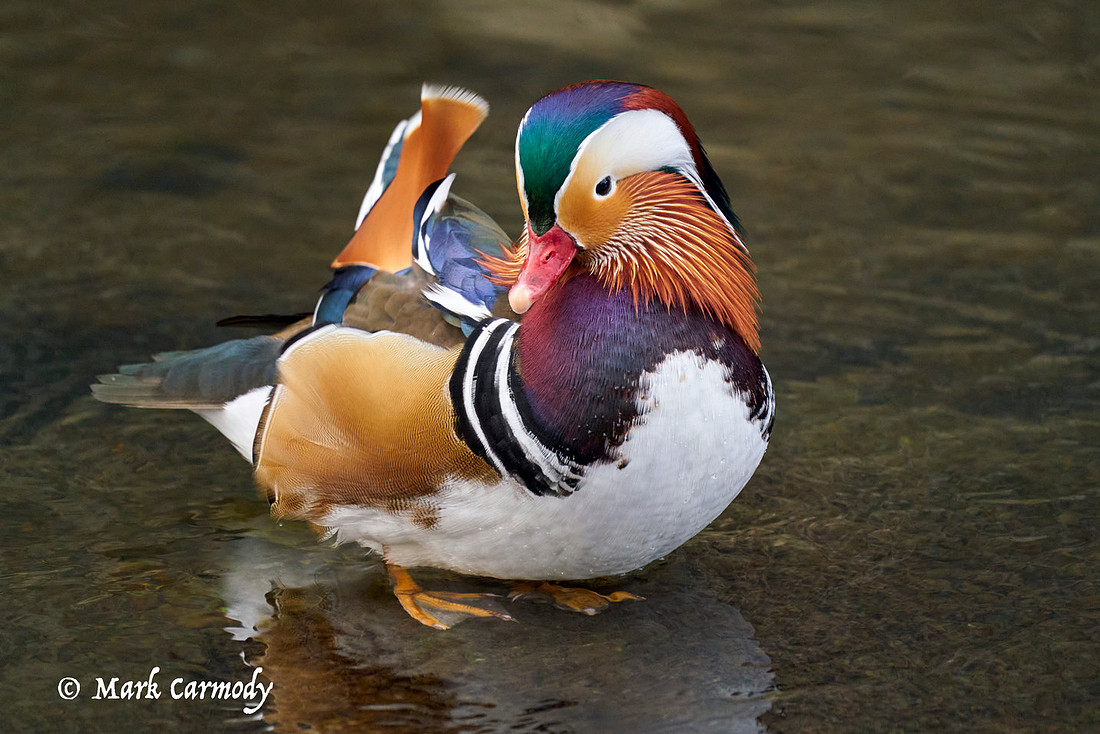
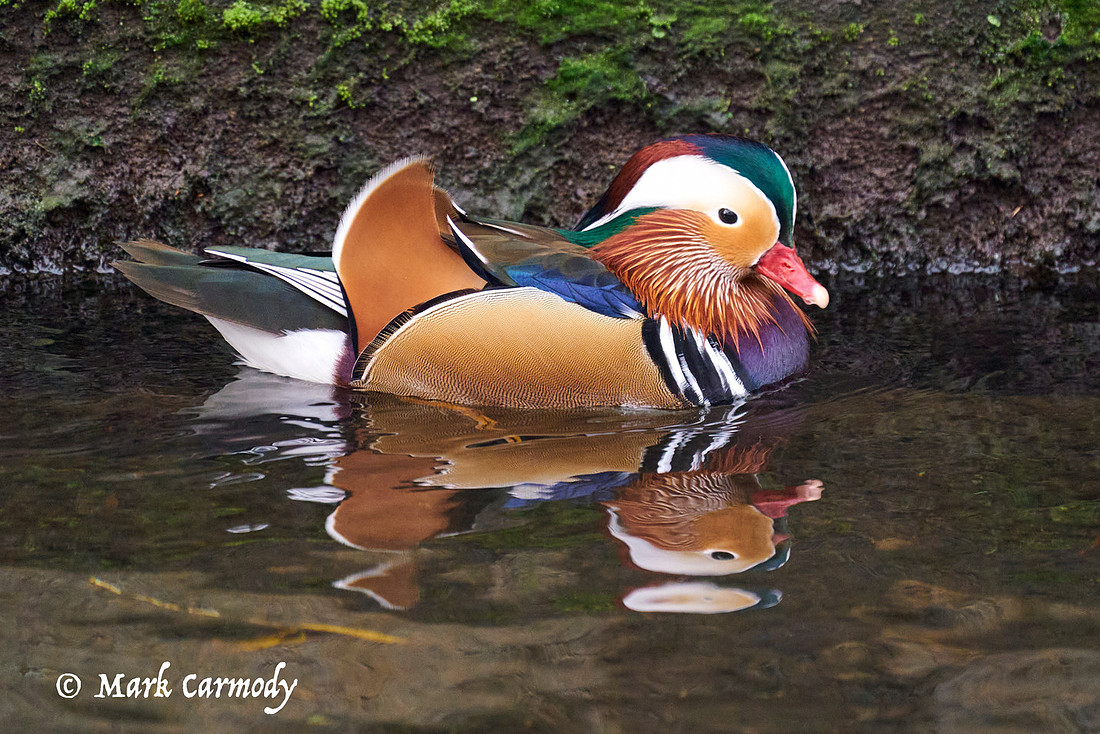
The male Mandarin Duck in all its finery.
The other is the Rose-necked Parakeet. There are at least 5 of this species wheeling around the park, making a racket as they call raucously from the trees. Despite their colourful nature, they are quite difficult to see. They have bred close by in the last few years, which is a concern as they can become an invasive pest. It is thought that the current population in Dublin (at least) stems from pairs escaping from an aviary that was damaged in a winter storm several years ago. They have exploded in numbers in London and are becoming well-established in Belfast as well. The NPWS would do well to capture the birds and rehome them before they take hold.
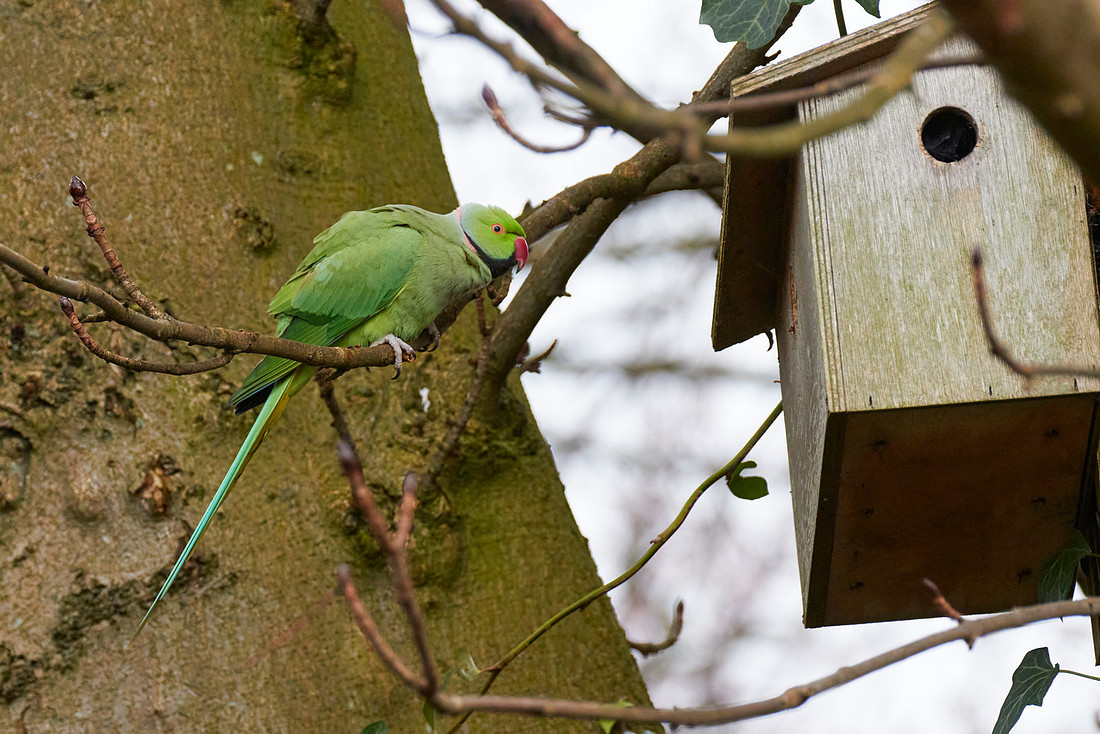
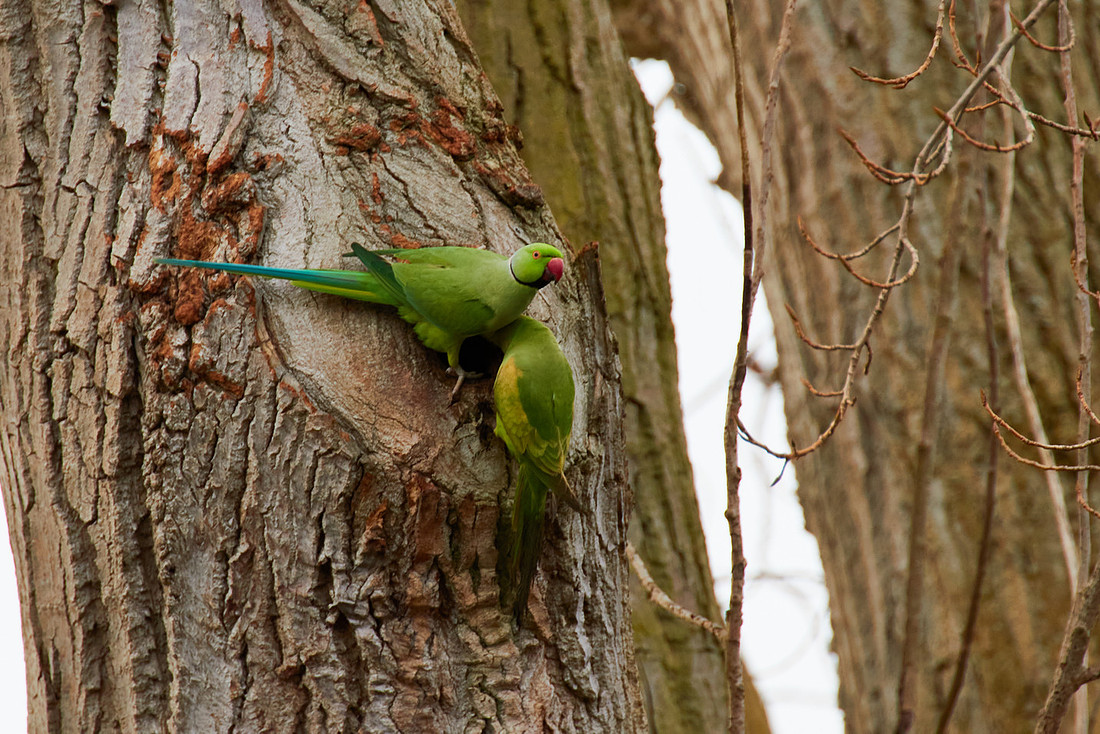
Rose-ringed Parakeets inspect a hole in a tree in the park for a potential nest site.
Griffith Park has a lot of potential to be more biodiverse. If Dublin City Council and Dublin Parks could look more to what they could do with some of the space that goes unused, we could bring in more wildlife. The water quality needs to be improved, and they are finally acting on the constant pollution entering the river near the Church. I hope that they could build a Dipper nesting box under the Dean Swift bridge, and even install bat boxes in the park and under the bridges to help Daubenton's and Leisler's bats that are present. This would add to the park immeasurably. Installing the fencing along the old bathing area, despite the protests about it, has increased the presence of Mallard and the Mute Swans, although the swans no longer have a route of the river to bring their cygnets out to graze on the grass. Much to be done.
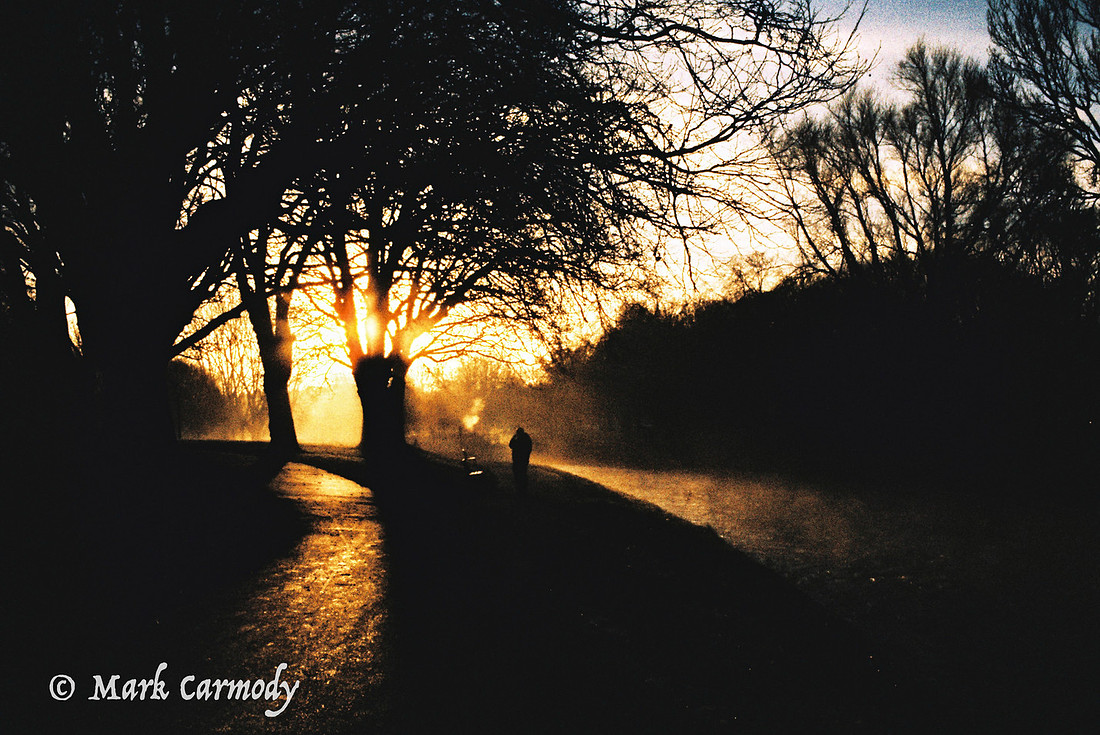
A winter's dawn in the park.
The Kingfishers of Griffith Park, Dublin
The Common Kingfisher/Cruidín (Alcedo atthis) is one of Ireland's most colourful breeding birds. It is a firm favourite of people, who are always thrilled to be shown one on a river, lake, or estuary. The rivers around Ireland typically have Kingfishers on them. However, they are quite shy birds by their nature and can be difficult to see as they skulk in low bushes or keep tight to the river banks.

A male Kingfisher, told by its all black bill, perched low in the undergrowth along the edge of the Tolka River, Griffith Park.
Griffith Park is a medium sized park on the north side of inner city Dublin, nestled on the border between the suburbs of Drumcondra and Glasnevin. It is one of my local parks, and the park that I traverse several times a week doing school drop offs/picks ups, and time spent in the playground (and Tram Cafe) with my daughter (the young fella tends to forego the walk for hanging out with his mates online or on the green, which is fair enough). From time to time, one would hear a high ptiched chee chee chee call coming from the river and see a flash of azure speeding around a bend in the river...and the Kingfisher was gone as quickly as it appeared. They repeated the same trick on me a handful of times over several years, but for the last few months, a pair of Kingfisher have become a regular sight and sound on my walks.

A male Kingfisher, told by its all black bill, hovering over the Tolka River running through Griffith Park.
They seem to have set up a territory locally, from The Church of the our Lady of Delours in Glasnevin down to the Frank Flood Bridge in Durmcondra. Previously I would have seen them on the Tolka River in the National Botanic Gardens, and along the same river in the Tolka Valley park further west. It was a pleasant and most welcome surprise to see them in the park. They have become such a routine sighting now that one can predict where on the river they will be depending on the flood of the river. It is magic.

A young female Kingfisher, told by having some orange on the lower mandible perched along the edge of the Tolka River, Griffith Park.

The Kingfisher, always on the lookout for food under the surface of the Tolka River.
The birds originally were keeping deep into the riverbank, making clean photographs a pipedream. Couple that to the greyest, darkest, and dreariest of weather over the course of November, December (2024), and January (2025), and the photographs have been average. I am still waiting for a decent bit of light, which I hope will happen.
 A male Kingfisher peaking through the undergrowth along the edge of the Tolka River, Griffith Park.
 The bright orange of the underwing is very apparent when the Kingfisher was hovering over the Tolka River, Griffith Park.
They favoured one particular corner of the river when the flow is low, meaning that they hide in a riverside willow and sometimes come out of cover and hover in the open. It is amazing to see and they are quite close when they do this. It is amazing to see how many people walk by and not notice these jewels of our rivers. I always try to point the birds out to people so that they know what magic is on their doorstep. The more people that see them, the hope is that people will take an interest to improve and appreciate the park's wildlife habitat more.
 A male Kingfisher on the lookout for food along Tolka River, Griffith Park.
The birds tended to favour an area with a very busy background for photographs. The images tended to be too distracting and either the bill was going over a branch, or a branch was going through the plane of the eye in the background. However, watching them feeding unhindered and uninhibited by people walking by was marvellous.
 A typical view of the Kingfisher along the edge of the Tolka River, Griffith Park.
A male Kingfisher out in the open along the edge of the Tolka River, Griffith Park.
Every now and then they would perch in one spot that had a better background. I like this shot because the bird is framed by the branches above, below and to the side, narrowing as they flow from right to left. Whether or not they stay in the area and become a regular sight for the next several years remains to be seen. I am hoping they do.
The Belcarra Yellow-crowned Night Heron
Belcarra is a small village in Co. Mayo with a rich history. In Irish birdwatching circles, it is now forever known as the village where Ireland's first Yellow-Crowned NIght Heron was found in the autumn of 2024.

The bird was noted in the area for some weeks before a local asked a friend of theirs what the bird could be. That person happened to be a prominent birdwatcher based on Dublin. Pandemonium ensued. Luckily, another well-known Wicklow-based birdwatcher was nearby and checked out the veracity of the record...and the rest, as they say, is history. Such an amazing discovery and a very beautiful bird. I finally gave in after the bird was there a few weeks and drove the 3 hours from Dublin across the country to arrive at dawn in the Co. Mayo village. Within 10 minutes of searching for the bird, I heard a call from the roof of the local community centre and there was the heron peering over at me. I spent the next 5-6 hours watching and photographing the bird. It was a worth the twitch.


This was also the first time twitching a big distance to see a decent rare bird since I switched from Canon to Sony. I used a Sony A9II with a Sony 200-600mm F5.6-6.3 G OSS lens.


